Equipment
Ingredients
Beef and Broth Base
- 1500 g beef rump cap, whole, trimmed of excess fat but leaving a thin cap
- 500 g beef marrow bones, rinsed
- 1 yellow onion, halved crosswise, unpeeled
- 3000 ml water
- 5 g black peppercorns, whole
- 2 g juniper berries, lightly crushed
- 3 bay leaves
- 20 g kosher salt
Root Vegetables
- 300 g carrots, peeled and cut into large chunks
- 200 g celery root, peeled and cut into large chunks
- 150 g leek, white and light green parts only, washed thoroughly and chopped
Apfelkren (Apple-Horseradish Sauce)
- 300 g tart apples, peeled, cored, and finely grated
- 50 g fresh horseradish root, peeled and finely grated
- 15 ml lemon juice, freshly squeezed
- 10 g granulated sugar
- 2 g kosher salt
Schnittlauchsauce (Chive Sauce)
- 50 g white bread, crusts removed, torn into pieces
- 40 ml whole milk
- 3 hard-boiled egg yolks
- 1 raw egg yolk
- 150 ml neutral oil, sunflower or canola oil
- 15 ml white wine vinegar
- 50 g fresh chives, finely chopped
- 3 g kosher salt
- 1 g white pepper, ground
Nutrition (per serving)
Method
Place the halved onion, cut-side down, in a dry skillet over medium-high heat. Sear until the cut surfaces are heavily charred and blackened. This adds deep color and flavor to the broth.
In a large stockpot, briefly blanch the beef marrow bones in boiling water for 3 minutes, then drain and rinse them under cold water to remove impurities.
Bring the 3000ml of water to a rolling boil in the stockpot. Carefully lower the beef rump cap and the blanched bones into the water. Ensure the meat is fully submerged. Wait for the water to return to a gentle boil, then immediately reduce the heat.
Simmer the beef gently at 85°C/185°F. Add the charred onion, peppercorns, juniper berries, bay leaves, and salt. Skim off any grayish foam that rises to the surface using a slotted spoon. Continue to simmer uncovered, skimming occasionally.
Add the prepared carrots, celery root, and leek to the simmering pot. Continue to simmer until the vegetables are tender and the meat yields easily when pierced with a carving fork. The internal temperature of the beef will well exceed safe consumption levels (74°C/165°F), resulting in a tender braised texture.
While the meat cooks, prepare the Apfelkren. In a mixing bowl, toss the freshly grated tart apples with lemon juice immediately to prevent browning. Fold in the finely grated horseradish, sugar, and salt. Mix thoroughly, cover, and refrigerate to let flavors meld.
To begin the Schnittlauchsauce, soak the torn white bread in milk for 5 minutes. Squeeze out excess milk. In a bowl, mash the hard-boiled egg yolks until smooth, then whisk in the soaked bread, raw egg yolk, and white wine vinegar until a thick paste forms.
Continuously whisk the egg and bread mixture while adding the neutral oil in a slow, steady stream to create a thick emulsion. Once fully emulsified, stir in the finely chopped chives, salt, and white pepper. Taste and adjust seasoning, then refrigerate.
Carefully remove the meat and vegetables from the broth. Strain the broth through a fine mesh sieve. Slice the beef against the grain into uniform slices, roughly 1cm thick.
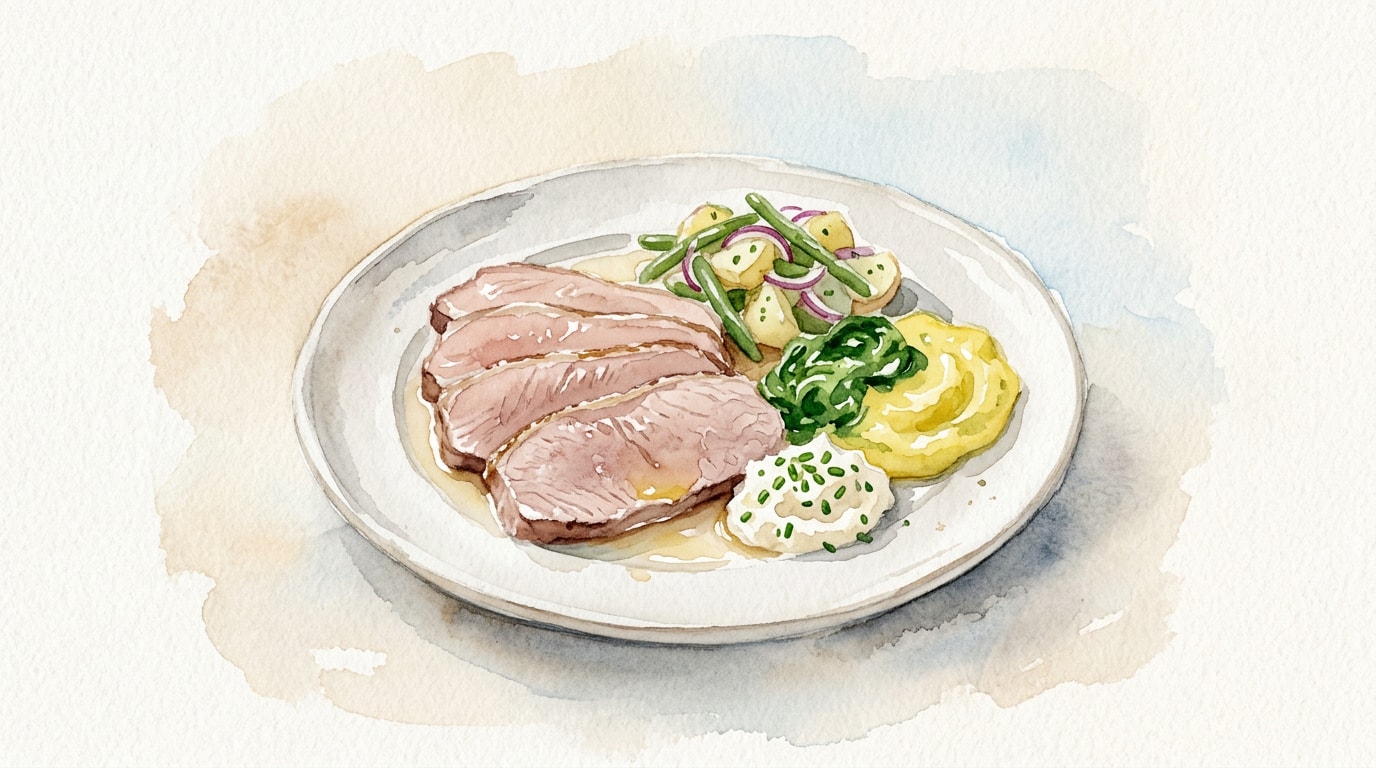
Plate the warm beef slices with a ladle of hot strained broth poured over top to keep them moist. Serve immediately with the boiled vegetables arranged alongside, and offer the Apfelkren and Schnittlauchsauce in chilled ramekins.
Chef's Notes
- Starting the meat in boiling water rather than cold water sears the exterior proteins, which locks in more of the juices for a superior meat texture. If the goal was exclusively a strong soup, cold water would be preferred.
- Do not peel the onion before blackening it. The papery dry skins impart a beautiful, rich golden color to the finished bouillon.
- Fresh horseradish is highly volatile. Grating it just before mixing into the acidic apple and lemon base preserves its characteristic sharp punch without turning bitter.
- Tafelspitz refers to the specific cut of beef (the top round or rump cap, leaving the fat cap on), but the term is used interchangeably for the dish. Retaining the fat cap during cooking bastes the lean meat.
- Always use a neutral oil like sunflower or grapeseed for the Schnittlauchsauce; olive oil will turn bitter during heavy whisking and overpower the delicate chive flavor.
Storage
Refrigerator: 4 days — Store the cooked meat submerged in the strained broth to prevent it from drying out. Keep sauces in separate airtight containers.
Freezer: 3 months — Freeze the meat submerged in broth. Do not freeze the chive or apple-horseradish sauces.
Reheating: Gently warm sliced meat in the simmering broth over low heat until heated through. Do not boil. Serve sauces cold.