Equipment
Ingredients
Main Ingredients
- 1 cornish hen, whole
- 30 g clarified butter
- 3 garlic, minced
- 1 lemon, juiced
- 5 g fresh dill, finely chopped
Pantry Staples
- kosher salt
- black pepper, freshly cracked
Nutrition (per serving)
Method
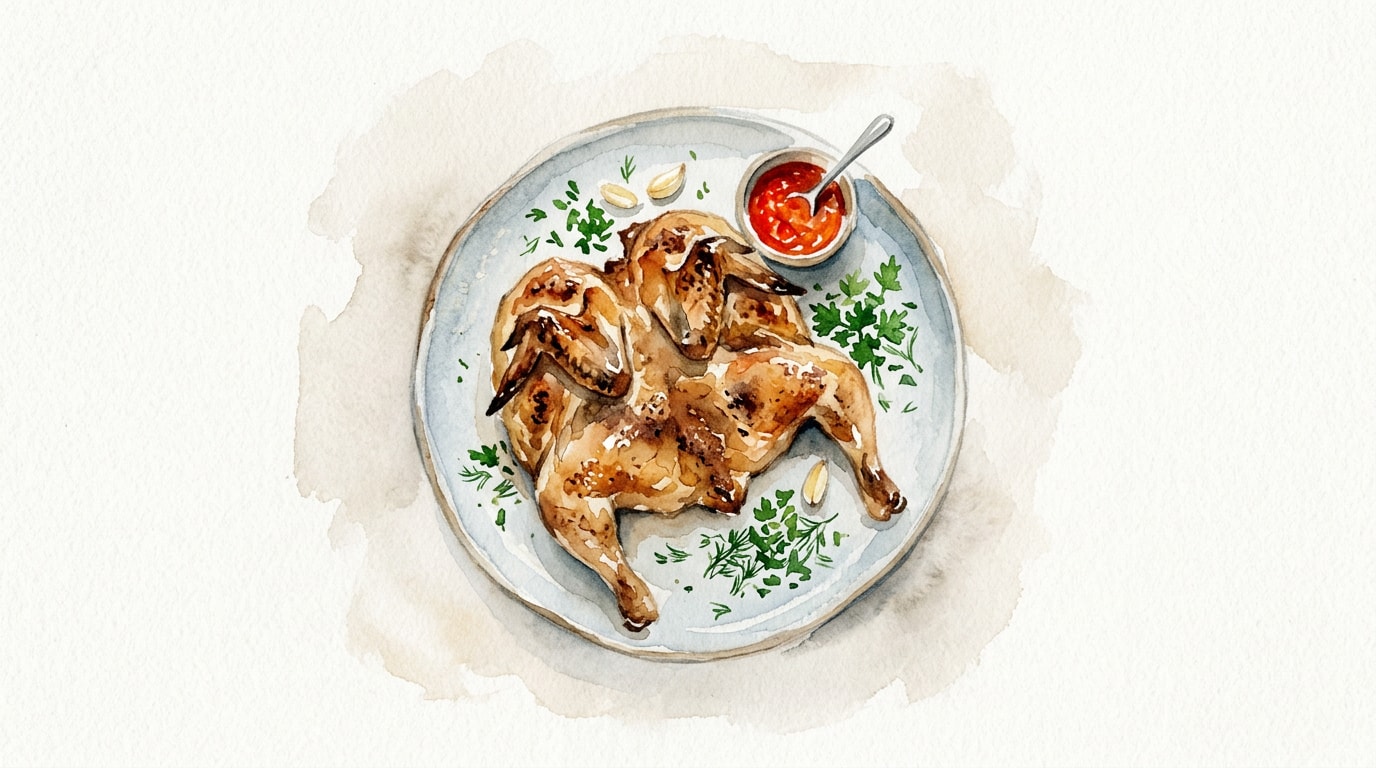
Using kitchen shears, cut along both sides of the Cornish hen's backbone. Remove the backbone, turn the hen over, and press down firmly on the breastbone until it cracks and the bird lays completely flat. Always wash hands and sanitize surfaces after handling raw poultry to prevent cross-contamination.
Pat the hen thoroughly dry with paper towels. Season generously on both sides with kosher salt and freshly cracked black pepper.
Heat the clarified butter in a heavy skillet over medium heat. Place the hen in the skillet skin-side down. Cover the hen with a piece of parchment paper or foil, then place your heavy weight directly on top to press the bird into the pan. Cook undisturbed until the skin is deep golden brown.
Remove the weight and parchment. Carefully flip the hen over. Replace the parchment and the weight. Continue cooking until the juices run clear and an instant-read thermometer inserted into the thickest part of the thigh registers 74°C or 165°F.
Transfer the hen to a cutting board to rest for 5 minutes. Lower the skillet heat to medium-low. Add the minced garlic to the residual pan drippings and saute for 30 seconds until fragrant. Stir in the lemon juice and chopped dill, scraping up any browned bits from the bottom of the pan to form a quick sauce.
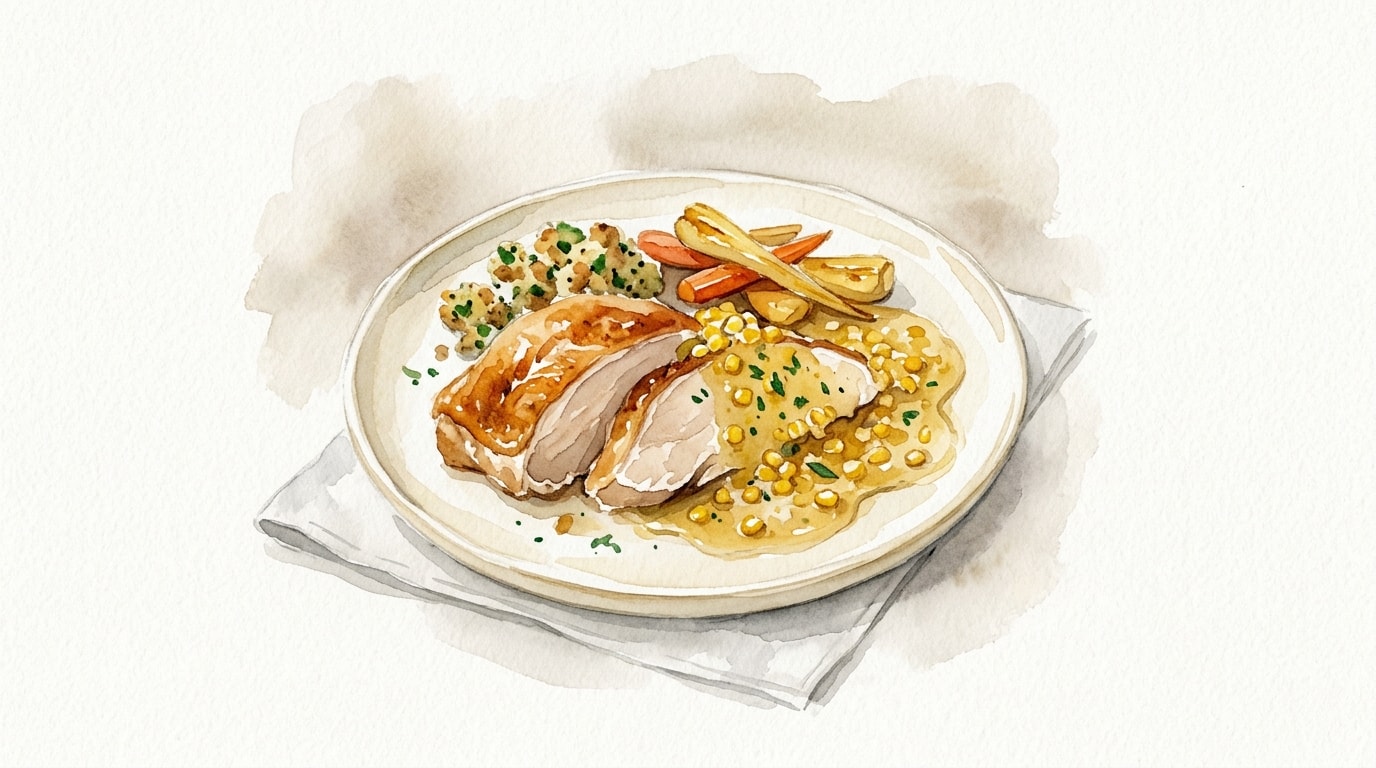
Plate the rested hen. Pour the hot, aromatic garlic-dill pan sauce directly over the top and serve immediately.
Chef's Notes
- For the absolute crispiest skin, spatchcock and salt the hen the night before, leaving it uncovered in the refrigerator. This dries out the pellicle (skin), supercharging the maillard reaction.
- Clarified butter or ghee is highly preferable to whole butter for this searing technique, as it has a higher smoke point and will not burn during the 20-plus minutes of pan-searing.
- Do not discard the backbone removed during prep; freeze it in a bag to use later for making a rich, gelatinous chicken stock.
- The resting period is non-negotiable. Cutting into the hen immediately will cause the pressurized juices to spill out onto the cutting board, resulting in dry meat.
Storage
Refrigerator: 3 days — Store in an airtight container. The skin will lose its crispness in the fridge.
Freezer: 1 month — Freeze wrapped tightly, though fresh preparation is highly recommended.
Reheating: Reheat uncovered in a 200C oven for 10-15 minutes to attempt to recrisp the skin.