Equipment
Ingredients
Pork and Dry Seasonings
- 1500 g pork shoulder, boneless, cut into 5cm chunks
- 15 g salt, kosher or sea salt
- 5 g black pepper, freshly ground
- 5 g ground allspice
Aromatics and Braising Liquid
- 30 ml coconut oil
- 50 g scallions, thinly sliced, white and green parts separated
- 20 g garlic, minced
- 15 g fresh ginger, peeled and grated
- 1 scotch bonnet pepper, left whole for mild heat, or pierced for medium heat
- 400 ml fresh orange juice
- 10 g orange zest, finely grated
- 500 ml chicken broth, low sodium
- 30 g dark brown sugar
- 10 g fresh thyme, whole sprigs
- 1 cinnamon stick
Nutrition (per serving)
Method
Place the pork shoulder chunks in a large bowl. Season thoroughly with salt, black pepper, and ground allspice, tossing to ensure even coverage. Wash hands, cutting board, and chef knife thoroughly after handling raw pork to prevent cross-contamination.
Heat the coconut oil in a Dutch oven over medium-high heat. Working in batches to avoid crowding, sear the pork pieces using tongs to turn them until deeply browned on all sides. Transfer the browned pork back to the large bowl.
Reduce the heat to medium. Add the white parts of the scallions, garlic, and grated ginger to the pot. Cook, stirring constantly with a wooden spoon, until softened and aromatic.
Pour the fresh orange juice into the pot. Use the wooden spoon to vigorously scrape the bottom of the Dutch oven, releasing all the browned bits into the liquid.
Return the pork and any accumulated juices to the pot. Add the chicken broth, orange zest, dark brown sugar, fresh thyme sprigs, cinnamon stick, and scotch bonnet pepper. Bring to a gentle boil, then cover with the lid and transfer to a 160C (320F) oven. Cook until the pork is highly tender and reaches a minimum internal temperature of 74C (165F).
Carefully remove the Dutch oven from the oven. Using tongs, transfer the pork pieces to a clean bowl. Discard the thyme sprigs, cinnamon stick, and scotch bonnet pepper. Use a spoon to skim and discard the excess fat floating on the surface of the braising liquid.
Place the Dutch oven with the remaining liquid on the stovetop over medium-high heat. Boil uncovered until the liquid reduces by more than half, transforming into a thick, glossy syrup.
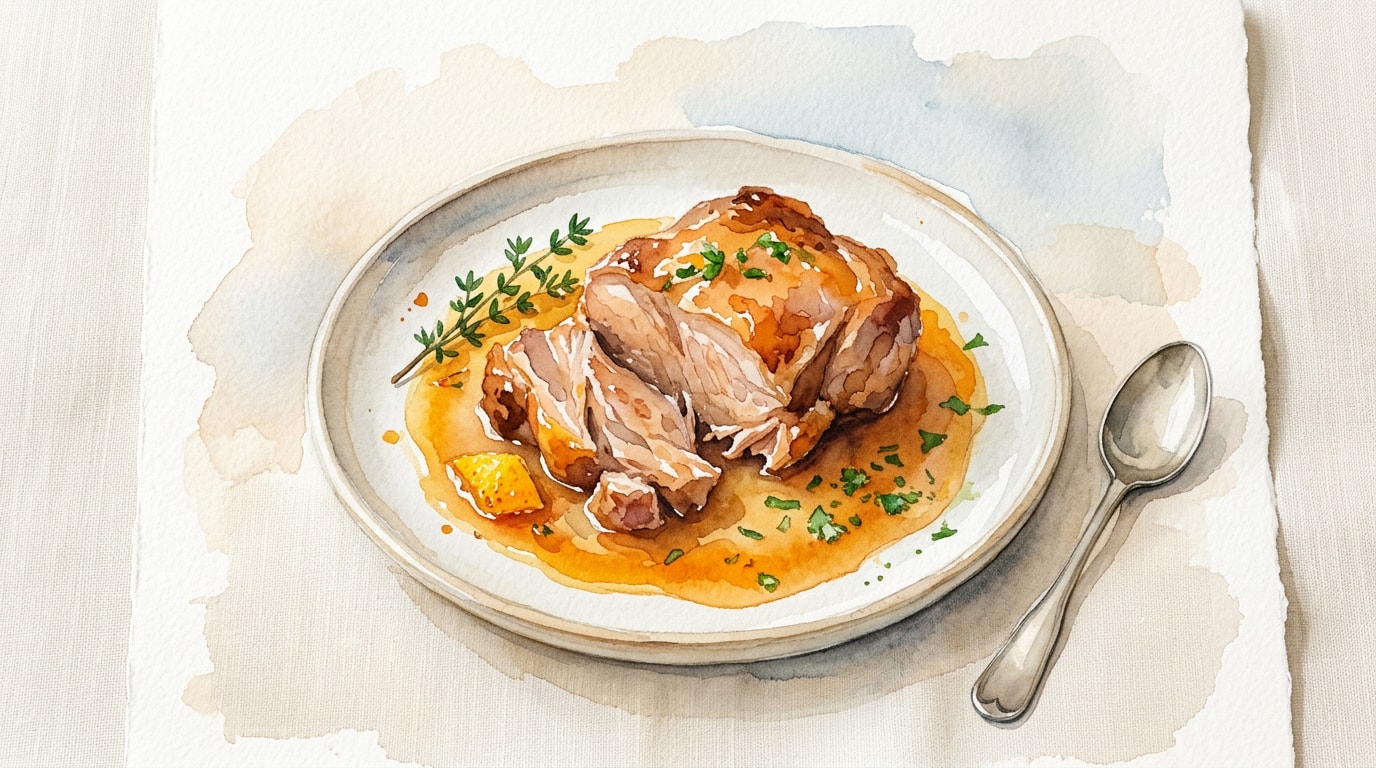
Return the pork to the pot with the reduced orange glaze. Toss gently over low heat until the meat is completely enrobed in the sauce and warmed through. Garnish with the reserved green parts of the scallions before serving.
Chef's Notes
- Searing the pork in batches is crucial. Overcrowding the pan lowers the temperature, causing the meat to steam in its own juices rather than developing the Maillard reaction needed for a deep flavor foundation.
- Do not skip skimming the fat before reducing the sauce. Pork shoulder is highly marbled, and leaving the rendered fat in the pot will result in a greasy, split sauce rather than a glossy, cohesive glaze.
- For the best flavor, use freshly squeezed orange juice. Bottled juices often undergo pasteurization processes that strip away the volatile aromatic compounds, leaving a flat and overly sweet profile.
Storage
Refrigerator: 4 days — Store in an airtight container. The sauce will gel when cold but will melt back to a glaze upon reheating.
Freezer: 3 months — Freeze pork and sauce together. Thaw overnight in the refrigerator before reheating.
Reheating: Reheat gently in a saucepan over medium-low heat until thoroughly warmed and bubbling.