Equipment
Ingredients
Aromatics and Base
- 15 ml coconut oil
- 3 garlic, minced
- 1 fresh ginger, peeled and minced
- 50 g white miso paste
Broth and Seafood
- 400 ml full-fat coconut milk
- 100 ml water or mild fish stock
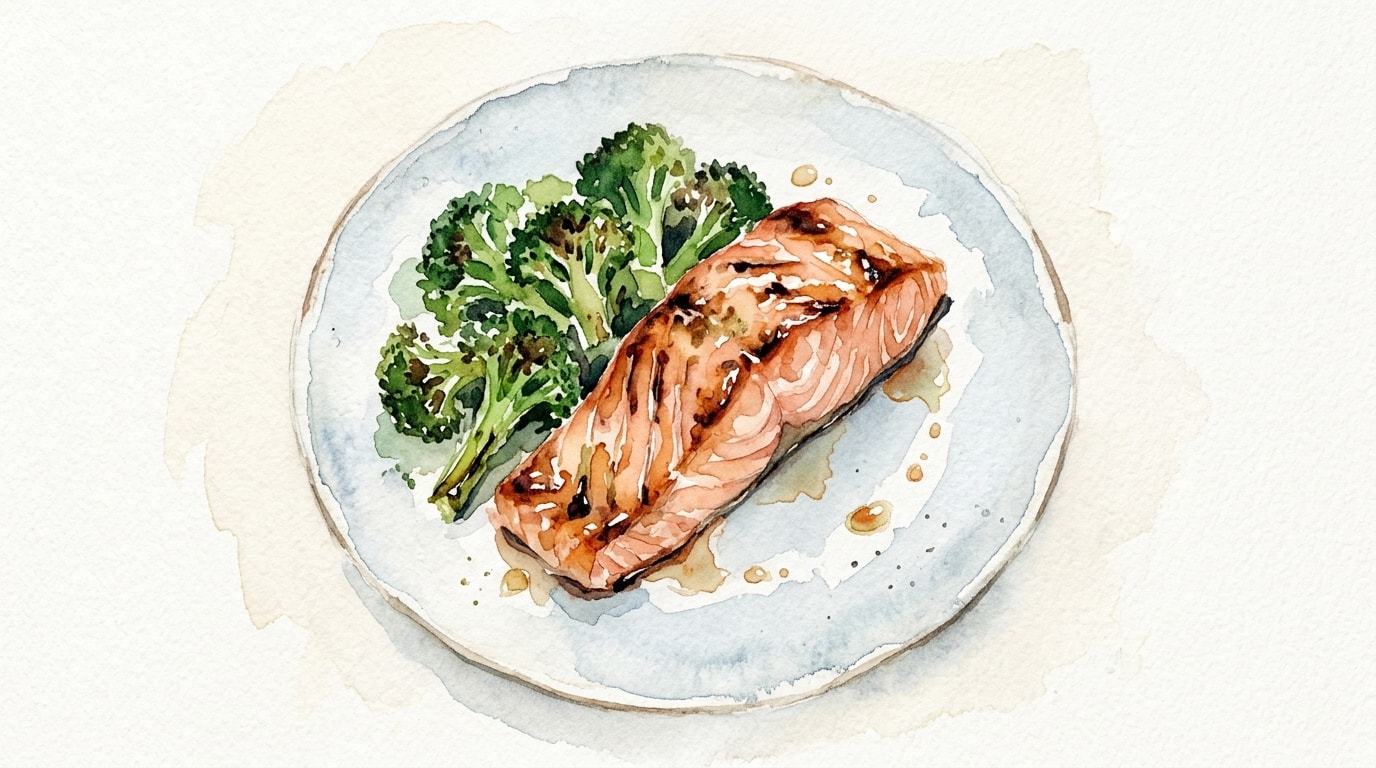
- 600 g salmon fillets, skinless, cut into 4 equal portions
Finishing Touches
- 100 g fresh baby spinach
- 30 ml fresh lime juice
- 15 g fresh cilantro, roughly chopped
Nutrition (per serving)
Method
Heat the coconut oil in a wide pot or Dutch oven over medium heat. Add the minced garlic and ginger, cooking until fragrant and softened but not browned, about 1 to 2 minutes.
Add the white miso paste to the pot. Stir constantly with a spatula, pressing the miso into the bottom of the pot until it begins to caramelize, darken slightly, and smell nutty, about 2 minutes.
Slowly pour in the coconut milk and water, whisking vigorously to dissolve the caramelized miso into the liquid. Bring the mixture to a gentle, trembling simmer over medium-low heat.
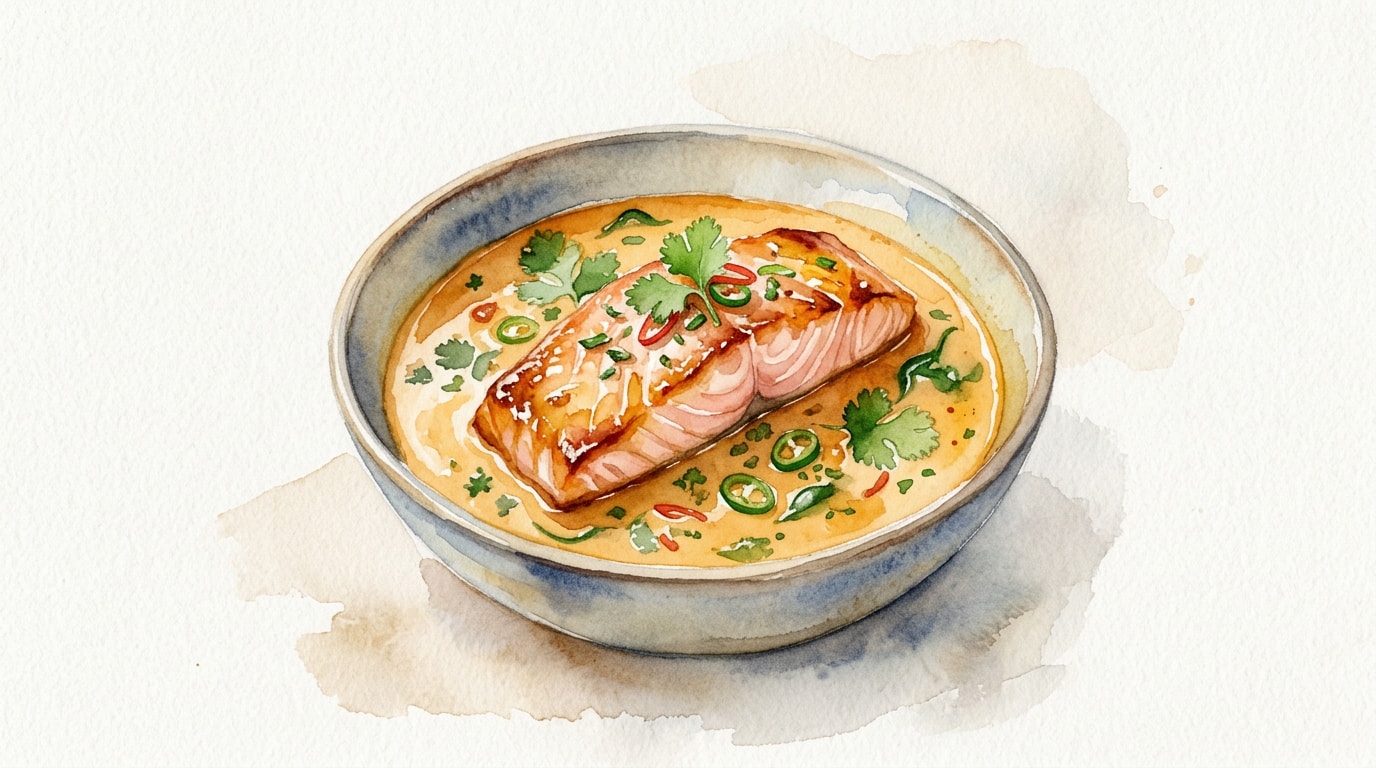
Gently lower the salmon fillets into the gently simmering broth. Cover the pot and let the salmon poach until just cooked through and flaky, about 6 to 8 minutes depending on thickness. Ensure the liquid does not reach a rapid boil. The internal temperature of the salmon should reach 50°C/120°F for medium doneness.
Carefully stir the baby spinach into the broth around the salmon fillets, allowing the residual heat to wilt the leaves, about 1 minute.
Remove the pot from the heat. Stir in the fresh lime juice and scatter the chopped cilantro over the top before ladling into shallow bowls.
Chef's Notes
- Caramelizing the miso paste directly in the oil deepens its umami profile and adds a nutty complexity that elevates the simple coconut broth.
- Full-fat coconut milk is essential here for a velvety texture; low-fat versions are highly prone to splitting and lack the necessary richness to balance the lime and miso.
- When poaching the salmon, ensure the liquid is barely trembling. A vigorous boil will agitate the delicate fish proteins, yielding a tough texture and cloudy, split broth.
- Wait until the very end, completely off the heat, to add your lime juice. Boiling citrus juice can result in a harsh, bitter flavor rather than bright acidity.
Storage
Refrigerator: 2 days — Store leftover salmon and broth separately if possible to maintain texture.
Reheating: Gently reheat on the stove over low heat to prevent the salmon from overcooking and the coconut milk from splitting.