Equipment
Ingredients
Flounder and Marinade
- 200 g flounder fillet, sliced into 5mm thick bite-sized pieces
- 5 g cornstarch
- 15 ml water, cold
- 2 g salt
- 1 g white pepper
Egg Mixture
- 4 eggs, large
- 15 ml water, room temperature
- 2 g salt
- 1 g white pepper
- 5 ml sesame oil
Cooking and Garnish
- 30 ml neutral oil
- 30 g scallions, thinly sliced, green and white parts separated
Nutrition (per serving)
Method
Place the sliced flounder in a mixing bowl. Add the cornstarch, 15ml cold water, half of the salt (2g), and half of the white pepper (1g). Toss gently to coat the fish evenly. Let marinate for 5 minutes.
In a separate clean mixing bowl, crack the eggs. Add the remaining 15ml water, remaining 2g salt, remaining 1g white pepper, and the sesame oil. Whisk vigorously until the mixture is fully homogeneous and slightly frothy. Note: If preparing a very soft, runny scramble for pregnant women, young children, or immunocompromised individuals, strongly consider using pasteurized eggs.
Heat 15ml of the neutral oil in a non-stick skillet over medium-high heat. Add the white parts of the scallions and the marinated flounder. Sauté gently until the fish is just opaque and reaches an internal temperature of 74°C/165°F. This should take about 1 to 2 minutes.
Transfer the cooked fish from the skillet directly into the raw egg mixture. Let it sit for 30 seconds to slightly temper the eggs, but do not whisk.
Wipe the skillet clean with a paper towel and heat the remaining 15ml of neutral oil over medium-low heat. Pour the egg and fish mixture into the skillet. Let it sit undisturbed for 10 seconds until the edges begin to set.
Using a spatula, gently push the eggs from the edges toward the center of the skillet, allowing the liquid egg to flow into the empty spaces. Repeat this gentle folding motion for 1 to 2 minutes until the eggs form large, soft curds but remain slightly glossy and wet. Remove from heat immediately.
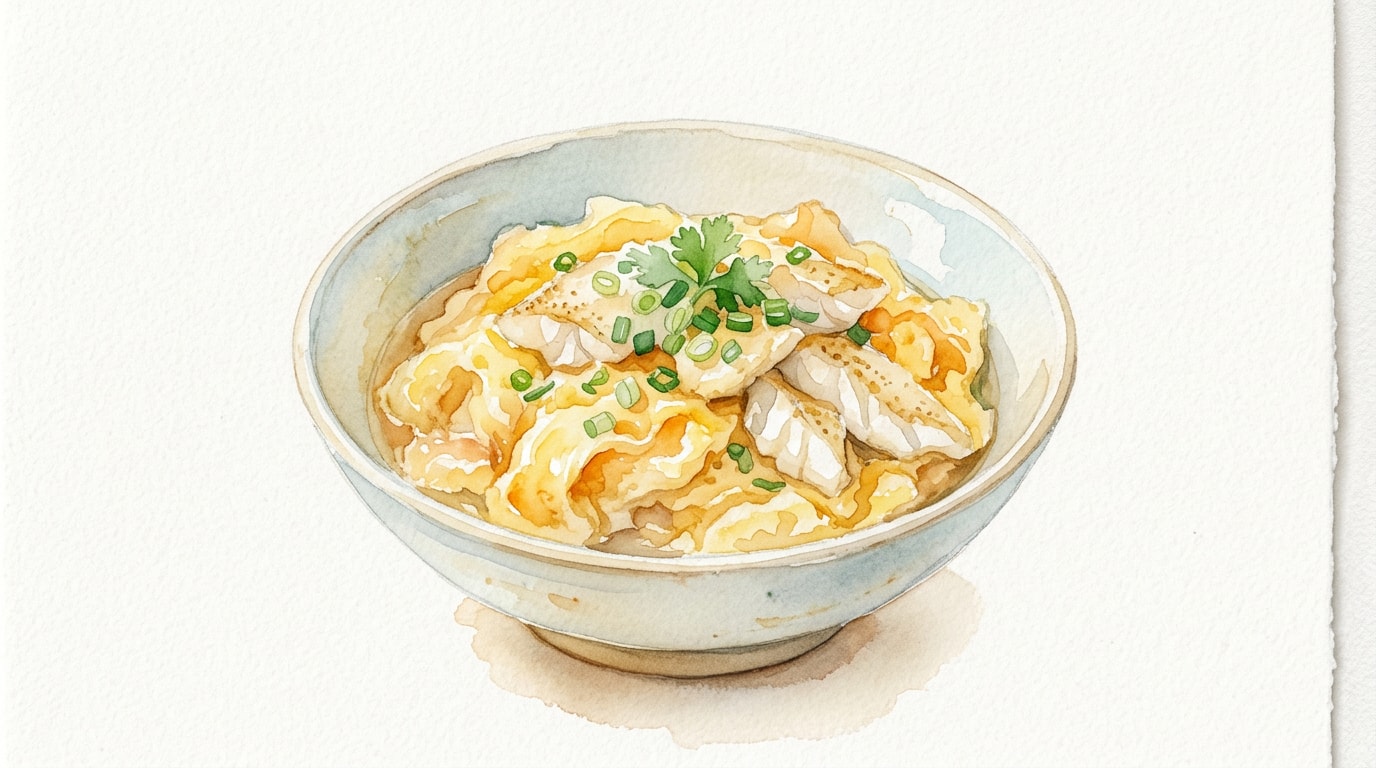
Transfer the eggs and flounder to a warm serving plate. Top generously with the reserved pungent green parts of the scallions. Serve immediately.
Chef's Notes
- The secret to restaurant-quality soft scrambled eggs is adding a small amount of water to the raw mixture. This creates steam as the eggs cook, forcing them to puff up and achieve a remarkably fluffy texture.
- Coating the flounder in cornstarch before cooking is a variation of the traditional Chinese 'velveting' technique. It creates a gelatinous protective barrier around the delicate fish, keeping the interior tender and preventing it from drying out over the high heat.
- Always remove your skillet from the heat right before the eggs look completely done. The residual heat in the pan and the eggs themselves will continue cooking the scramble for another 30 to 60 seconds.
- For the most vibrant flavor, ensure the scallions are sliced as thinly as possible. This maximizes the surface area and encourages the rapid release of their pungent aromatic oils the moment they hit the warm eggs.
Storage
Refrigerator: 1 day — Best eaten immediately. Reheating will negatively impact the soft texture of the eggs.
Reheating: Microwave on 50 percent power in 15-second intervals just until warmed through, though fresh preparation is strongly recommended.