Equipment
* optional
Ingredients
Pasta & Base
- 200 g spaghetti, dried
- 4 g whole black peppercorns, whole
- 5 g sea salt
Cheese Blend
- 60 g pecorino romano, finely grated
- 40 g parmigiano reggiano, finely grated
Nutrition (per serving)
Method
Finely grate the cheeses using a microplane. The cheese must be light and airy like snow to melt properly without clumping.
Crush the whole peppercorns coarsely using a mortar and pestle or the back of a heavy skillet.
Toast the crushed pepper in a large dry skillet over medium heat until fragrant, about 1-2 minutes. Add a small ladle (approx 50ml) of plain water to the pan to stop the cooking, then turn off heat.
Bring a pot of water to a boil. Use less water than usual (approx 2 liters for 200g pasta) to maximize starch concentration. Salt lightly.
While water boils, place the grated cheese in a small bowl. Gradually whisk in a ladle of hot (not boiling) starchy pasta water to create a thick, lump-free paste (the 'pastello').
Cook the pasta until it is very al dente, about 2 minutes less than package instructions. Transfer pasta directly to the skillet with the pepper using tongs, carrying over some pasta water.
Turn the skillet heat to medium. Toss the pasta with the pepper water for 1 minute to finish cooking and coat the strands. Add more starchy water if the pan looks dry.
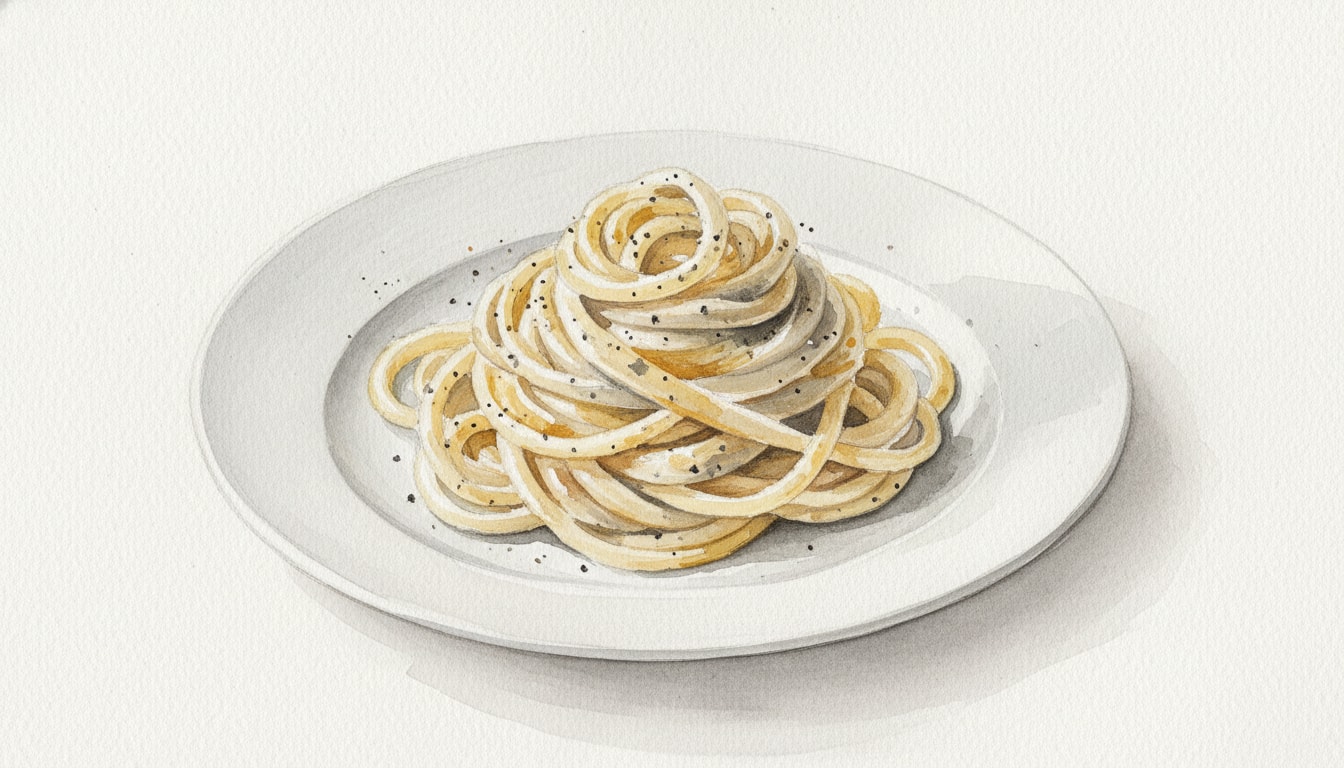
CRITICAL STEP: Remove skillet from heat completely and wait 30 seconds. Pour in the cheese paste and vigorously stir/toss the pasta to emulsify the sauce into a cream. Add tiny splashes of pasta water if too thick.
Chef's Notes
- The secret to a creamy Cacio e Pepe is starch. Using a smaller pot of water concentrates the starch released by the pasta, which acts as the emulsifier.
- Removing the pan from the heat is non-negotiable. Pecorino coagulates at roughly 60-70°C (140-160°F). If the pan is boiling, the cheese will separate into protein and oil.
- Use aged Pecorino Romano (DOP if possible). Younger cheeses may melt too easily and become oily, while very old cheeses might be too dry.
- The 'pastello' method (making a cheese paste first) is much more foolproof for home cooks than sprinkling dry cheese onto the pasta.
Storage
Refrigerator: 2 days — Sauce may separate upon reheating. Add a splash of water and heat very gently.
Reheating: Reheat in a skillet over low heat with a splash of water, stirring constantly to re-emulsify.