Equipment
* optional
Ingredients
Lobster Tails
- 2 cold-water lobster tails, thawed if previously frozen
- 30 g unsalted butter, melted
- 2 g garlic powder
- 1 g smoked paprika
- 2 g kosher salt
Bourbon Beurre Blanc
- 1 shallot, finely minced
- 60 ml bourbon whiskey
- 30 ml white wine vinegar
- 15 ml heavy cream
- 115 g unsalted butter, cold and cubed
- 1 g white pepper, ground
- 2 g kosher salt
Garnish
- 5 g fresh chives, finely chopped
- 1 lemon, cut into wedges
Nutrition (per serving)
Method
Set oven to broil and allow it to preheat to 260 C or 500 F. Position the oven rack in the upper middle position, about 15 centimeters from the heat source.
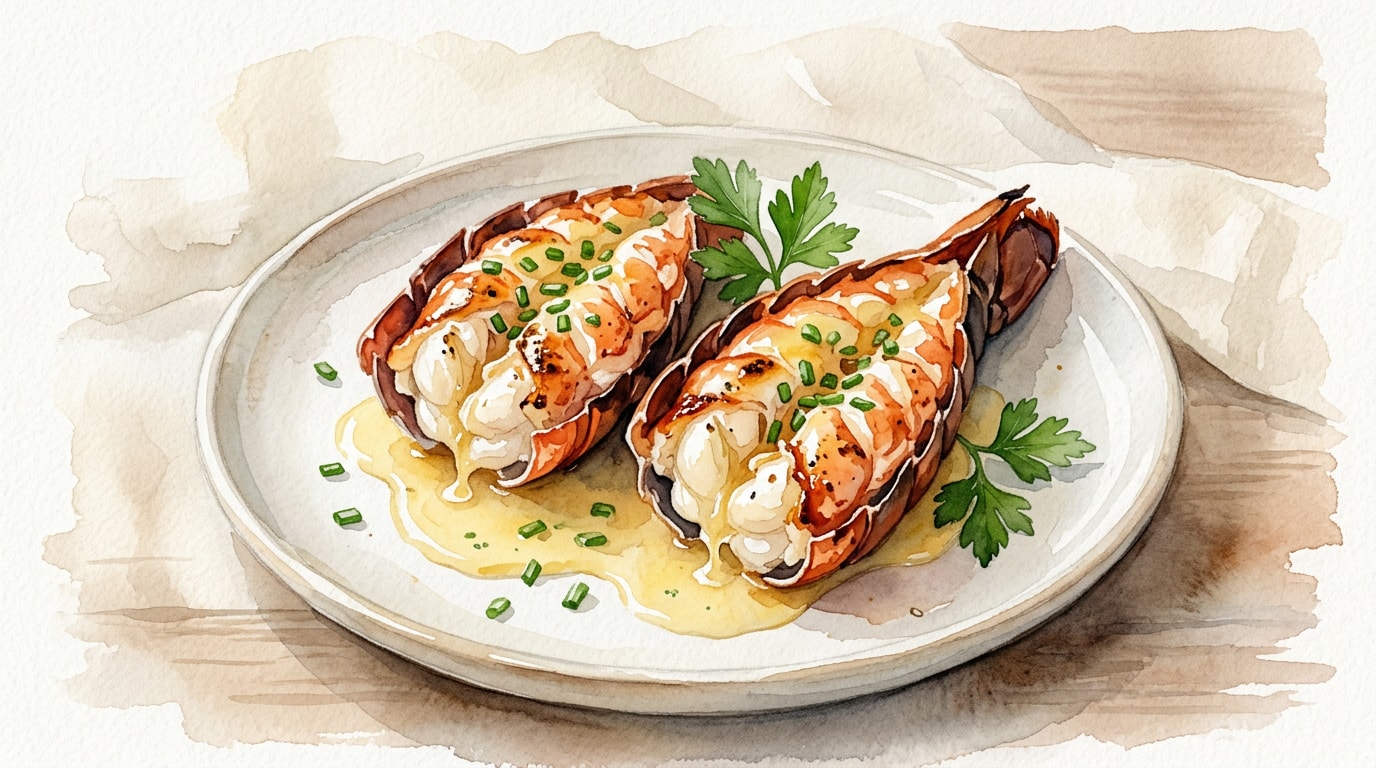
Using kitchen shears, cut down the center of the top of the lobster shell all the way to the tail fin. Gently pry the shell open with your thumbs and carefully lift the meat out, resting it on top of the closed shell. Leave the base attached to the tail fin.
In a small bowl, combine the melted butter, garlic powder, smoked paprika, and salt. Brush this mixture generously over the exposed lobster meat.
Place the butterflied tails on a baking sheet. Broil for 8 to 10 minutes until the meat is opaque and reaches an internal temperature of 60 C or 140 F. Remove from the oven and set aside to rest.
While the lobster cooks, prepare the sauce base. In a small saucepan over medium heat, combine the minced shallot, bourbon, and white wine vinegar. Simmer until the liquid is almost completely evaporated, reducing to about one tablespoon. This is known as au sec.
Lower the heat to the absolute lowest setting. Whisk in the heavy cream. Begin adding the cold, cubed butter one or two pieces at a time. Whisk continuously and vigorously, allowing each addition to fully melt and emulsify before adding the next. Do not let the sauce boil.
Remove the sauce from the heat immediately after the last butter cube is incorporated. Season with kosher salt and ground white pepper. Transfer the rested lobster tails to serving plates, spoon the warm bourbon beurre blanc generously over the meat, and garnish with fresh chives and lemon wedges.
Chef's Notes
- Using a tablespoon of heavy cream before adding the butter is a modern restaurant trick. Traditional beurre blanc relies solely on the reduction to hold the emulsion, but the cream provides stability, allowing the sauce to hold longer without breaking.
- White pepper is preferred over black pepper in beurre blanc purely for aesthetic reasons, preventing black specks from interrupting the pristine, creamy color of the sauce.
- If your lobster tails curl significantly while baking, you can insert a wooden skewer lengthwise through the meat before cooking to keep them perfectly straight for presentation.
- The sweet caramel and vanilla notes inherent in bourbon pair magnificently with the natural sweetness of cold-water lobster, while the vinegar and shallot provide the necessary acidic backbone to cut through the heavy butter.
Storage
Refrigerator: 1 day — Store leftover lobster meat and sauce in separate airtight containers. The emulsion may break when chilled.
Reheating: Reheat lobster meat extremely gently over a double boiler or sous-vide to prevent rubbery texture. Do not microwave. Bring the sauce to room temperature slowly, whisking continuously over residual heat if necessary.