Equipment
Ingredients
Protein
- 400 g boneless skinless chicken breast, room temperature for 15 minutes
Sear and Season
- 6 g kosher salt
- 2 g black pepper, freshly ground
- 15 ml grapeseed oil
Basting Aromatics
- 45 g unsalted butter
- 3 garlic, smashed and peeled
- 5 g fresh thyme, whole sprigs
Nutrition (per serving)
Method
Pat the chicken breasts completely dry with paper towels to ensure a proper sear. Season generously on both sides with kosher salt and black pepper. Wash your hands thoroughly with soap and warm water after handling raw poultry.
Place a cast iron skillet over medium-high heat and add the grapeseed oil. Heat the pan until the oil begins to shimmer and lightly smoke.
Carefully lay the chicken breasts into the skillet, dropping them away from you to prevent oil splatters. Press down gently with tongs to ensure full contact with the pan. Cook undisturbed for 5 to 6 minutes until a deep bronzed crust forms and the chicken releases easily from the metal.
Flip the chicken breasts. Immediately reduce the heat to medium-low and add the unsalted butter, smashed garlic cloves, and fresh thyme sprigs to the skillet. As the butter melts and foams, tilt the pan slightly toward you. Use a metal spoon to continuously scoop the hot infused butter over the top of the chicken. Continue basting for 4 to 5 minutes until an instant-read thermometer inserted into the thickest part of the meat registers exactly 74 degrees Celsius (165 degrees Fahrenheit).
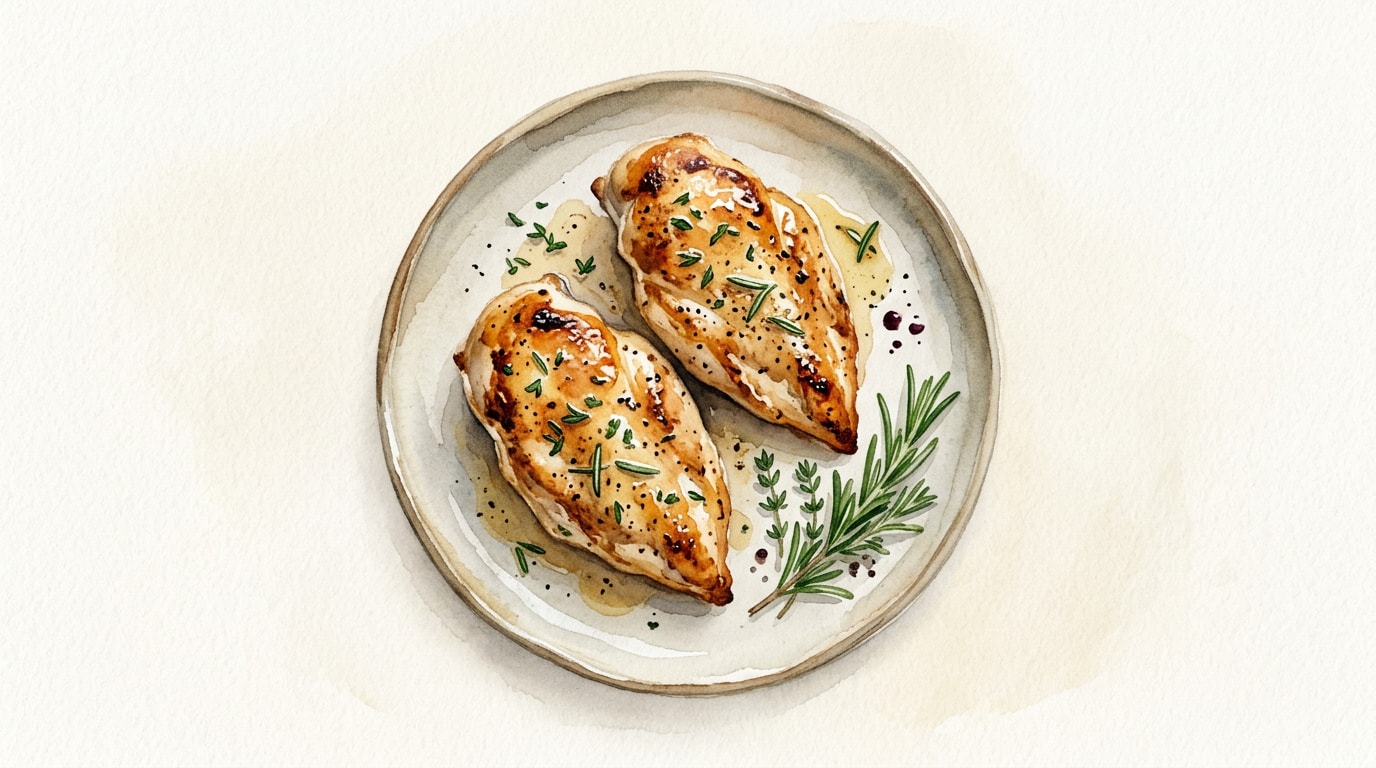
Transfer the cooked chicken breasts to a cutting board. Pour the remaining browned butter, garlic, and herbs over the meat. Let the chicken rest for 5 minutes before slicing to allow the muscle fibers to relax and redistribute their juices.
Chef's Notes
- The classic French technique of basting with foaming butter cooks the exposed top of the chicken gently while infusing the meat with fat-soluble flavor compounds drawn from the garlic and herbs.
- Drying the chicken surface thoroughly before searing is absolutely non-negotiable. Excess surface moisture will steam the meat, preventing the Maillard reaction needed for a proper bronzed crust.
- Always use a thin metal spoon for basting. Plastic utensils can easily melt against the rim of a hot cast iron skillet, and wooden spoons are often too thick to efficiently scoop up shallow pools of butter.
- Resting the chicken is crucial. If you slice it immediately, the pressurized juices will bleed out onto the cutting board, leaving the breast meat dry.
Storage
Refrigerator: 4 days — Store in an airtight container. Keep intact if possible to retain moisture.
Freezer: 2 months — Freeze wrapped tightly in foil and placed in an airtight bag.
Reheating: Gently warm covered in a skillet over low heat with a splash of water, or slice and eat cold over salads to prevent drying out.