Equipment
Ingredients
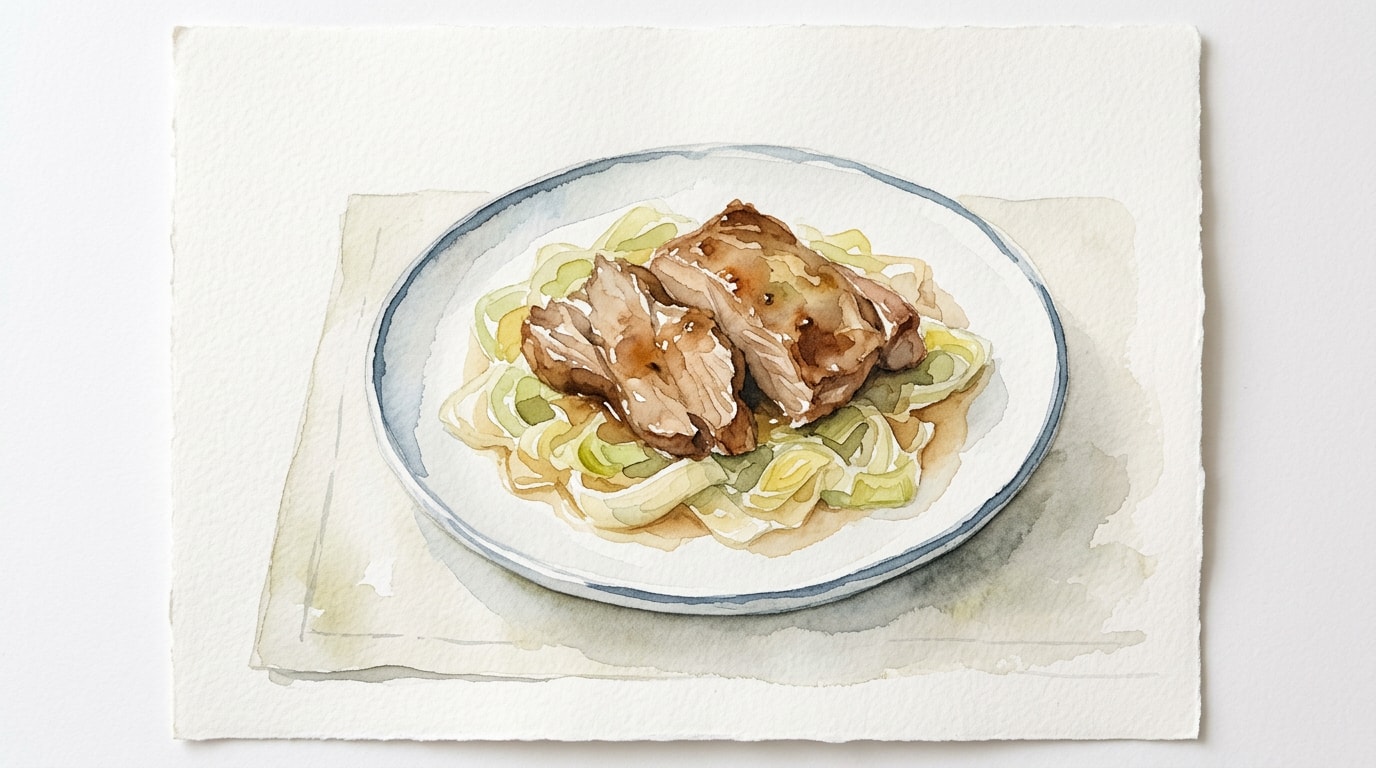
Veal
- 800 g veal flank, cut into 5cm chunks
Aromatics & Vegetables
- 400 g leeks, sliced into 1cm rounds, white and light green parts only
- 4 garlic cloves, minced
- 5 g fresh thyme, whole sprigs
- 2 dried bay leaves
Liquids & Fats
- 250 ml dry white wine
- 500 ml chicken stock, warm
- 30 ml olive oil
- 30 g unsalted butter
Seasoning
- 10 g kosher salt
- 5 g black pepper, freshly ground
Nutrition (per serving)
Method
Pat the veal flank chunks completely dry with paper towels to ensure a good sear. Season generously on all sides with the kosher salt and black pepper. Wash your hands and thoroughly sanitize any surfaces that came into contact with the raw meat to prevent cross-contamination.
Preheat your oven to 160C/320F. Place the heavy-bottomed Dutch oven over medium-high heat on the stovetop and add the olive oil, allowing it to heat until it shimmers.
Working in batches to avoid crowding the pan, use kitchen tongs to place the veal chunks in the hot oil. Sear until a deep brown crust forms on all sides, about 3 to 4 minutes per side. Transfer the browned meat to a clean plate and set aside.
Reduce the stovetop heat to medium and add the unsalted butter to the Dutch oven. Add the sliced leeks and cook, stirring frequently, until they soften and become translucent, about 8 minutes. Stir in the minced garlic and cook for 1 additional minute until fragrant.
Pour the dry white wine into the pot to deglaze it. Use a wooden spoon to firmly scrape up all the flavorful browned bits from the bottom of the pan. Allow the wine to simmer vigorously until the liquid has reduced by half, concentrating its flavor.
Return the seared veal chunks and any accumulated resting juices from the plate back into the Dutch oven. Pour in the chicken stock, submerge the fresh thyme sprigs and dried bay leaves into the liquid, and bring the pot to a gentle simmer on the stovetop.
Cover the Dutch oven with a tight-fitting lid and transfer it to the preheated oven. Braise for 2 hours, checking occasionally. The veal must be completely fork-tender. Food safety dictates reaching an internal temperature of 74C/165F, but braising breaks down collagen, naturally pushing internal temperatures much higher for maximum tenderness.
Remove the pot from the oven. Carefully fish out and discard the bay leaves and bare thyme stems. Allow the braise to rest for 15 minutes before serving, which lets the sauce thicken slightly and the flavors meld together beautifully.
Chef's Notes
- Veal flank is a hard-working muscle rich in connective tissue. The key to its luxurious texture is patience. Do not rush the braise; it must cook slowly to convert the tough collagen into silky gelatin.
- Cleaning leeks thoroughly is critical, as sand and grit hide tightly between their layers. Slice them first, then agitate them in a large bowl of cold water, lifting the leeks out so the dirt remains trapped at the bottom.
- Choose a dry, crisp white wine like Sauvignon Blanc or an unoaked Chardonnay. Avoid sweet or oak-heavy wines, as their flavor will concentrate and become cloying or bitter during the braising process.
- For a richer, glossier sauce with a velvety mouthfeel, remove the pot from the heat at the very end and vigorously swirl in a small knob of cold butter just before serving.
Storage
Refrigerator: 4 days — Store in an airtight container. The flavors will deepen and improve after a day in the refrigerator.
Freezer: 3 months — Freeze in airtight containers, ensuring the meat is fully submerged in the sauce to prevent freezer burn.
Reheating: Gently reheat in a saucepan over medium-low heat until simmering and warmed thoroughly to at least 74C/165F. Add a splash of stock or water if the sauce has reduced too much.