Equipment
Ingredients
Meat and Searing
- 4 lamb shanks, trimmed of excess surface fat
- 10 g kosher salt
- 5 g black pepper, freshly cracked
- 30 ml olive oil
Aromatics and Base
- 1 yellow onion, diced
- 100 g celery, thickly sliced
- 4 garlic, minced
- 30 g tomato paste
Braising Liquid and Herbs
- 250 ml dry red wine
- 1000 ml beef stock, low-sodium
- 2 fresh rosemary, whole sprigs
- 4 fresh thyme, whole sprigs
- 2 bay leaves, dried
Vegetables and Grains
- 250 g carrots, peeled and thickly sliced on the bias
- 200 g parsnips, peeled and thickly sliced on the bias
- 150 g pearl barley, rinsed well under cold water
Nutrition (per serving)
Method
Preheat the oven to 160°C (320°F). Arrange an oven rack in the lower-middle position to accommodate a large Dutch oven.
Pat the lamb shanks completely dry with a paper towel. Season them generously on all sides with kosher salt and freshly cracked black pepper.
Heat the olive oil in the Dutch oven over medium-high heat until shimmering. Using tongs, carefully add the lamb shanks and sear until a deep brown crust forms on all sides, turning occasionally. This should take about 10 minutes. Remove the shanks and set them aside on a plate.
Reduce the heat to medium. Add the diced yellow onion and sliced celery to the rendered lamb fat in the pot. Sauté until the onion is softened and slightly translucent.
Stir in the minced garlic and tomato paste. Cook, stirring constantly, until the tomato paste darkens to a rich brick-red color and becomes highly aromatic.
Pour in the dry red wine to deglaze the pot. Scrape the bottom firmly with a wooden spoon to release all the browned fond. Simmer until the wine has reduced by half.
Pour in the beef stock and add the fresh rosemary, thyme, and bay leaves. Return the seared lamb shanks to the pot along with any resting juices. Bring the liquid to a gentle, steady simmer.
Cover the Dutch oven tightly with its lid and carefully transfer it to the preheated oven. Braise undisturbed for 1 hour and 30 minutes.
Remove the pot from the oven. Carefully stir in the sliced carrots, sliced parsnips, and rinsed pearl barley, nestling them into the broth around the lamb shanks. Cover and return to the oven for another 1 hour.
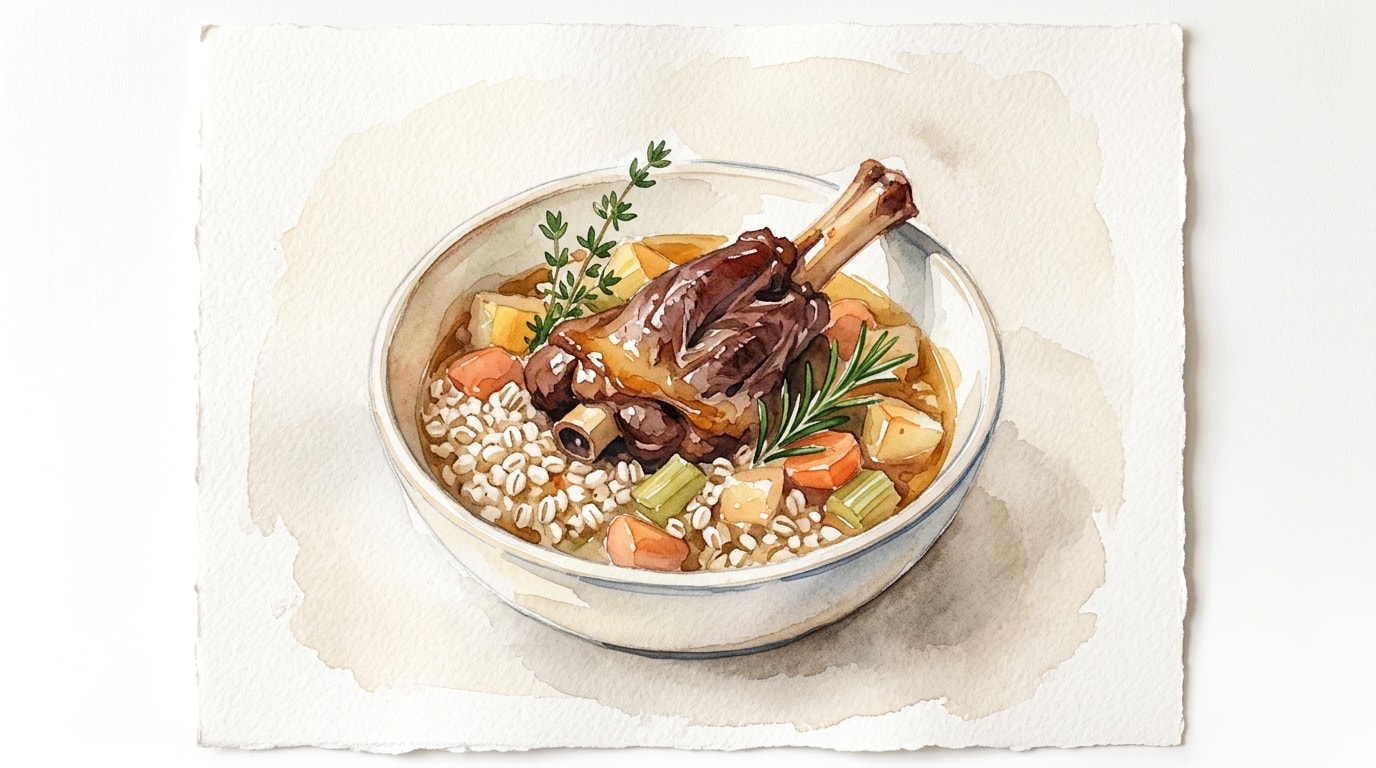
Remove from the oven and let the stew rest for 15 minutes. Skim any excess liquid fat from the surface. Discard the herb sprigs and bay leaves. Serve in shallow bowls, placing a lamb shank in the center and spooning the hearty barley, root vegetables, and savory broth around it.
Chef's Notes
- Searing the lamb shanks deeply is crucial for building a rich, foundational flavor profile via the Maillard reaction. Do not rush this step.
- Pearl barley thickens the broth naturally due to its starch content. Always rinse it thoroughly under cold water before adding to wash away excess surface starch.
- Adding the root vegetables and barley partway through the braising process ensures they maintain their structural integrity and don't turn to mush during the long cook required for the lamb.
- For the best possible flavor and texture, make this stew a day ahead. The flavors meld and deepen overnight, and chilling allows for the easy removal of solidified lamb fat from the surface before reheating.
Storage
Refrigerator: 4 days — Barley will continue to absorb liquid; add extra water or broth when reheating.
Freezer: 3 months — Meat and broth freeze well, but barley may become slightly soft upon thawing.
Reheating: Reheat gently on the stovetop over low heat, adding a splash of stock or water if the stew has become too thick.