Equipment
Ingredients
The Lamb
- 4 lamb shank, trimmed of excess surface fat
- 15 g kosher salt
- 5 g black pepper, freshly ground
- 30 ml olive oil
The Braise
- 500 g leek, washed thoroughly and sliced into 2cm rounds
- 250 ml dry white wine
- 750 ml veal stock
- 5 garlic, peeled and smashed
- 5 g fresh thyme, tied with butcher's twine
- 2 bay leaf, dried or fresh
- 50 g unsalted butter, cold and cut into small cubes
Nutrition (per serving)
Method
Preheat the oven to 150°C/300°F. Ensure the rack is positioned in the lower third of the oven to accommodate the Dutch oven.
Thoroughly pat the lamb shanks dry with paper towels to ensure proper browning. Season aggressively on all sides with the kosher salt and black pepper. Use a dedicated cutting board and wash your hands thoroughly after handling the raw meat to prevent cross-contamination.
Heat the olive oil in a heavy-bottomed Dutch oven over medium-high heat. Working in batches if necessary, sear the lamb shanks until a deep, dark brown crust forms on all sides, about 10 to 12 minutes total. Remove the shanks to a resting plate.
Lower the heat to medium. Add the thick-sliced leeks to the rendered lamb fat in the Dutch oven. Sauté gently until they begin to soften and collapse, picking up the rich lamb flavor, about 8 minutes. Do not allow them to take on dark color.
Pour the dry white wine into the pot to deglaze. Scrape the bottom of the Dutch oven continuously with a wooden spoon to release the fond (the caramelized brown bits). Allow the wine to boil rapidly until it reduces by half.
Nestle the seared lamb shanks back into the pot among the leeks. Pour in the veal stock and add the smashed garlic, thyme bundle, and bay leaves. The liquid should come about halfway to three-quarters up the sides of the shanks.
Bring the liquid to a gentle simmer on the stove, cover tightly with the lid, and transfer to the preheated oven. Braise undisturbed for 2.5 to 3 hours. The internal temperature of the lamb must reach at least 90°C/195°F for the tough collagen to melt into gelatin, ensuring perfectly tender meat.
Carefully remove the tender lamb shanks to a platter and cover with foil to keep warm. Place the Dutch oven back on the stove over medium-high heat. Skim any excess liquid fat from the surface, then boil the braising liquid and leeks until the sauce reduces and thickens slightly, about 10 minutes.
Remove the pot from the heat. Discard the thyme bundle and bay leaves. Vigorously whisk the cold, cubed butter into the reduced sauce until it completely emulsifies, transforming the braising liquid into a rich, glossy glaze.
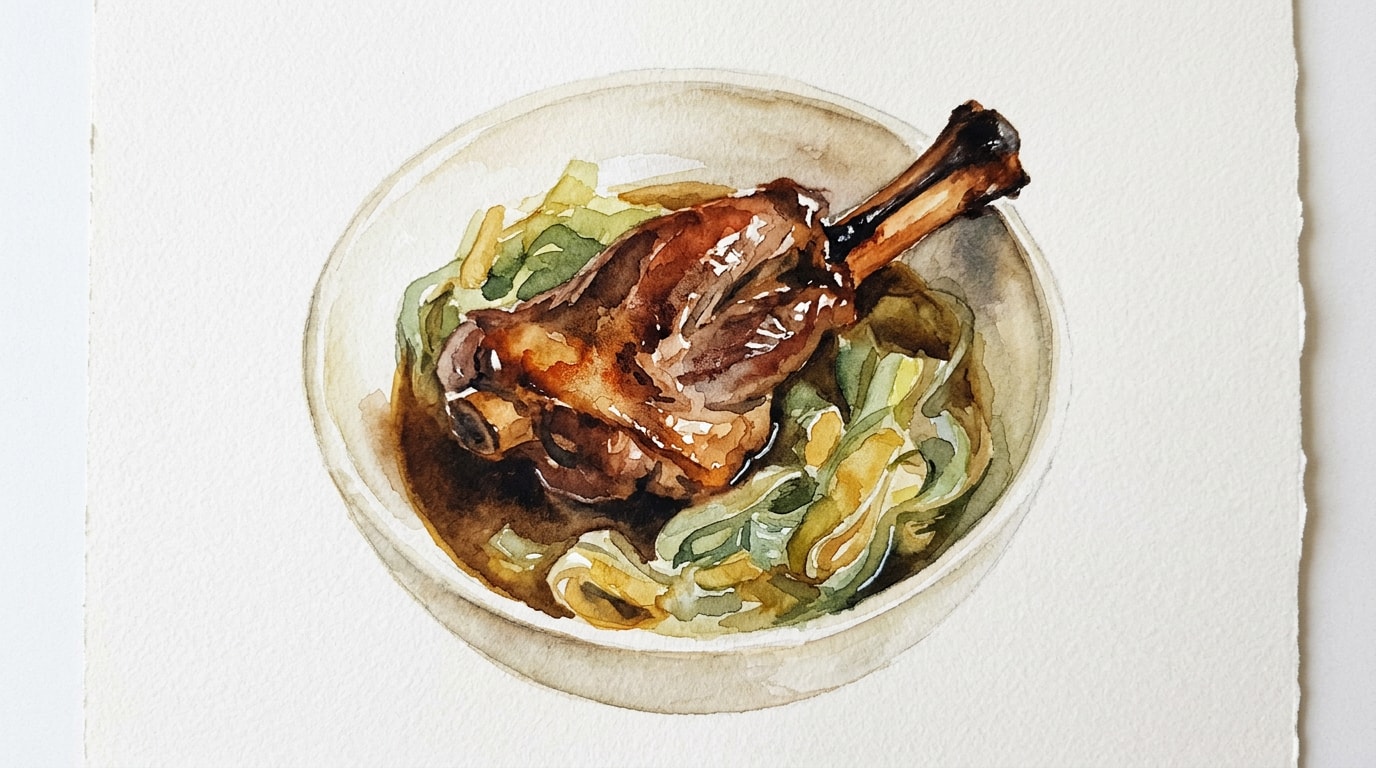
Place one lamb shank into each warmed shallow serving bowl. Ladle the hot, buttery leek and white wine sauce generously over the meat, ensuring each portion gets an equal amount of the melted leeks.
Chef's Notes
- Thoroughly washing leeks is non-negotiable in professional kitchens. Sand and grit hide deep between the tight layers. Slicing them first and agitating them in a water bath is the only foolproof method.
- Searing the lamb shanks develops a layer of fond on the bottom of the pot. Do not skip this step, as the Maillard reaction is essential for a deeply flavored, complex braising liquid.
- Using a dry, highly acidic white wine rather than traditional red wine balances the rich fat of the lamb and the sweet earthiness of the leeks, brightening the entire dish.
- Mounting the sauce with cold butter (the technique of monter au beurre) at the very end provides a luxurious mouthfeel and glossy finish that elevates a rustic stew to restaurant-level refinement.
Storage
Refrigerator: 4 days — Store in an airtight container. The flavors will deepen and improve after 24 hours. The fat will solidify on top, making it easy to remove before reheating.
Freezer: 3 months — Freeze the shanks fully submerged in their sauce in a heavy-duty container to prevent freezer burn.
Reheating: Gently reheat in a covered saucepan over low heat until the sauce simmers and the lamb is heated completely through to the bone.