Equipment
Ingredients
Braised Pork Cheeks
- 800 g iberico pork cheeks, trimmed of excess surface fat and silver skin
- 30 ml olive oil
- 1 yellow onion, diced
- 1 carrot, diced
- 1 celery, diced
- 4 garlic, crushed
- 30 g tomato paste
- 250 ml ruby port wine
- 500 ml chicken stock, low sodium
- 4 fresh thyme, whole sprigs
- 2 bay leaves, dried
- kosher salt
- black pepper, freshly ground
Parmesan Polenta
- 1000 ml chicken stock, low sodium
- 250 ml whole milk
- 250 g coarse cornmeal
- 50 g unsalted butter, cubed
- 80 g parmigiano-reggiano, finely grated
Dressed Radicchio
- 1 radicchio, cored and leaves torn into bite-sized pieces
- 45 ml extra virgin olive oil
- 15 ml balsamic vinegar, high quality aged
- flaky sea salt
Nutrition (per serving)
Method
Preheat the oven to 150C/300F. Pat the Iberico pork cheeks thoroughly dry with paper towels and season generously with kosher salt and black pepper.
Heat the olive oil in the Dutch oven over medium-high heat. Working in batches to avoid crowding, sear the pork cheeks until deeply browned on all sides. Transfer the browned cheeks to a plate.
Lower the heat to medium. Add the diced onion, carrot, and celery to the residual pork fat in the pot. Cook until softened and lightly browned, then add the crushed garlic and tomato paste. Cook for 2 more minutes until the paste darkens.
Pour the port wine into the pot to deglaze, using a wooden spoon to scrape up all the browned bits from the bottom. Allow the wine to simmer and reduce by half.
Return the pork cheeks and any resting juices to the pot. Pour in the 500ml of chicken stock, add the thyme and bay leaves, and bring to a gentle simmer. Cover with the lid and transfer to the preheated oven. Braise for 2.5 hours.
About 45 minutes before the pork is done, begin the polenta. In the medium saucepan, bring the 1000ml of chicken stock and the milk to a boil over medium-high heat.
Slowly pour the coarse cornmeal into the boiling liquid in a steady stream while whisking continuously to prevent lumps. Reduce the heat to the lowest setting, cover partially, and simmer for 35 to 40 minutes, stirring vigorously every 10 minutes.
Remove the polenta from the heat. Fold in the cubed butter and grated Parmigiano-Reggiano. Taste and adjust salt if necessary. Keep warm with a tight-fitting lid.
Remove the Dutch oven from the oven. Carefully transfer the delicate pork cheeks to a plate. Strain the braising liquid through a fine mesh strainer into a clean pot, discarding the solids. Boil the liquid over high heat until it reduces to a glossy sauce that coats the back of a spoon.
In the mixing bowl, toss the torn radicchio with the extra virgin olive oil, balsamic vinegar, and flaky sea salt until lightly and evenly coated.
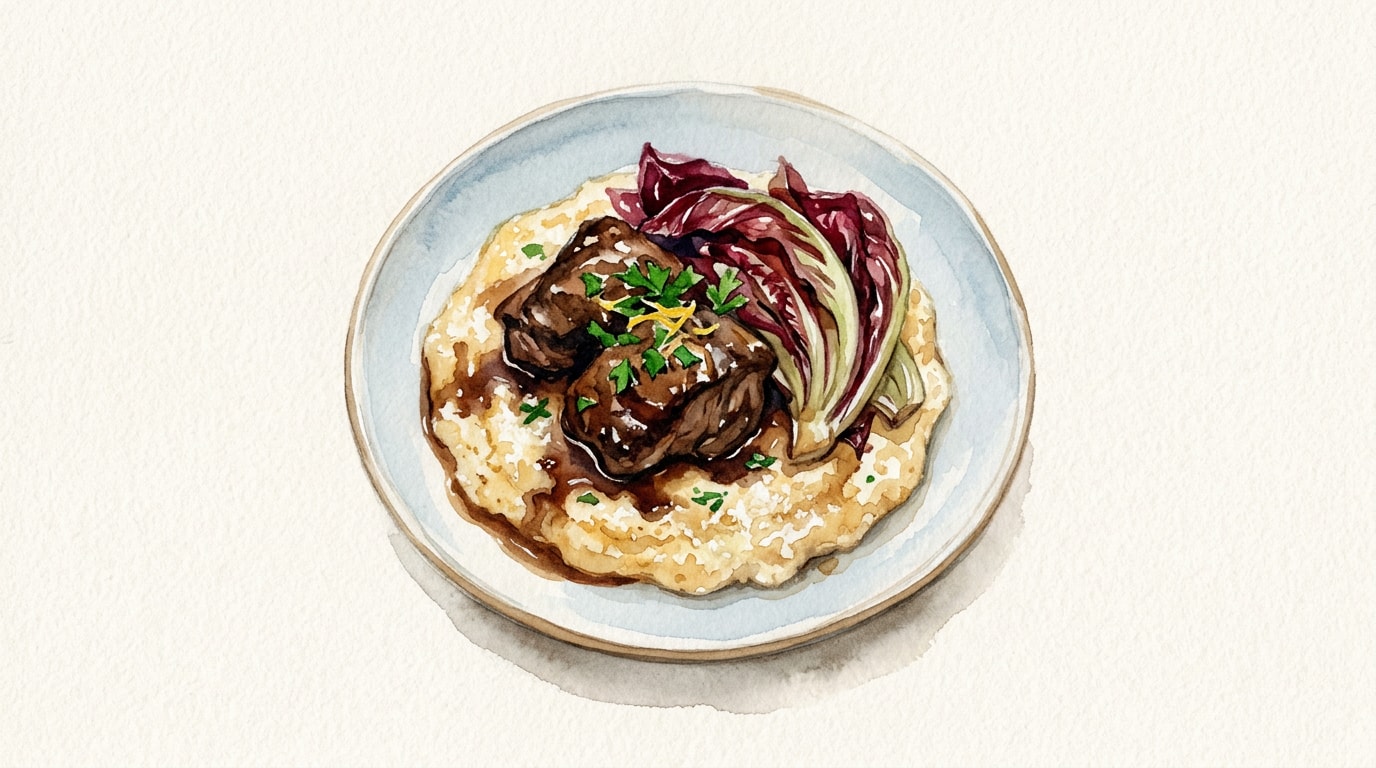
Spoon a generous bed of hot Parmesan polenta into wide, shallow bowls. Place two pork cheeks in the center, and generously spoon the glossy port reduction over the meat. Arrange a small handful of the dressed radicchio to the side.
Chef's Notes
- Iberico pork has an exceptionally high fat content, largely composed of heart-healthy oleic acid. Take care not to boil the braise violently, or the delicate fat structure will break and render the sauce greasy.
- Removing the silver skin from the cheeks is paramount. If left on, it acts as a rigid band that will cause the cheek to curl tightly during searing and block moisture absorption.
- Traditional polenta requires patience. Using a combination of milk and chicken stock instead of just water adds depth and a silken mouthfeel that pairs perfectly with the intense, savory glaze of the pork.
- The bitter profile of radicchio is non-negotiable here. The richness of the pork and the heavy dairy in the polenta desperately require an acidic, bitter counter-note to reset the palate between bites.
Storage
Refrigerator: 3 days — Store pork and polenta in separate airtight containers. Radicchio must be prepared fresh and does not keep once dressed.
Freezer: 3 months — Freeze the braised pork and sauce only. Polenta will become grainy and separate when frozen.
Reheating: Reheat pork cheeks gently in their sauce over low heat. Reheat polenta in a saucepan over medium-low heat, whisking in milk or water until the creamy texture is restored.