Equipment
Ingredients
Proteins
- 4 duck legs, whole, skin-on
- 100 g pancetta, diced
Aromatics and Produce
- 1 yellow onion, finely diced
- 1 carrot, finely diced
- 1 celery stalk, finely diced
- 3 garlic, minced
- 2 yellow peaches, peeled and diced
- 5 g fresh thyme, whole sprigs
Liquids and Pantry
- 150 ml dry white wine
- 500 ml chicken stock, low sodium preferred
- 1 cinnamon stick
- 400 g pappardelle pasta, dry
- salt
- black pepper
Nutrition (per serving)
Method
Preheat the oven to 160C/320F.
Place the duck legs skin-side down in a cold Dutch oven. Set over medium heat and sear until the fat renders and the skin is deeply browned, about 10 minutes. Flip and brown the other side for 2 minutes. Remove the duck and set aside. Wash hands and all surfaces thoroughly after handling the raw poultry.
Add the diced pancetta to the rendered duck fat in the Dutch oven. Sauté until crisp, about 5 minutes. Use a slotted spoon to remove the pancetta and set it aside, leaving the fat in the pot.
Add the diced onion, carrot, and celery to the hot fat. Cook until softened and beginning to brown, about 8 minutes. Add the minced garlic and cook for 1 additional minute until fragrant.
Pour in the white wine to deglaze the pot, scraping up any browned bits from the bottom with a wooden spoon. Simmer until the wine is reduced by half.
Return the duck legs to the pot. Add the chicken stock, cinnamon stick, and fresh thyme. Bring to a simmer, cover with a tight-fitting lid, and transfer to the preheated oven. Braise for 2 hours. The internal temperature of the duck will well exceed the safe poultry minimum of 74C/165F, ensuring it is perfectly cooked and tender.
Carefully remove the Dutch oven from the oven. Transfer the duck legs to a cutting board. Discard the skin and bones, and shred the meat using two forks.
Skim off the excess fat from the surface of the braising liquid. Remove and discard the cinnamon stick and thyme sprigs. Stir the diced peaches, crisp pancetta, and shredded duck meat into the liquid. Simmer gently on the stovetop for 10 minutes to reduce the sauce slightly and soften the peaches.
Bring a large pot of generously salted water to a boil. Cook the pappardelle pasta according to the package instructions until al dente, usually about 8 minutes. Drain the pasta using a colander, reserving a small cup of the pasta cooking water.
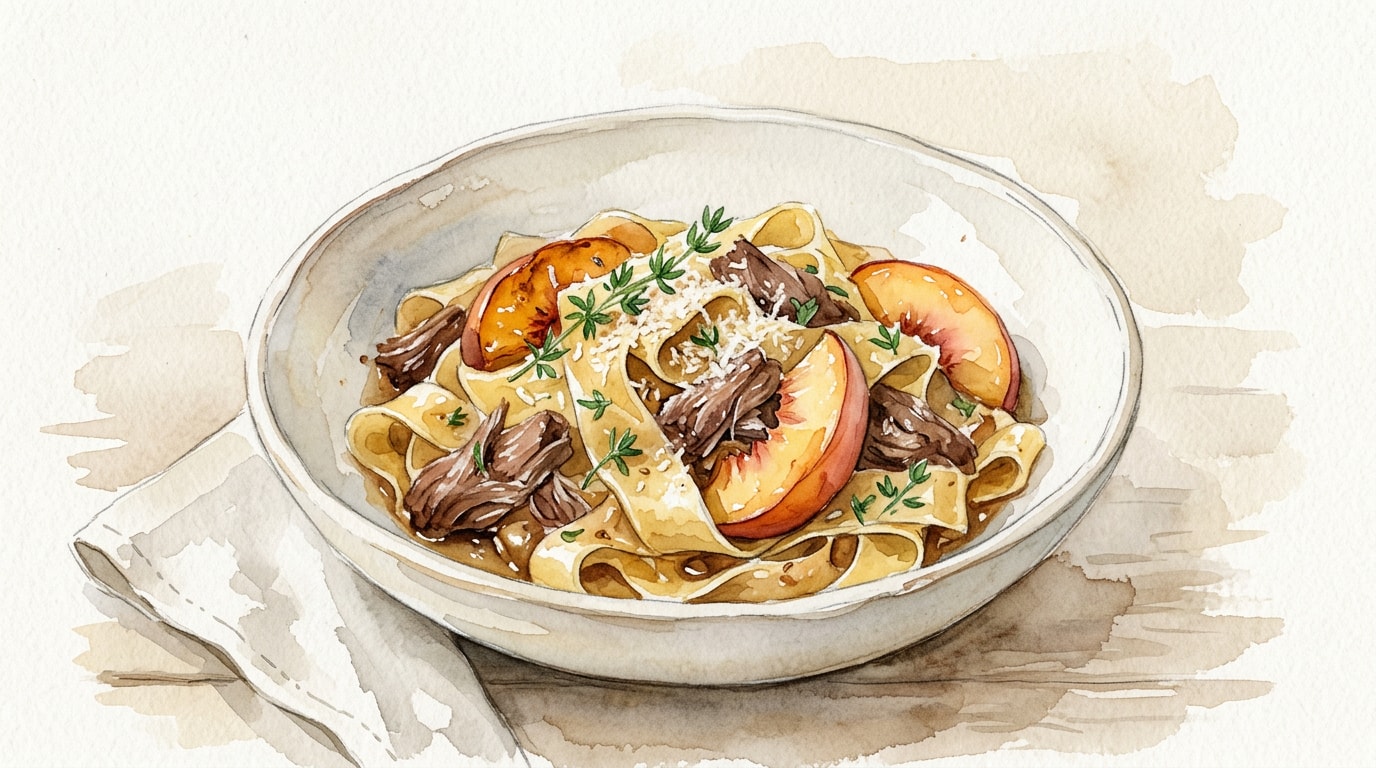
Add the cooked pappardelle to the duck and peach ragu. Gently mix to coat the pasta evenly in the rich sauce, adding a splash of the reserved pasta water if needed to achieve a glossy consistency. Season with salt and black pepper to taste, then serve immediately.
Chef's Notes
- Starting the duck legs in a cold pot is a crucial technique. It allows the fat under the skin to melt slowly and render out completely before the skin browns, preventing burning and yielding maximum cooking fat.
- The peaches introduce a beautiful floral sweetness that cuts through the richness of the duck and the saltiness of the pancetta. Ensure they are ripe but firm so they do not disintegrate into a mush during the final simmer.
- If you have the time, make the duck ragu a day in advance. Resting the sauce overnight in the refrigerator allows the complex notes of the cinnamon, duck, and wine to mature and harmonize. It also makes removing the solidified fat incredibly easy.
- Pappardelle is the ideal pasta for this dish because its wide, flat ribbons provide plenty of surface area for the rich, robust ragu to cling to.
Storage
Refrigerator: 3 days — Store the duck ragu separately from the pasta for best results.
Freezer: 3 months — Freeze the duck ragu only, without the pasta. Add fresh peaches upon reheating if desired.
Reheating: Reheat the sauce gently in a saucepan over medium heat, then toss with freshly boiled pasta.