Equipment
Ingredients
Beef and Searing
- 1000 g beef cheeks, excess fat and silver skin trimmed
- 15 g kosher salt
- 5 g black pepper, freshly ground
- 30 ml olive oil
Mirepoix and Aromatics
- 200 g yellow onion, roughly chopped
- 150 g carrot, peeled and roughly chopped
- 100 g celery, roughly chopped
- 15 g garlic, smashed
- 30 g tomato paste
Braising Liquids
- 375 ml dry red wine
- 100 ml madeira wine
- 500 ml beef stock
- 5 g fresh thyme, left on the sprig
- 2 bay leaves
Finishing
- 15 g fresh horseradish root, peeled
Nutrition (per serving)
Method
Pat the beef cheeks dry with paper towels. Season generously on all sides with the kosher salt and black pepper.
Preheat the oven to 150°C (300°F).
Heat the olive oil in a Dutch oven over medium-high heat. Sear the beef cheeks until a dark brown crust forms on all sides, about 8 to 10 minutes total. Remove the cheeks using tongs and set aside.
Reduce the heat to medium. Add the chopped onion, carrot, celery, and smashed garlic to the Dutch oven. Sauté until the vegetables are softened and lightly browned.
Stir in the tomato paste and cook, stirring constantly, to allow it to caramelize and slightly darken in color.
Pour in the Madeira wine and dry red wine to deglaze the pot. Scrape the bottom with a wooden spoon to release any browned bits. Simmer until the liquid is reduced by half.
Return the beef cheeks to the pot. Add the beef stock, fresh thyme, and bay leaves. Bring to a simmer, cover with a tight-fitting lid, and transfer to the preheated oven. Braise until the cheeks are completely fork-tender. For food safety, the meat must reach at least 74°C/165°F, but for the collagen to break down and become melt-in-your-mouth tender, it should reach an internal temperature of 90°C to 95°C (195°F to 205°F).
Carefully remove the beef cheeks from the pot with tongs and cover loosely to keep warm. Pour the remaining braising liquid through a fine mesh strainer into a saucepan, pressing gently to extract liquid, then discard the cooked vegetables and herbs.
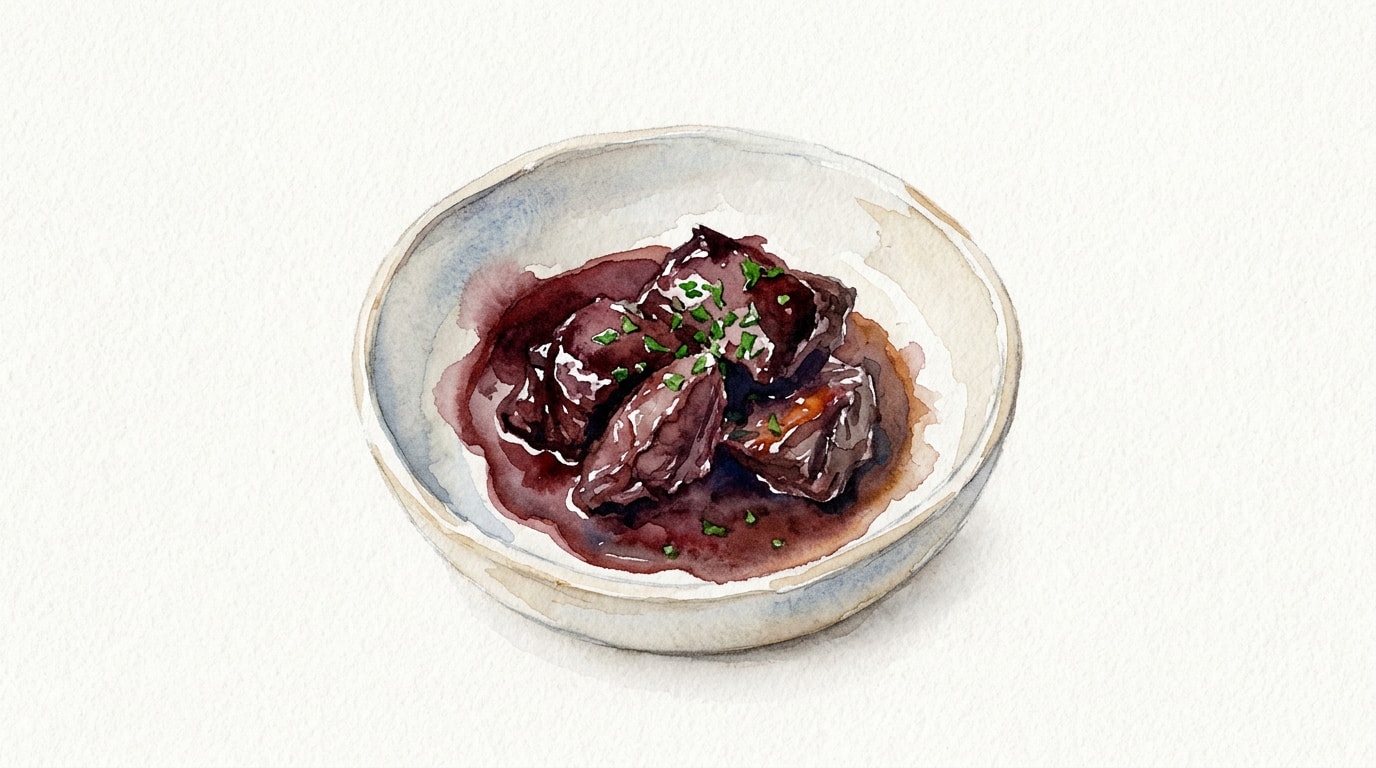
Skim off any excess fat from the surface of the strained liquid. Simmer the sauce over medium-high heat until it reduces to a rich, glossy glaze that coats the back of a spoon.
Place the warm beef cheeks in shallow bowls and generously spoon the reduced hot sauce over them. Use a fine grater to scatter the fresh horseradish evenly over the top right before serving.
Chef's Notes
- Do not rush the searing process. Establishing a deep, mahogany crust on the beef cheeks builds the foundational flavor profile for the entire braise.
- Removing the thick silver skin from the exterior of the cheeks is non-negotiable. While internal collagen melts beautifully, the external silverskin will remain tough and chewy.
- This dish is significantly better when made a day in advance. Chill the fully cooked dish overnight, easily peel the congealed fat from the surface the next day, and reheat gently. The flavors will be much deeper.
- Fresh horseradish root loses its sharp pungency very quickly once grated. Wait until the absolute last moment before serving to grate it over the hot dish so the aromatic oils bloom.
Storage
Refrigerator: 4 days — Flavors deepen significantly after 24 hours. Store in an airtight container.
Freezer: 3 months — Freeze the cheeks fully submerged in their sauce to prevent freezer burn.
Reheating: Reheat gently in a covered pot on the stovetop over low heat until simmering and heated all the way through.