Equipment
Ingredients
Ham and Braise
- 3000 g bone-in cured ham, whole
- 300 g yellow onion, quartered
- 200 g carrot, chopped roughly
- 150 g celery, chopped roughly
- 50 g garlic, halved horizontally across the cloves
- 10 g fresh thyme, whole sprigs
- 3 bay leaves
- 5 g black peppercorns, whole
- 1000 ml apple cider, unfiltered
- 1000 ml water
Glaze and Finish
- 100 g brown sugar, packed
- 50 g dijon mustard
- 30 ml apple cider vinegar
- 10 g whole cloves, for studding
Nutrition (per serving)
Method
Preheat your oven to 160°C/320°F.
Arrange the quartered onions, chopped carrots, celery, halved garlic, thyme sprigs, bay leaves, and black peppercorns in an even layer across the base of a large Dutch oven.
Place the whole cured ham gently on top of the aromatic vegetables. Pour the apple cider into the pot, then add enough water until the liquid comes about one-third of the way up the sides of the ham.
Cover the pot tightly with a lid and transfer to the oven. Braise for 2.5 hours, or until the internal temperature of the ham registers 60°C/140°F on a meat thermometer.
Remove the pot from the oven. Carefully transfer the braised ham to a cutting board and let it rest for 15 minutes to cool slightly. Increase the oven temperature to 220°C/430°F.
While the ham rests, whisk the brown sugar, Dijon mustard, and apple cider vinegar together in a small mixing bowl until completely smooth.
Using a sharp chef's knife, carefully slide the blade under the thick skin of the ham and peel it away, ensuring you leave an even layer of fat behind.
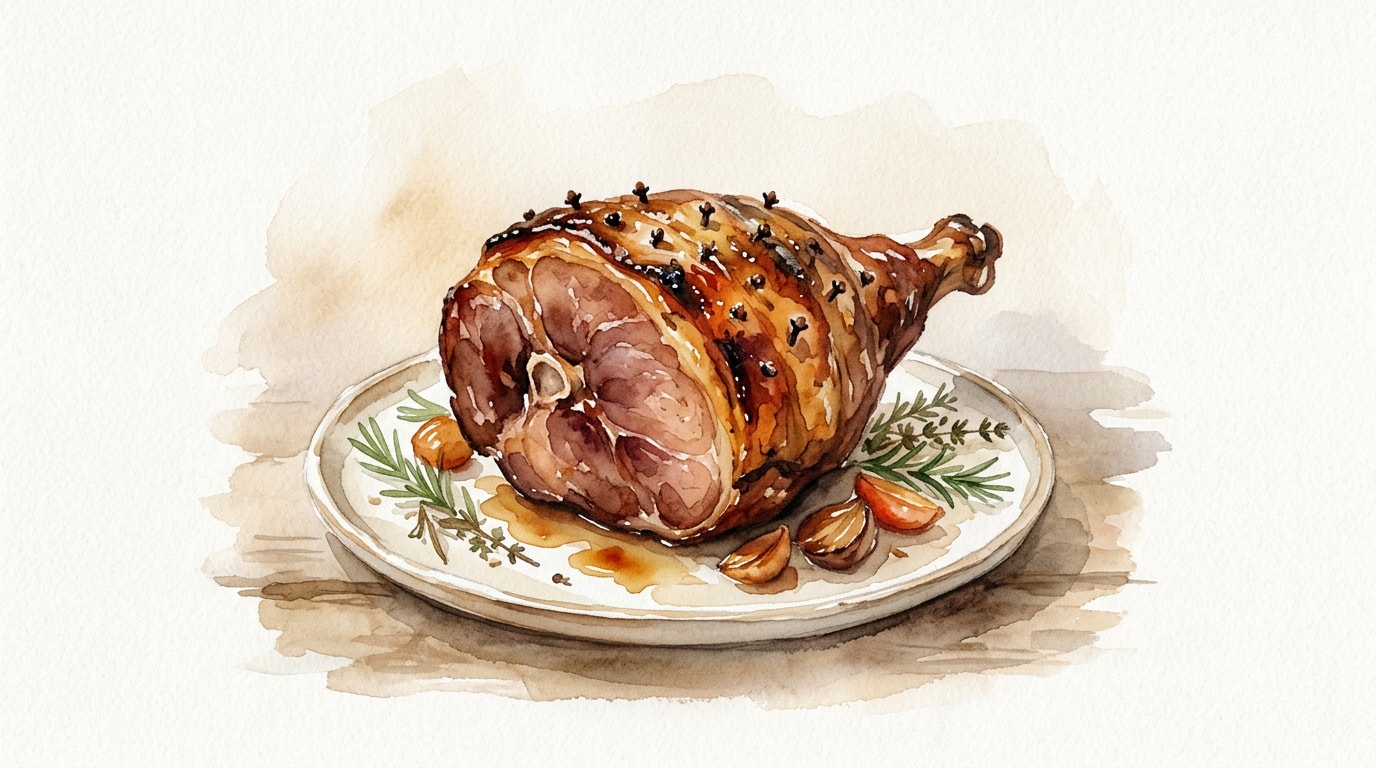
Score the exposed fat in a crisscross diamond pattern, cutting lightly without piercing the actual meat. Press a whole clove firmly into the center of each diamond.
Using a pastry brush, slather half of the mustard and sugar glaze evenly over the scored surface of the ham.
Transfer the glazed ham to a clean roasting pan and place it uncovered in the hot oven. Roast for 10 minutes.
Carefully remove the ham from the oven, brush with the remaining glaze, and return it to roast for a final 10 to 15 minutes. The exterior should be dark, blistered, and crispy, and the final internal temperature must reach at least 65°C/150°F.
Move the finished ham to a serving board, tent it loosely with foil, and let it rest for 20 minutes before carving and serving.
Chef's Notes
- Do not discard the intensely flavorful braising liquid. Strain it, let the fat separate, and use the remaining broth as a phenomenal base for split pea or lentil soups.
- If your cured ham is known to be aggressively salty, submerge it in a large pot of cold water for 12 to 24 hours before cooking, changing the water once, to extract excess salinity.
- Scoring the fat is crucial not just for aesthetics, but because it creates pathways for the rendering fat to self-baste the ham while providing textured edges for the sweet glaze to cling onto and caramelize.
- Always use a meat thermometer. Even though cured hams are technically pre-cooked and safe, bringing the core temperature to 65°C/150°F ensures the internal fat layers have properly rendered, resulting in a much more succulent texture.
Storage
Refrigerator: 4 days — Wrap tightly in foil or store in an airtight container.
Freezer: 2 months — Slice before freezing. Freeze in airtight bags with a little braising liquid to maintain moisture.
Reheating: Gently reheat slices in a low oven (150C/300F) covered with foil, adding a splash of leftover braising liquid or water to prevent drying out.