Equipment
* optional
Ingredients
Aioli
- 4 garlic cloves, peeled and germ removed
- 3 g coarse sea salt
- 3 egg yolks, room temperature
- 250 ml extra virgin olive oil, high quality, fruity
- 10 ml lemon juice, freshly squeezed
Stew Base
- 1000 g monkfish tail, membranes removed, cut into 5cm chunks
- 500 g waxy potatoes, peeled and sliced 1cm thick
- 30 ml olive oil
- 150 g white onion, finely chopped
- 150 g leek, white and light green parts only, sliced
- 200 ml dry white wine
- 600 ml fish stock, hot
- 1 bouquet garni
Nutrition (per serving)
Method
In a mortar, crush the garlic cloves with the coarse sea salt until a smooth paste forms. Add the egg yolks and whisk to combine. Very slowly, drop by drop at first, whisk in the 250ml of olive oil to form a thick emulsion. Once thick, whisk in the lemon juice. Set aside.
Heat 30ml of olive oil in a heavy-bottomed pot over medium heat. Add the chopped onion and leek. Sweat gently until translucent but not browned.
Pour in the dry white wine to deglaze the pot, scraping up any fond. Allow the wine to reduce by half.
Add the hot fish stock and the bouquet garni. Bring to a gentle simmer. Add the sliced potatoes, cover, and cook until the potatoes are just tender.
Season the monkfish chunks lightly with salt and place them into the simmering broth. Poach gently until the fish is opaque and firm. Ensure the internal temperature of the fish reaches 63°C/145°F.
Using a slotted spoon, carefully transfer the cooked monkfish and potatoes to a warm serving platter. Discard the bouquet garni. Keep the remaining broth warm over very low heat.
Place half of the reserved aioli into a medium bowl. Gradually whisk in a ladle of the hot broth to temper the egg yolks, preventing them from scrambling.
Pour the tempered aioli mixture back into the pot of broth over the lowest possible heat. Whisk continuously until the sauce thickens and coats the back of a spoon. Do not let the temperature exceed 75°C/167°F or the sauce will curdle.
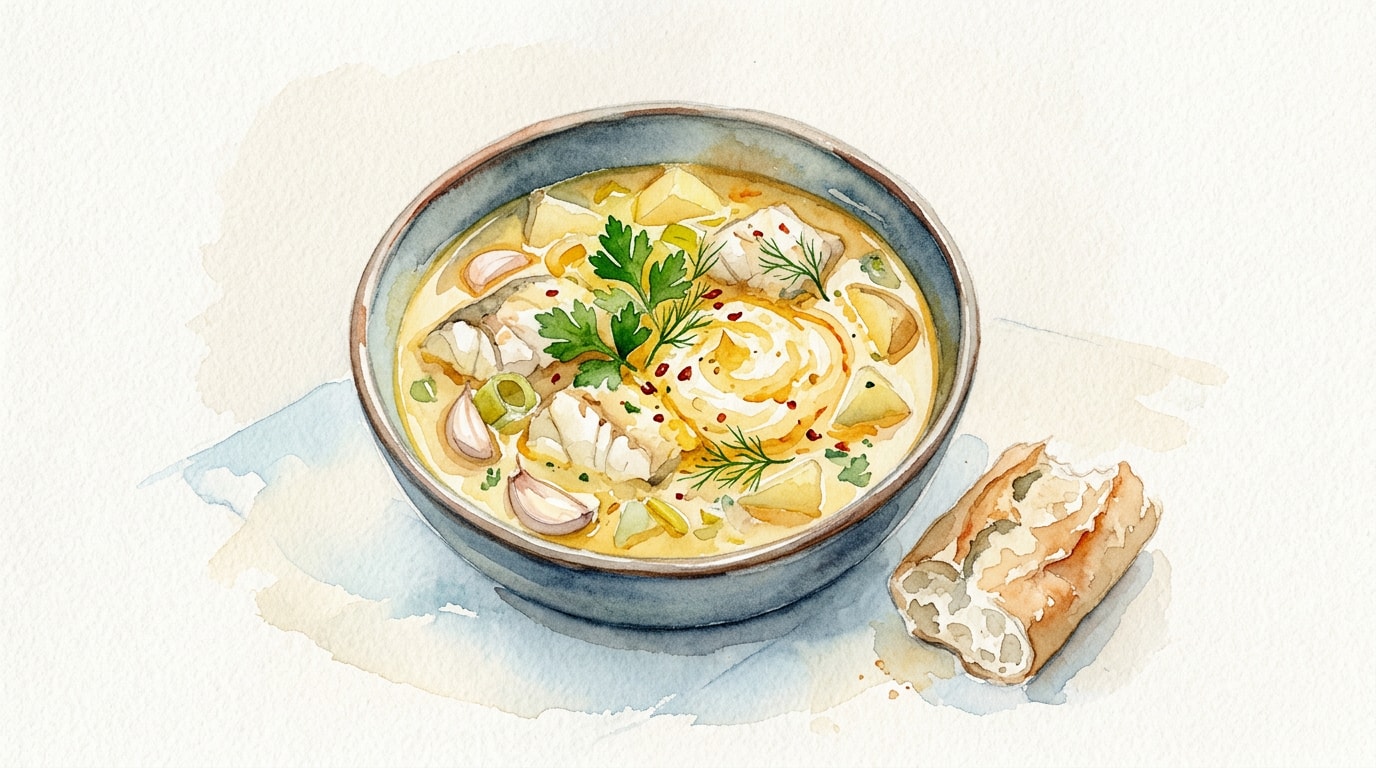
Pour the thickened, velvety sauce generously over the reserved monkfish and potatoes. Serve immediately alongside the remaining aioli and toasted bread.
Chef's Notes
- Monkfish has a tough exterior membrane that will shrink and curl during cooking. Ask your fishmonger to thoroughly clean the tail, or take the time to slip your knife under the bluish skin and peel it away before portioning.
- The secret to a stable aioli is patience and temperature. If your kitchen is cold, warming your mortar slightly with hot water (then drying it thoroughly) before starting can help the emulsion form.
- When thickening the final sauce, treat it exactly like a creme anglaise. Use a wooden spoon or spatula to stir, constantly scraping the bottom of the pot, and pull it off the heat the moment it thickens.
- Do not skip the dried orange peel in the bouquet garni. The subtle citrus oil cuts through the richness of the garlic and egg yolks, brightening the entire profile of the stew.
Storage
Refrigerator: 1 day — Store fish and broth separately if possible. Reheat over very low heat to prevent the emulsion from breaking.