Equipment
Ingredients
Bumbu Halus (Spice Paste)
- 150 g shallots, peeled and roughly chopped
- 30 g garlic, peeled
- 50 g long red chilies, seeds removed, roughly chopped
- 20 g ginger, peeled and sliced
- 20 g galangal, peeled and sliced
- 10 g fresh turmeric, peeled
- 25 g candlenuts
- 5 g coriander seeds, toasted
- 50 ml water
Main Ingredients
- 1000 g beef chuck, cut into 4cm cubes
- 800 ml coconut milk, full fat, do not shake before opening
- 3 lemongrass, bruised and tied into knots
- 5 makrut lime leaves, bruised
- 20 g galangal, whole piece, heavily bruised
- 10 g tamarind paste
- 15 g coconut sugar
- 10 g kosher salt
Flavor Enhancers
- 30 g desiccated coconut, dry-toasted until dark brown and pounded into an oily paste
Nutrition (per serving)
Method
Place the shallots, garlic, chilies, ginger, galangal, turmeric, candlenuts, coriander seeds, and water into a food processor. Blend until a completely smooth paste is formed.
Transfer the spice paste to a heavy-bottomed pot over medium heat. Sauté the paste for about 5 minutes, stirring continuously, until the raw aroma dissipates and the color slightly deepens.
Add the beef chuck, coconut milk, lemongrass stalks, makrut lime leaves, bruised whole galangal, tamarind paste, coconut sugar, and salt to the pot. Stir well to coat the meat and bring the mixture to a gentle boil over medium heat.
Reduce the heat to low. Simmer the curry gently, uncovered, for about 2 hours. Stir occasionally to prevent sticking. This initial liquid phase is traditionally known as gulai.
As the liquid heavily reduces, the coconut oil will begin to separate from the milk, transitioning the dish into the thickened kalio phase. Stir in the toasted coconut paste (kerisik) if using.
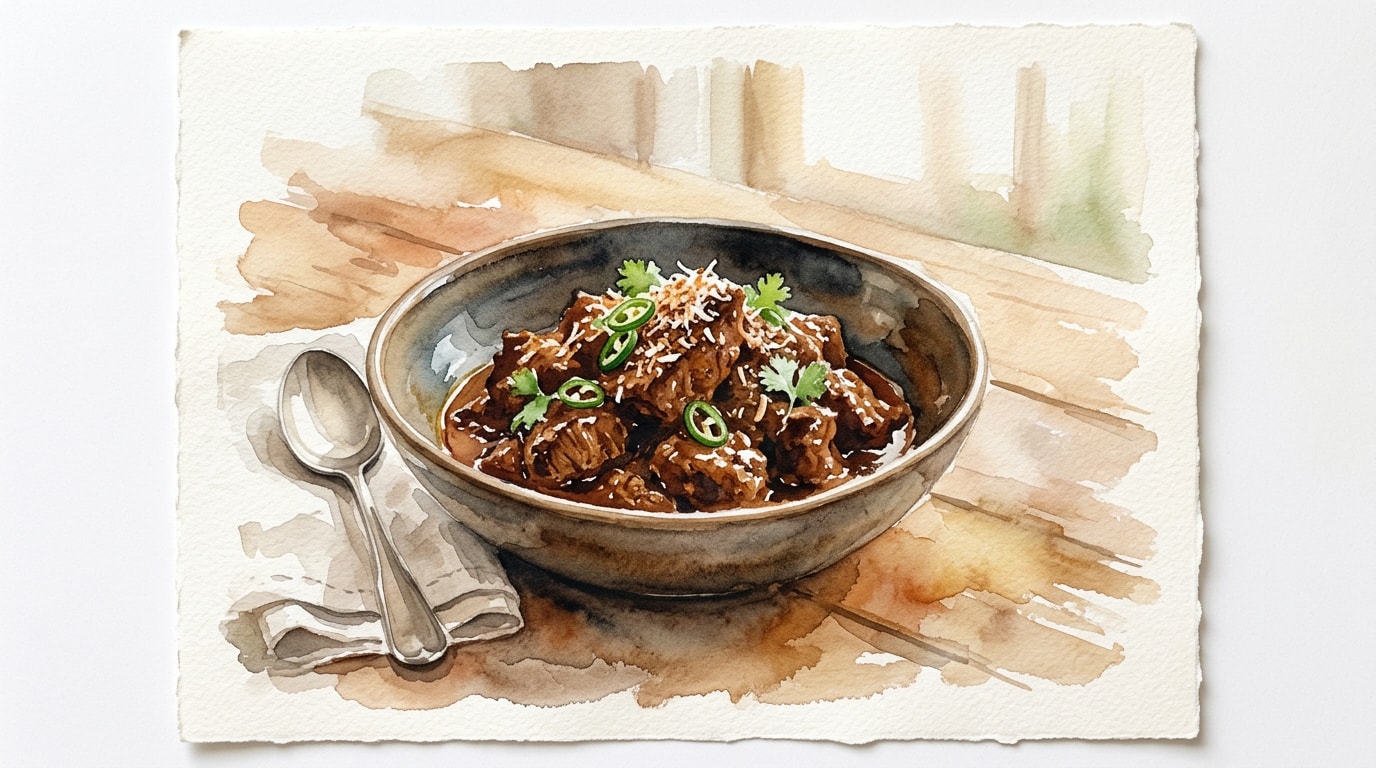
Lower the heat to the absolute minimum. The liquid will evaporate entirely, leaving only the spiced coconut oil. The beef will now essentially fry in this oil. Stir continuously for 30 to 45 minutes, scraping the bottom of the pot to caramelize the meat and spices to a dark, rich brown without burning.
Remove the pot from the heat. Allow the rendang to rest for at least 30 minutes. The excess oil can be skimmed off if desired. Pick out and discard the whole lemongrass, lime leaves, and galangal pieces before serving.
Chef's Notes
- The cooking process of authentic rendang moves through three distinct, critical phases: Gulai (a soupy liquid curry), Kalio (a thickened gravy with separating oil), and finally Rendang (dry, dark, and intensely caramelized). Patience is essential; do not stop at the Kalio stage.
- Using full-fat, pure coconut milk is non-negotiable. The entire cooking technique relies on the natural coconut fat separating from the water content to effectively fry and preserve the beef at the end.
- Kerisik (toasted, pounded grated coconut) adds a signature nutty depth and helps absorb excess oil to create the characteristic dry crust. While omitted in some modern shortcuts, it is vital for an authentic flavor profile.
- Rendang famously tastes significantly better the next day. As the dish cools and rests, the complex array of spices continues to permeate the beef.
Storage
Refrigerator: 1 week — Store in an airtight container. The flavor significantly improves after 24 hours.
Freezer: 3 months — Freeze in portions. Thaw overnight in the refrigerator before reheating.
Reheating: Reheat gently in a pan over low heat until warmed through, adding a small splash of water if the oil has completely solidified.