Equipment
Ingredients
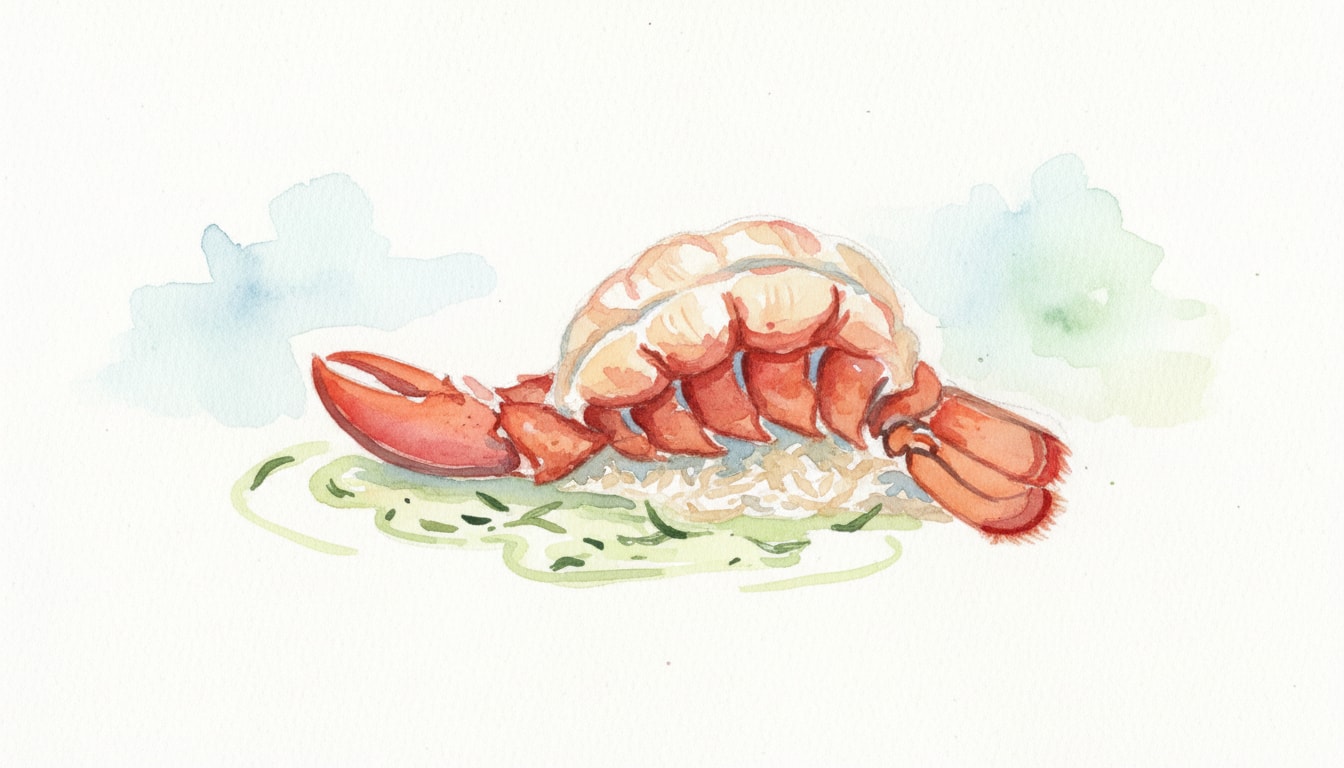
Lobster
- 2 whole lobster, raw or live
- 30 g unsalted butter, melted
- salt
- white pepper
Tarragon Cream Sauce
- 250 ml heavy cream
- 60 ml dry white wine
- 1 shallot, finely minced
- 15 g unsalted butter
- 1 garlic, minced
- 10 g fresh tarragon leaves, chopped
- 10 ml lemon juice
- 5 g dijon mustard
Nutrition (per serving)
Method
Preheat your oven to 220°C (425°F). Ensure the rack is in the center position.
Place the lobsters on a stable cutting board. Using a sharp, heavy knife, split them in half lengthwise from head to tail. Remove the stomach sac (behind the eyes) and the intestinal tract (running down the tail). Crack the claws slightly with the back of the knife to help heat penetrate.
Place lobster halves shell-side down on a baking sheet. Brush the exposed meat with 30g melted butter and season lightly with salt and white pepper.
Bake the lobsters for 8-10 minutes, until the shell turns bright red and the meat is opaque but slightly underdone in the center. (Target internal temp approx 55°C/130°F at this stage).
While lobsters bake, prepare the sauce. In a saucepan over medium heat, melt 15g butter. Add minced shallots and sauté for 2 minutes until translucent but not browned. Add garlic and cook for another 30 seconds.
Deglaze the pan with white wine. Simmer rapidly until the liquid reduces by half.
Pour in the heavy cream. Reduce heat to low and simmer gently for 5-7 minutes until the sauce thickens slightly and coats the back of a spoon. Whisk in the Dijon mustard (if using), lemon juice, and chopped tarragon. Season with salt to taste.
Remove lobsters from the oven. Spoon the tarragon cream sauce generously over the tail meat and into the head cavity. Return to the oven for 2-3 minutes to warm through and meld flavors. Final internal temperature should reach 63°C (145°F).
Serve immediately, garnished with extra fresh tarragon sprigs if desired.
Chef's Notes
- Always use fresh tarragon for this dish; dried tarragon has a dusty flavor that dulls the delicate sweetness of the lobster.
- Do not boil the sauce aggressively after adding the lemon juice, as the acidity combined with high heat can sometimes cause the cream to curdle or look grainy.
- If the lobsters are very large, you can remove the claw meat halfway through cooking and add it to the sauce to prevent the tails from drying out while the claws finish.
- A dry, acidic white wine like Muscadet or Sauvignon Blanc works best to cut through the richness of the heavy cream.
Storage
Refrigerator: 1 day — Seafood degrades quickly; best consumed immediately. Reheat gently to avoid rubbery texture.
Reheating: Gently warm in a saucepan over low heat or in a 150°C oven, covered, just until warm.