Equipment
Ingredients
Homemade Red Curry Paste
- 15 g dried long red chilies, deseeded and soaked in warm water
- 5 g coarse salt
- 30 g lemongrass, tender bottom third only, finely sliced
- 15 g galangal, peeled and finely chopped
- 2 g makrut lime leaves, center vein removed, finely shredded
- 10 g cilantro roots, cleaned and chopped
- 40 g shallots, peeled and chopped
- 20 g garlic, peeled and chopped
- 10 g shrimp paste
- 3 g coriander seeds
- 2 g cumin seeds
- 2 g white peppercorns
The Curry
- 600 g beef chuck, cut into 4cm pieces
- 400 ml coconut milk, full fat, unstirred
- 250 ml beef broth
- 150 g bamboo shoots, canned, drained and sliced
- 20 g palm sugar, finely chopped
- 30 ml fish sauce
- 2 g makrut lime leaves, lightly bruised and torn
- 10 g fresh red chilies, diagonally sliced
- 15 g thai basil leaves, picked from stems
Nutrition (per serving)
Method
Drain the soaked dried chilies, reserving a small amount of the soaking liquid.
In a dry small skillet over medium heat, toast the coriander seeds, cumin seeds, and white peppercorns until deeply fragrant, about 2 minutes. Transfer to a mortar and pestle and grind to a fine powder, then remove and set aside.
In the mortar, pound the drained chilies and coarse salt into a fine paste. Add the remaining paste ingredients one by one in this strict order: lemongrass, galangal, lime leaves, cilantro roots, shallots, and garlic. Pound each ingredient until completely integrated before adding the next. Finally, stir in the ground dry spices and shrimp paste.
Spoon the thick cream from the top of the unstirred coconut milk into a heavy-bottomed pot. Heat over medium-high until the cream reduces, bubbles vigorously, and the oil begins to separate from the solids.
Add the homemade red curry paste to the cracked coconut cream. Sauté constantly until the paste is cooked through, deeply fragrant, and the oil takes on a bright red hue.
Add the beef chuck pieces to the pot, tossing well to coat the meat entirely in the fried curry paste. Cook until the exterior of the beef is no longer raw.
Pour in the remaining thinner coconut milk and the beef broth. Bring to a gentle boil, then immediately reduce the heat to low. Cover partially and gently braise until the meat is completely tender. Maintain a temperature just below boiling to break down the connective tissue (target internal temperature around 90°C/195°F for the beef).
Once the beef is tender, stir in the sliced bamboo shoots, palm sugar, fish sauce, and torn makrut lime leaves. Simmer for an additional 5 minutes to heat the bamboo shoots and meld the flavors.
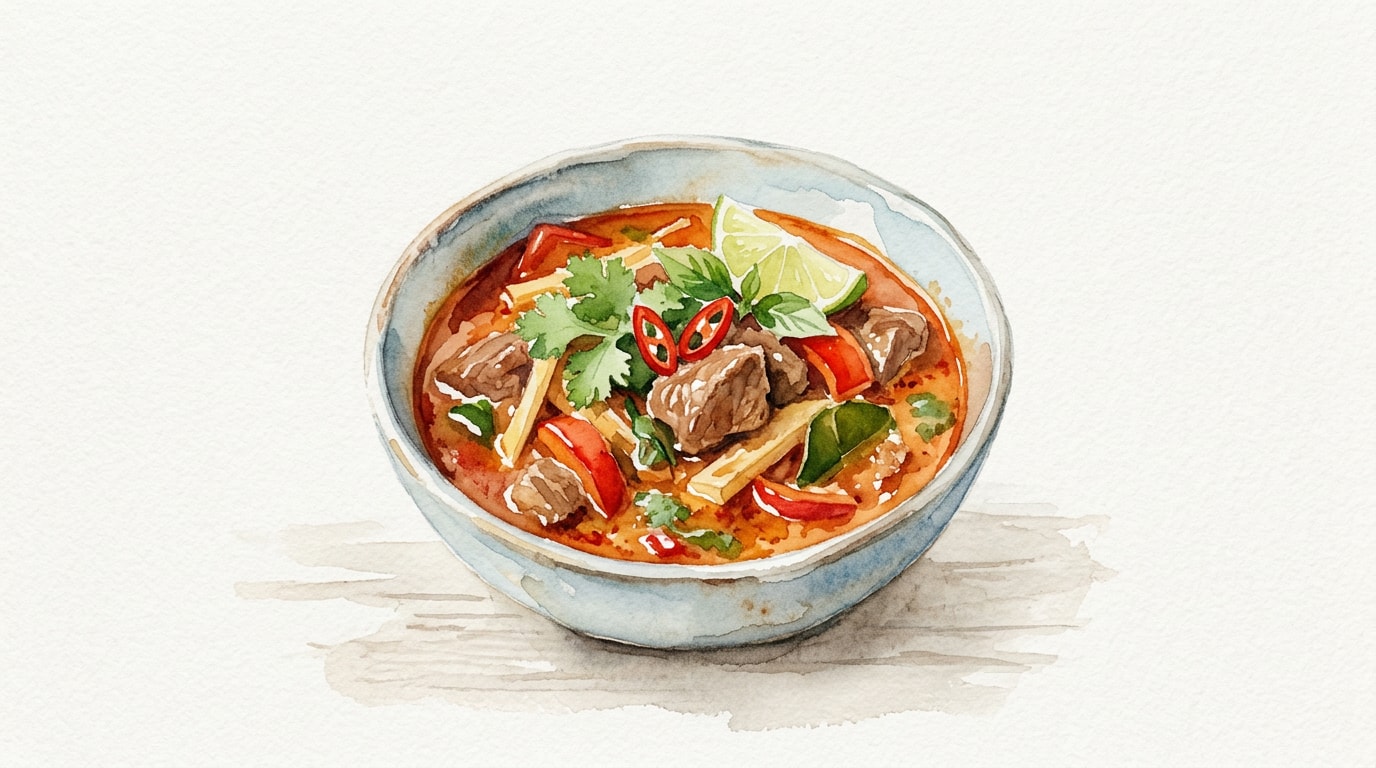
Remove the pot from the heat. Stir in half of the Thai basil leaves. Transfer the curry to a serving bowl and garnish with the remaining Thai basil and freshly sliced red chilies. Serve immediately with jasmine rice.
Chef's Notes
- Cracking the coconut cream is a foundational Thai cooking technique. It acts as both the cooking fat to bloom the spices and a flavor enhancer. Emulsifier-free coconut milk is essential for this step.
- Using a granite mortar and pestle crushes the cell walls of the aromatics, releasing essential oils that a food processor's sharp blades simply chop past. The flavor difference is profound.
- Palm sugar discs can be very hard. Microwave them for 10-15 seconds to soften before chopping, or use a microplane to grate them directly into the pot.
- Always adjust the final seasoning (fish sauce and sugar) at the very end. The braising process concentrates flavors, and the saltiness of shrimp paste varies heavily by brand.
- Tearing the makrut lime leaves rather than slicing them helps release their volatile aromatic oils directly into the simmering broth.
Storage
Refrigerator: 4 days — Store in an airtight container. The flavors will deepen and improve overnight.
Freezer: 3 months — Freeze without the fresh basil garnish. Bamboo shoots may change texture slightly upon thawing.
Reheating: Reheat gently on the stovetop over medium-low heat until simmering.