Equipment
Ingredients
Protein
- 400 g beef flank steak, sliced thinly against the grain
Aromatics and Base
- 15 ml coconut oil, melted
- 50 g thai red curry paste
Liquids and Seasonings
- 400 ml full-fat coconut milk, shaken well before opening
- 30 ml fish sauce
- 15 g palm sugar, finely chopped
Vegetables and Herbs
- 150 g red bell pepper, sliced into thin strips
- 100 g bamboo shoots, drained and rinsed
- 100 g snow peas, ends trimmed
- 4 makrut lime leaves, center vein removed and lightly bruised
- 20 g thai basil, leaves picked from stems
Nutrition (per serving)
Method
Place the beef flank steak on the cutting board and slice it thinly against the grain to ensure tenderness. Wash your hands, knife, and cutting board thoroughly with hot soapy water after handling the raw meat to prevent cross-contamination.
Heat the coconut oil in a wok over medium heat. Add the Thai red curry paste and fry constantly until it becomes highly aromatic and the oils begin to separate from the paste.
Add the sliced beef to the wok and stir-fry with the curry paste until the meat is browned on the outside.
Pour the full-fat coconut milk into the wok, stirring constantly with a wooden spoon to deglaze the pan and dissolve the curry paste. Add the fish sauce, chopped palm sugar, and bruised makrut lime leaves.
Bring the liquid to a gentle bubble, then immediately reduce the heat to low. Let the curry simmer gently until the beef is tender and has reached a minimum safe internal temperature of 63°C/145°F.
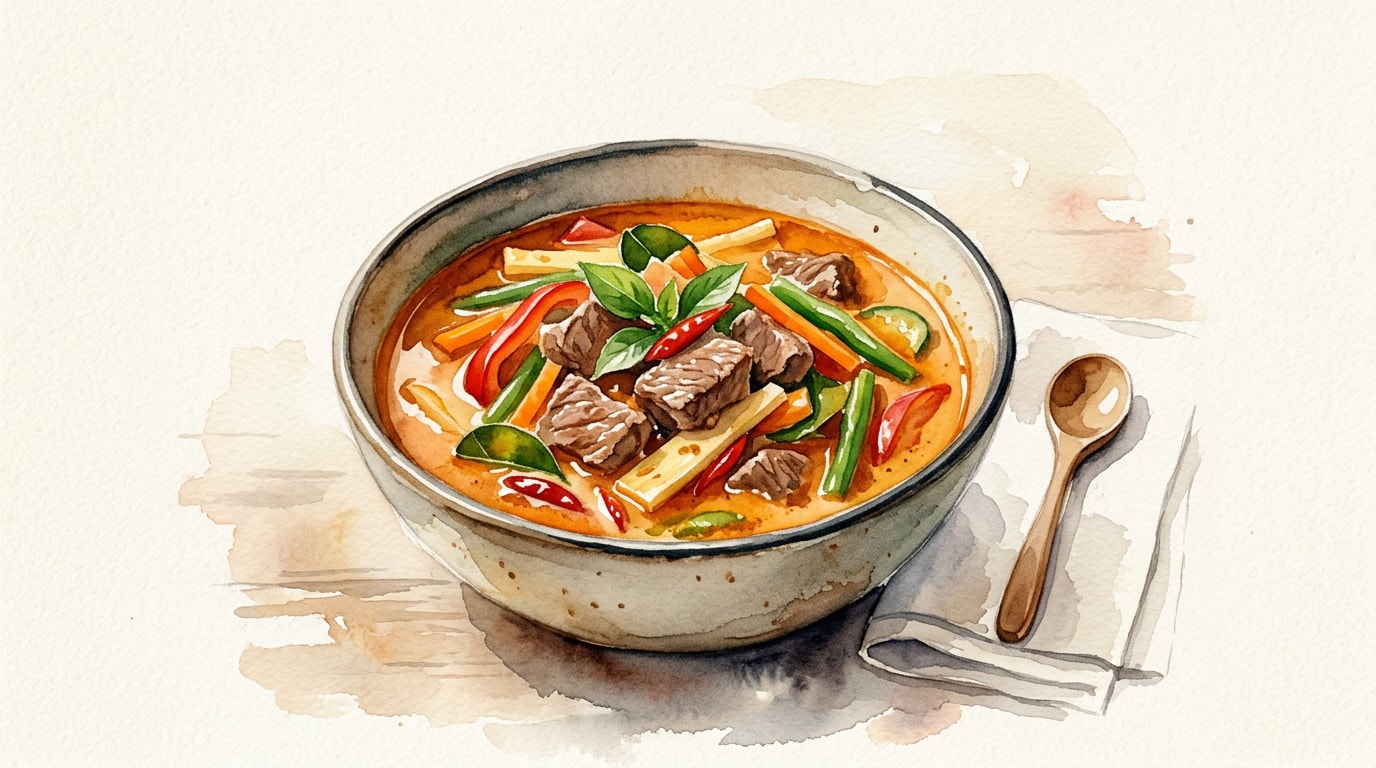
Stir the sliced red bell pepper, drained bamboo shoots, and trimmed snow peas into the simmering curry. Cook until the vegetables are vibrant and tender-crisp.
Remove the wok from the heat. Gently fold in the fresh Thai basil leaves until they are just wilted by the residual heat of the broth. Serve immediately with steamed jasmine rice.
Chef's Notes
- Cracking the coconut cream is a foundational Thai cooking technique. If using a high-quality coconut milk without emulsifiers, you can scoop the thick cream from the top of the can and fry the curry paste directly in that instead of using coconut oil.
- Bruising the makrut lime leaves by tearing them slightly or crushing them lightly in your hand helps release their essential oils, contributing a highly aromatic citrus note that defines this dish.
- Always taste your curry before serving. Thai cuisine relies on the balance of salty, sweet, sour, and spicy. Adjust fish sauce and palm sugar dynamically depending on the saltiness of your specific brand of curry paste.
Storage
Refrigerator: 3 days — Store in an airtight container. The flavors will deepen overnight.
Freezer: 1 month — Vegetables like snow peas and bell peppers will lose their crunch upon thawing. Add fresh vegetables when reheating if desired.
Reheating: Reheat gently on the stovetop over medium-low heat to prevent the coconut milk from splitting heavily.