Equipment
Ingredients
Dry Spices for Paste
- 4 g coriander seeds
- 2 g cumin seeds
- 2 g white peppercorns
Fresh Aromatics for Paste
- 15 g green bird's eye chilies, stemmed and roughly chopped
- 30 g lemongrass, bottom third only, thinly sliced
- 15 g galangal, peeled and finely chopped
- 15 g garlic, peeled
- 30 g shallots, peeled and chopped
- 10 g cilantro roots, cleaned and chopped
- 2 g makrut lime leaves, finely julienned
- 5 g shrimp paste
- 3 g kosher salt
Curry
- 400 g chicken thighs, boneless, skinless, cut into bite-sized pieces
- 400 ml coconut milk, full-fat, unstirred
- 120 ml chicken stock, unsalted or low sodium
- 15 g palm sugar, finely chopped
- 30 ml fish sauce
- 150 g thai eggplants, quartered
- 100 g bamboo shoots, sliced and drained
- 20 g thai basil leaves, picked from stems
- 10 g red spur chili, thinly sliced on a bias
Nutrition (per serving)
Method
Place a small frying pan over medium heat. Add the coriander seeds, cumin seeds, and white peppercorns. Toast for 2 to 3 minutes until highly fragrant. Remove from heat and let cool slightly.
Transfer the toasted spices to a mortar and pestle. Grind into a fine powder, then remove and set aside.
In the same mortar, pound the chilies and salt into a rough paste. Add the lemongrass, galangal, cilantro roots, and makrut lime leaves, pounding until smooth. Add the garlic and shallots, pounding again until completely integrated. Finally, stir in the ground dry spices and shrimp paste until a uniform green paste forms.
Scoop out 100ml of the thickest cream from the top of the unstirred coconut milk. Place this coconut cream in a wok over medium-high heat. Cook for 3 to 5 minutes until the water evaporates and the coconut oil begins to separate from the white solids.
Add the freshly pounded green curry paste to the wok with the separated coconut cream. Fry the paste in the coconut oil for 2 to 3 minutes until extremely fragrant and the raw smell of the aromatics cooks off.
Add the chopped chicken thighs to the wok. Toss to coat the chicken entirely in the aromatic curry paste and cook for 2 minutes until the exterior turns opaque.
Pour in the remaining coconut milk and the chicken stock. Bring to a gentle boil, then reduce the heat and simmer for 10 minutes until the chicken reaches a safe internal temperature of 74 C / 165 F.
Add the quartered Thai eggplants, bamboo shoots, palm sugar, and fish sauce. Stir gently and continue to simmer for an additional 4 to 5 minutes until the eggplants are tender but still hold their shape.
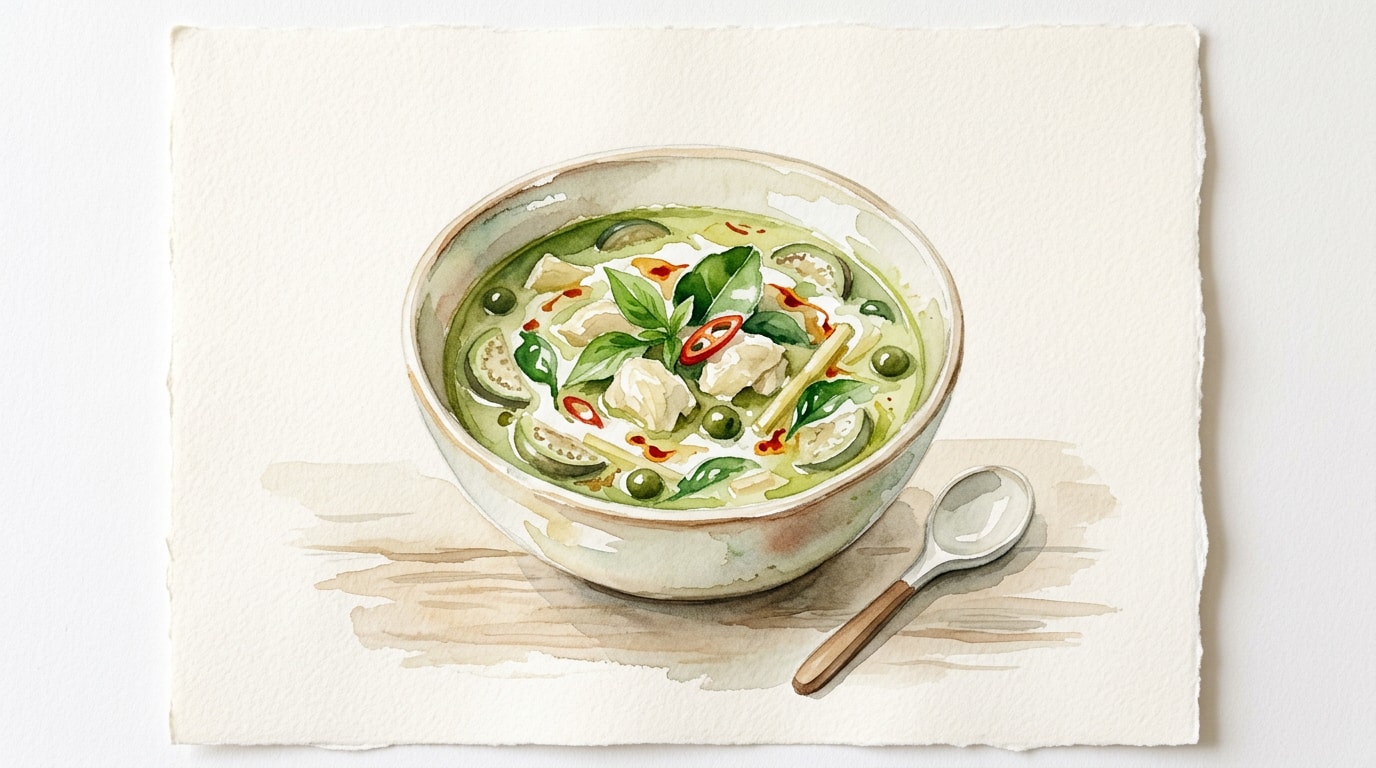
Turn off the heat. Stir in the Thai basil leaves and the sliced red spur chili. The residual heat will instantly wilt the basil and release its anise-like aroma. Serve immediately with steamed jasmine rice.
Chef's Notes
- Pounding the paste in a mortar and pestle breaks down the cell walls of the herbs differently than the sheer slicing force of a food processor, resulting in a more profound extraction of essential oils.
- Cracking the coconut cream is an authentic and essential Thai technique. Frying the fresh paste in the natural coconut fat unlocks fat-soluble flavor compounds and yields the characteristic oily sheen on the surface of the finished curry.
- Toasting the whole dry spices immediately before grinding provides a vastly superior flavor compared to using pre-ground spices.
- If cilantro roots are unavailable, use the thickest, lowest parts of the cilantro stems. They contain the highest concentration of flavor and aroma compared to the leaves.
Storage
Refrigerator: 4 days — Store in an airtight container. The flavors will deepen overnight.
Freezer: 1 month — Eggplants and bamboo shoots may soften significantly upon thawing.
Reheating: Reheat gently on the stovetop over medium-low heat until thoroughly warmed, avoiding boiling to prevent the coconut milk from separating further.