Equipment
Ingredients
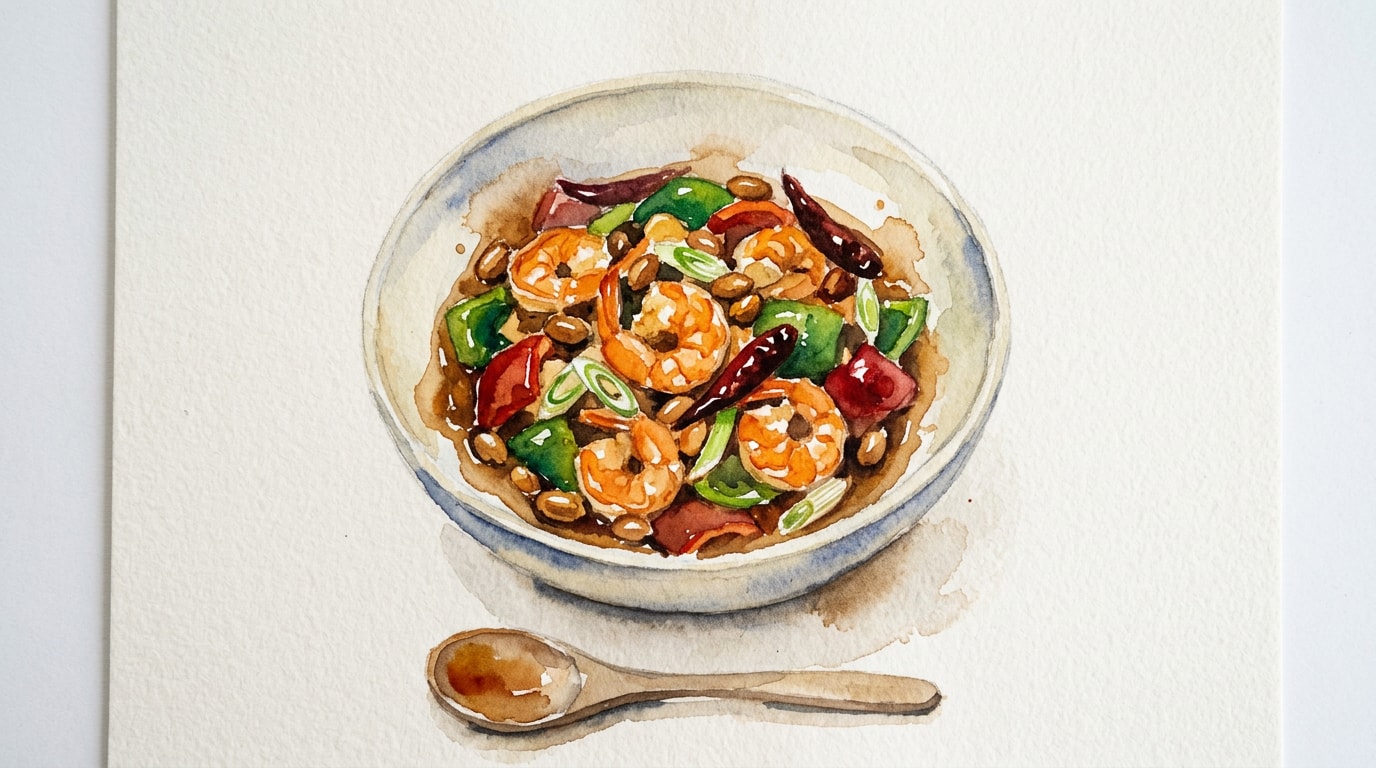
Shrimp and Marinade
- 450 g large shrimp, peeled, deveined, and patted dry
- 15 ml light soy sauce
- 15 ml shaoxing wine
- 5 g cornstarch
Kung Pao Sauce
- 45 ml chicken broth
- 30 ml light soy sauce
- 15 ml dark soy sauce
- 15 ml chinkiang vinegar, Chinese black vinegar
- 15 g granulated sugar
- 5 g cornstarch
- 5 ml sesame oil, toasted
Stir-Fry Components
- 30 ml vegetable oil, divided use
- dried red chiles, cut in half, seeds removed
- garlic, minced
- 10 g ginger, minced
- red bell pepper, diced into 2cm cubes
- green bell pepper, diced into 2cm cubes
- 50 g roasted unsalted peanuts
- scallions, sliced thinly on the bias
Nutrition (per serving)
Method
Place the patted-dry shrimp in a mixing bowl. Add the light soy sauce, Shaoxing wine, and cornstarch. Toss thoroughly to coat, then let marinate at room temperature for 10 minutes.
In a separate small bowl, whisk together the chicken broth, light soy sauce, dark soy sauce, Chinkiang vinegar, sugar, cornstarch, and sesame oil. Stir until the sugar and cornstarch are completely dissolved.
Heat a wok or large heavy-bottomed skillet over high heat until lightly smoking. Swirl in half of the vegetable oil (15ml). Add the marinated shrimp in a single layer. Sear for 1 to 2 minutes until they turn pink and opaque, reaching an internal temperature of 74C/165F. Remove the shrimp from the wok and set aside.
Reduce the wok heat to medium. Add the remaining 15ml of vegetable oil. Toss in the dried red chiles, minced garlic, and minced ginger. Stir-fry for 30 seconds until highly fragrant, being careful not to let the aromatics burn.
Increase the heat back to high. Add the diced red and green bell peppers. Toss and stir-fry continuously for 2 minutes until the peppers are slightly blistered but retain a crisp texture.
Return the cooked shrimp to the wok. Give the prepared sauce mixture a quick stir to lift any settled cornstarch, then pour it over the ingredients. Toss everything together for 1 minute as the sauce rapidly bubbles, thickens, and turns glossy.
Turn off the heat entirely. Fold in the roasted peanuts and sliced scallions. Serve immediately over steamed rice while hot.
Chef's Notes
- Mise en place is absolutely critical for wok cooking. Have every ingredient chopped, measured, and placed in individual bowls next to the stove before turning on the heat. The cooking process takes less than 5 minutes total.
- Ensure the shrimp are thoroughly patted dry with paper towels before applying the marinade. Excess moisture prevents proper searing and will water down the final glossy sauce.
- Dark soy sauce is used primarily for its deep mahogany color and subtle molasses flavor, rather than saltiness. If you omit it, the dish will still taste excellent but will lack the signature dark hue of restaurant-style Kung Pao.
- Searing the shrimp and removing them before cooking the vegetables is the secret to tender proteins. This technique, called 'velveting' (aided by the cornstarch marinade), protects the delicate seafood from the high heat needed to blister the peppers.
Storage
Refrigerator: 3 days — Store in an airtight container. Peanuts will lose their crunch over time.
Reheating: Reheat in a skillet or wok over medium heat with a splash of water until just warmed through, avoiding overcooking the shrimp.