Equipment
Ingredients
Aromatic Base
- 5 garlic, peeled
- 30 g fresh coriander, roughly chopped, stems included
- 10 g coarse sea salt
- 60 ml extra virgin olive oil
Broth and Body
- 1000 ml water
- 300 g stale rustic bread, torn or sliced into bite-sized chunks
- 4 eggs
Nutrition (per serving)
Method
Place the peeled garlic cloves, fresh coriander, and coarse sea salt into a mortar. Pound vigorously with the pestle until it forms a uniform, highly aromatic green paste.
Stir the extra virgin olive oil into the garlic and coriander paste until well combined. Divide this mixture evenly among four warm serving bowls.
Bring the water to a gentle simmer in a large saucepan, reaching approximately 90 C to 95 C (195 F to 203 F).
If using eggs, carefully crack them one by one into the simmering water. Poach for 3 minutes until the whites are set but the yolks remain runny. Remove with a slotted spoon and set aside on a warm plate.
Distribute the torn stale bread evenly over the aromatic paste in the serving bowls.
Pour the hot poaching water (or plain boiling water if omitting eggs) directly over the bread in each bowl. Stir gently to emulsify the herb paste with the water and hydrate the bread. Let it sit for 2 minutes to thicken and absorb flavors.
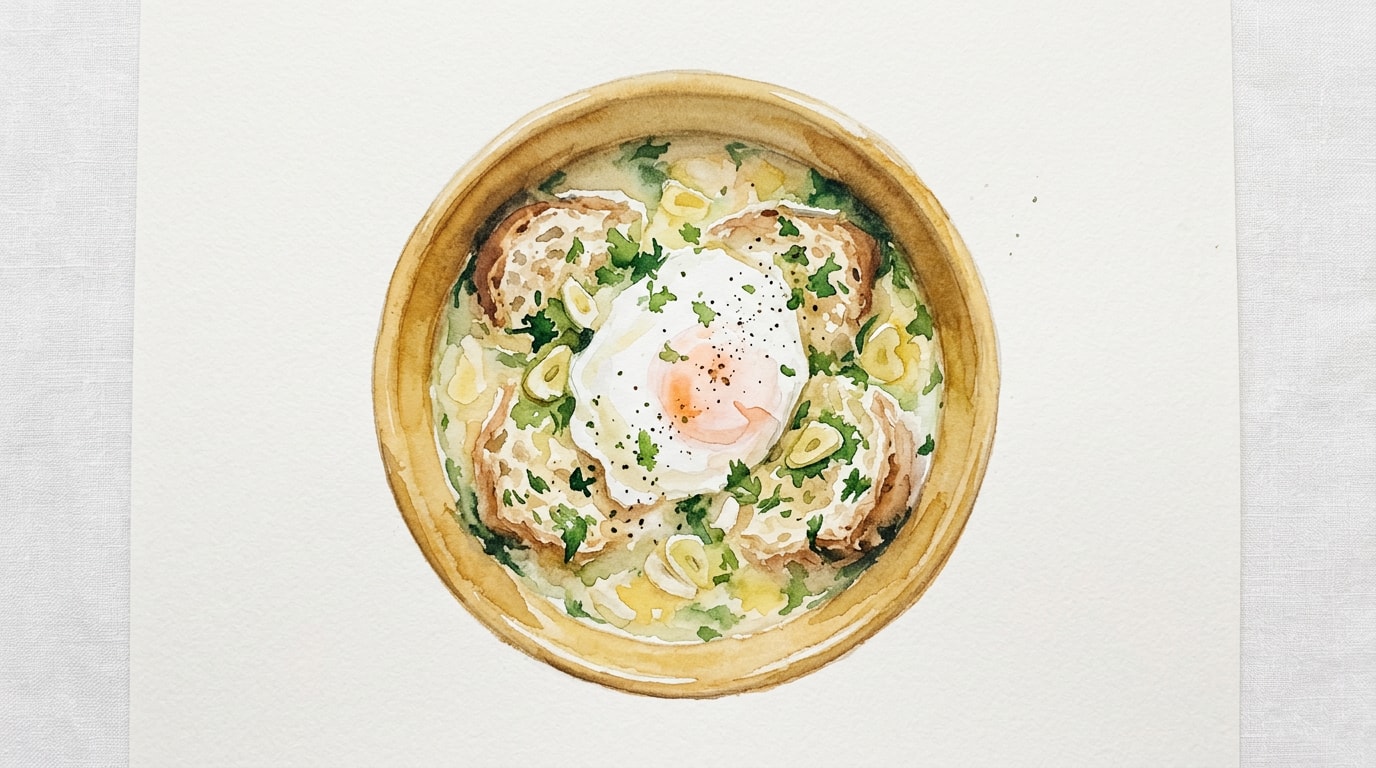
Top each bowl with a poached egg. Serve immediately while piping hot.
Chef's Notes
- The quality of the extra virgin olive oil makes or breaks this dish. Use a robust, peppery oil to stand up to the raw garlic.
- Pounding the herbs in a mortar creates a vastly superior flavor compared to chopping, as it crushes the plant cells to release their aromatic oils rather than cleanly slicing them.
- For enhanced depth, some traditional cooks simmer the water with a leftover crust of bread or a few garlic skins before straining it for the broth.
- Ensure safe consumption of poached eggs by using pasteurized eggs if serving elderly individuals, pregnant women, or young children.