Equipment
* optional
Ingredients
Aromatics & Nuts
- 60 g fresh basil leaves, leaves only, no stems
- 40 g pine nuts (pinoli), lightly toasted
- 5 g garlic clove, peeled
Binder & Seasoning
- 20 g nutritional yeast, flakes
- 90 ml extra virgin olive oil
- 4 g coarse sea salt
- 5 ml lemon juice, freshly squeezed
Nutrition (per serving)
Method
Wash the basil leaves gently in cold water and dry them thoroughly. Use a salad spinner or gently roll in clean kitchen towels until no moisture remains.
In a food processor, combine the garlic, toasted pine nuts, and coarse sea salt. Pulse until the mixture is a coarse, sandy paste.
Add the dry basil leaves and the nutritional yeast. Pulse 5-7 times until the basil is finely chopped but not yet a paste.
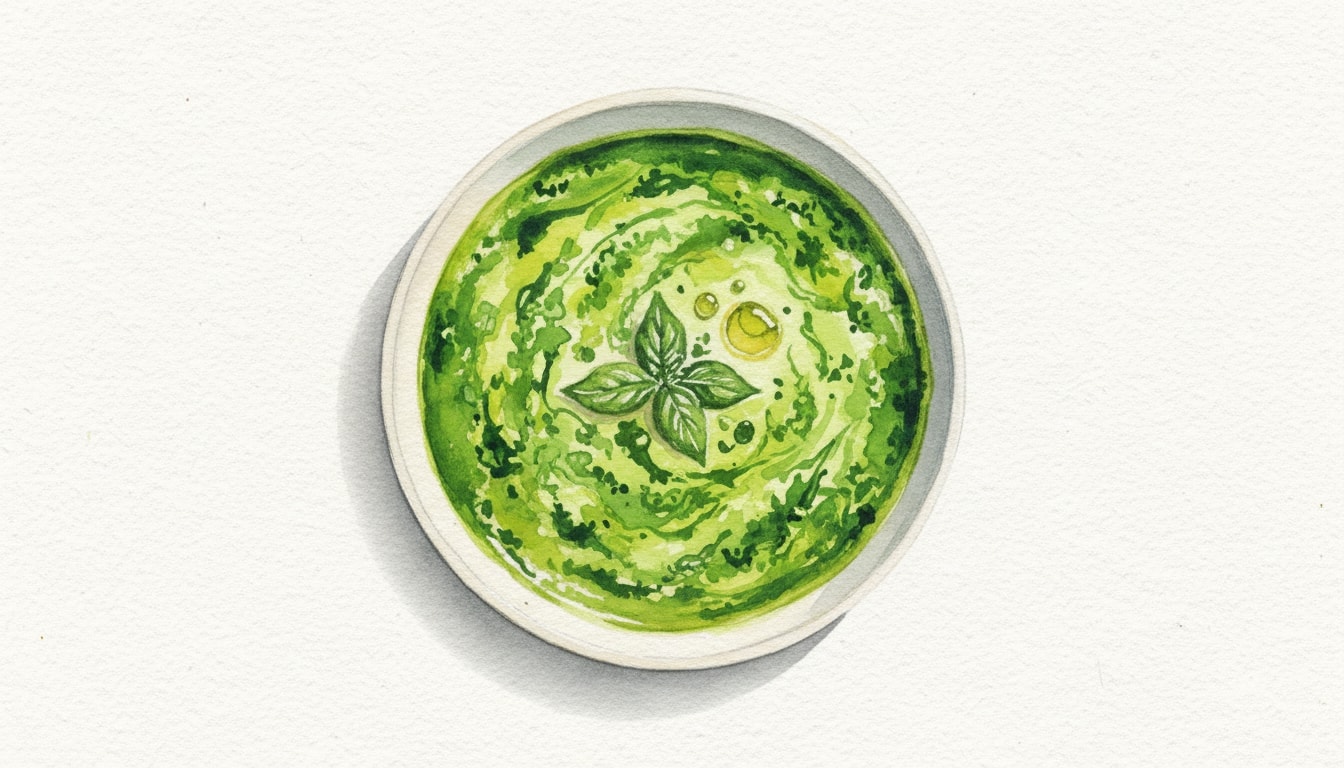
With the processor on its lowest setting, slowly drizzle in the extra virgin olive oil and the optional lemon juice. Stop as soon as the sauce comes together.
Taste the pesto. Adjust with a pinch more salt or nutritional yeast if needed. Transfer to a jar immediately.
Chef's Notes
- Nutritional yeast is the secret weapon here; it provides the 'funk' and savory notes usually provided by the Parmigiano-Reggiano.
- Because vegan pesto lacks the fat from the cheese, I've slightly increased the pine nut and olive oil ratios to maintain that signature mouthfeel.
- For a nut-free version, use toasted sunflower seeds or pumpkin seeds (pepitas).
Storage
Refrigerator: 7 days — Cover the surface with a thin layer of olive oil to prevent oxidation.
Freezer: 6 months — Freezes excellently in ice cube trays for easy portioning.
Reheating: Do not heat directly; stir into hot pasta or grains just before serving.