Equipment
* optional
Ingredients
Seafood
- 1000 g whole cleaned octopus, thawed if previously frozen
Produce
- 500 g waxy potatoes, peeled
Seasonings & Oil
- 60 ml extra virgin olive oil
- 5 g smoked paprika, ground
- 10 g coarse sea salt, flaky
Nutrition (per serving)
Method
Fill a large pot with unsalted water and bring to a rapid, rolling boil. Do not add salt to the water, as this will toughen the skin of the octopus.
Using tongs, hold the octopus by the head and dip the tentacles into the boiling water for 3 seconds, then immediately lift it out. Repeat this dipping process three times to scare the octopus. This curls the tentacles beautifully and prevents the outer skin from detaching during the long simmer.
Submerge the entire octopus in the water. Reduce the heat to maintain a gentle, steady simmer around 90 Celsius or 195 Fahrenheit. Cook for 40 to 50 minutes.
Use tongs to carefully transfer the cooked octopus to a wooden cutting board. Let it rest for 15 minutes to allow the juices to settle. Do not discard the cooking water; keep it at a boil.
Slice the peeled waxy potatoes into 1.5-centimeter thick rounds. Carefully drop them into the boiling, pink-tinted octopus cooking water. Cook for 15 minutes until tender.
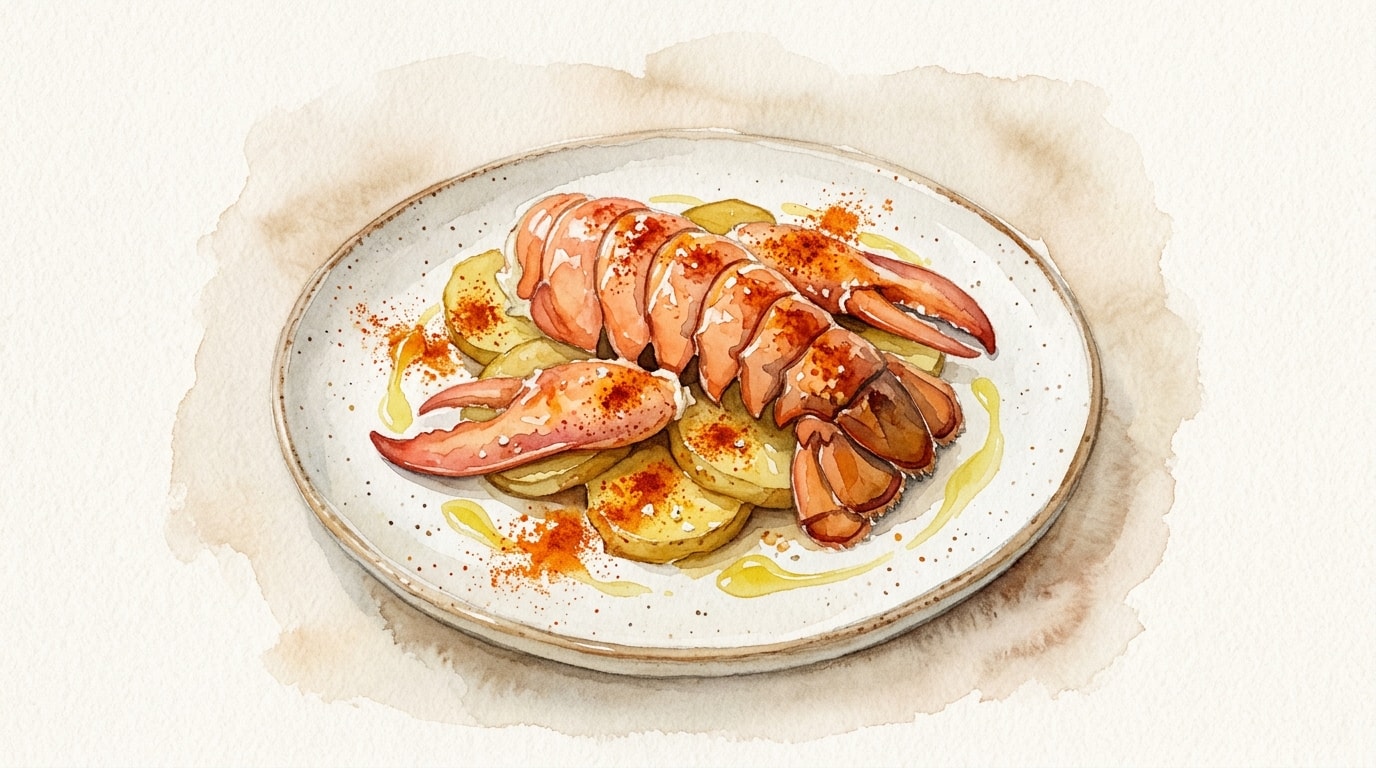
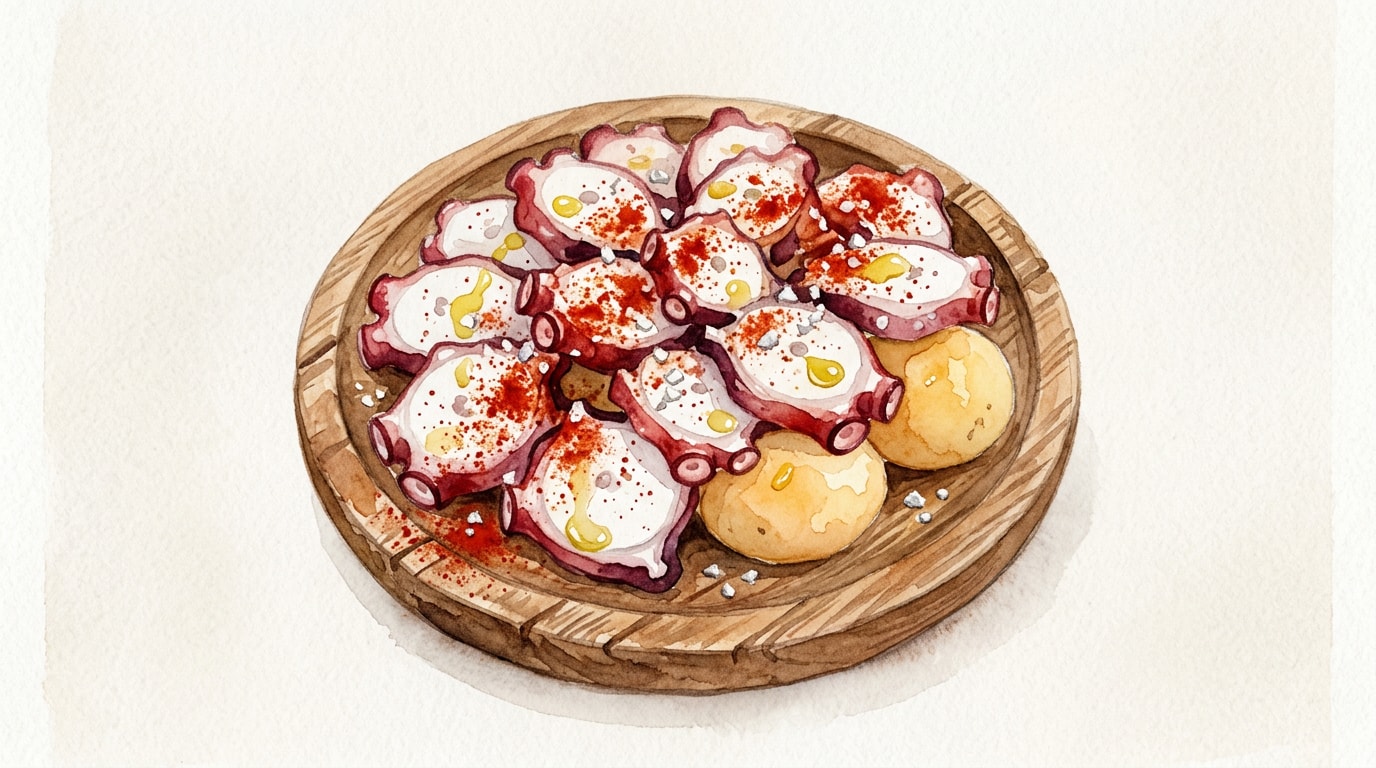
Drain the potatoes using a colander. Arrange the warm potato slices in a slightly overlapping, single layer covering the surface of a wooden serving platter.
Using kitchen scissors, snip the resting octopus tentacles into bite-sized medallions about 1.5 centimeters thick. Arrange the octopus pieces generously over the bed of warm potatoes. Discard the head or save it for another use.
Generously drizzle the entire dish with extra virgin olive oil. Sprinkle evenly with smoked paprika, and finish by crushing the coarse sea salt over the top. Serve immediately while still warm.
Chef's Notes
- Buying a pre-frozen raw octopus or freezing a fresh one for at least 24 hours before cooking is highly recommended. The freezing process expands the water inside the octopus, breaking down the tough muscle fibers and guaranteeing a more tender result.
- Using a wooden plate for serving is highly traditional in Galicia. The wood absorbs any excess residual water from the potatoes while retaining heat, allowing the olive oil to pool beautifully without becoming watery.
- Resist the urge to salt the cooking water. Salting the water early draws out moisture and tightens the proteins, leading to tough octopus skin. The dish gets all of its necessary sodium from the generous pinch of coarse salt at the end.
- A high-quality Pimenton de la Vera is what gives this five-ingredient dish its signature soul. I recommend blending sweet paprika for depth of flavor with just a pinch of hot paprika for a subtle, lingering warmth.
Storage
Refrigerator: 2 days — Store octopus and potatoes in airtight containers. Olive oil will solidify in the fridge but liquefy at room temperature.
Reheating: Gently warm the octopus and potatoes over a double boiler or microwave on low power. Re-season with fresh olive oil and paprika after warming.