Equipment
Ingredients
Oysters and Base
- 12 fresh oysters, live, shells scrubbed clean
- 500 g rock salt, coarse
Champagne Veloute
- 30 g unsalted butter, divided into two 15g portions
- 20 g shallot, finely minced
- 60 ml dry champagne
- 60 ml fish stock
- 15 g all-purpose flour
- 30 ml heavy cream
- white pepper
- kosher salt
Garnish
- 5 g fresh chives, finely minced
Nutrition (per serving)
Method
Preheat the oven to 220C/425F and spread a thick layer of rock salt over a rimmed baking sheet to keep the oysters completely level during baking.
Wrap a thick kitchen towel around your non-dominant hand holding the oyster. Insert the oyster knife into the hinge, twist to pop the shell open, and slide the blade across the top shell to sever the muscle.
Carefully pour the natural oyster liquor from the shells through a fine mesh sieve into a small bowl to reserve. Detach the bottom muscle, leaving the oyster meat in the deep cup shell, and arrange on the salt bed.
Melt half of the unsalted butter in a small saucepan over medium-low heat. Add the finely minced shallot and cook gently until translucent and sweet, taking care not to brown the aromatics.
Pour the dry champagne into the saucepan with the shallots. Increase the heat to medium-high and let the liquid bubble until it has reduced by half.
Pour the reserved, strained oyster liquor and the fish stock into the champagne reduction. Bring to a gentle boil, then immediately remove from the heat and set aside.
In a separate small saucepan, melt the remaining half of the butter over medium heat. Whisk in the all-purpose flour and cook constantly for one minute to form a pale blonde roux.
Gradually whisk the hot champagne broth into the roux to prevent lumps from forming. Simmer the mixture gently for three to four minutes until the sauce coats the back of a spoon.
Remove the saucepan from the heat. Stir in the heavy cream, season with a tiny pinch of white pepper, and taste for salt, keeping in mind the oyster liquor is naturally salty.
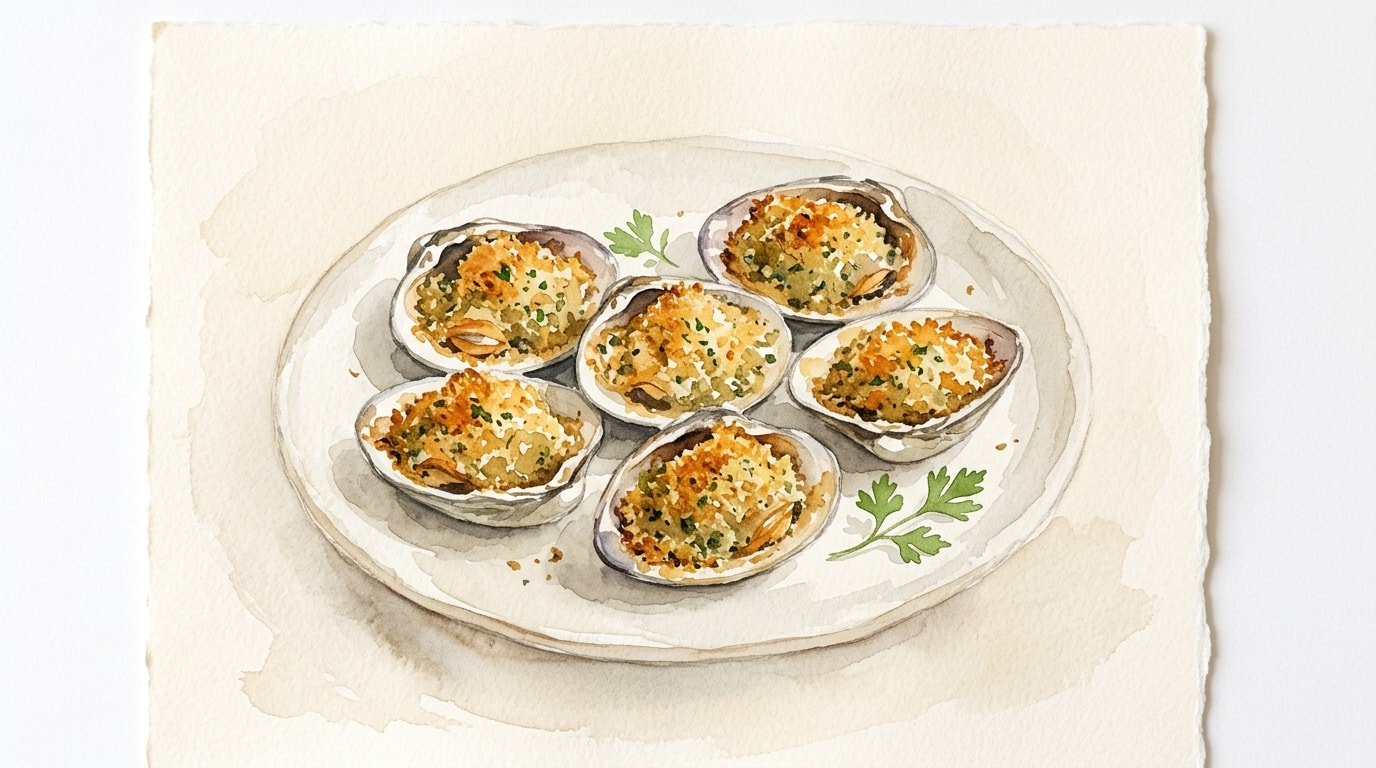
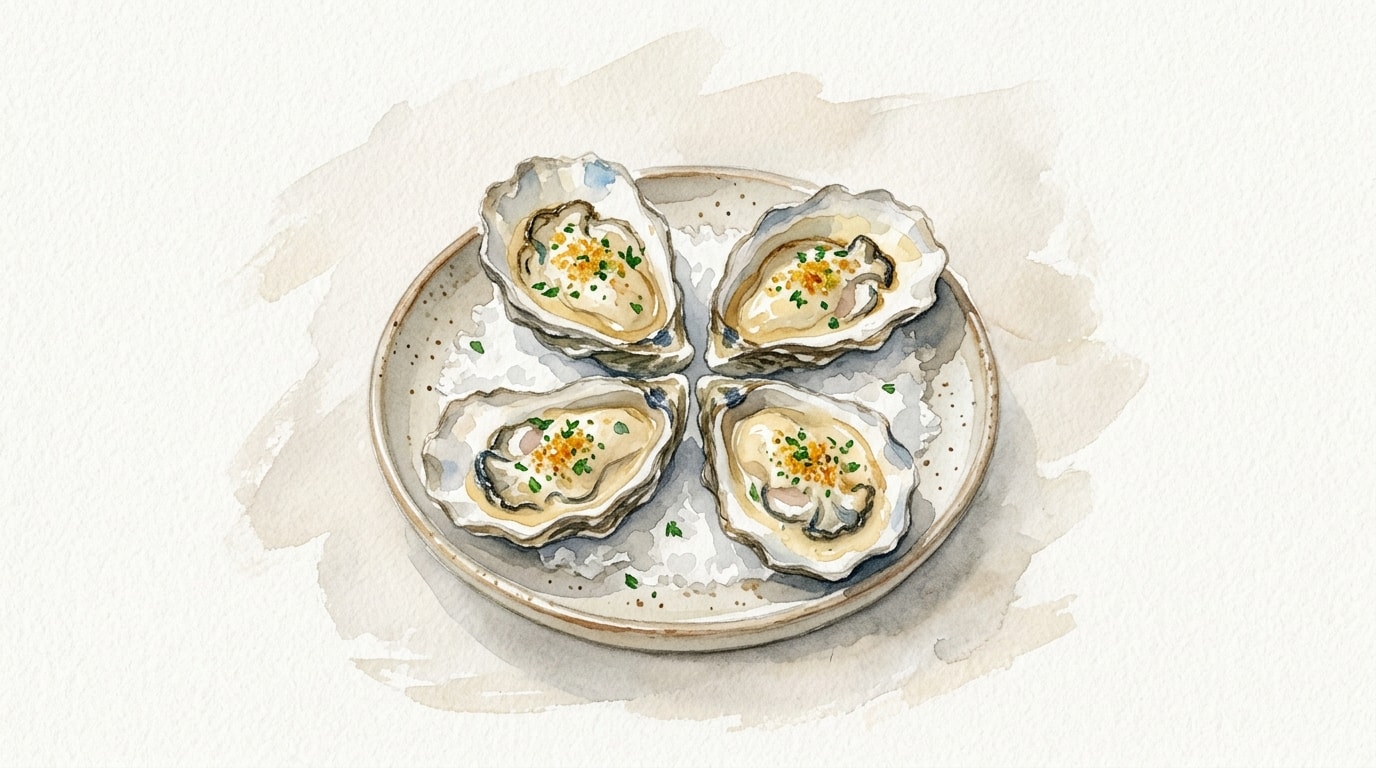
Spoon a generous amount of the warm champagne veloute over each oyster nestled on the baking sheet, ensuring the meat is completely covered by the liquid.
Transfer the baking sheet to the upper third of the oven and bake for four to five minutes, or until the sauce is bubbling heavily and the edges of the oysters begin to curl slightly under the sauce.
Remove the oysters from the oven, garnish each shell with a pinch of fresh minced chives, and serve immediately while piping hot.
Chef's Notes
- Always use a dry brut champagne rather than a sweet sparkling wine to ensure the sauce remains balanced and savory against the natural sweetness of the oyster.
- The rock salt bed is crucial not just for presentation, but to keep the shells completely stable so you do not spill any of the precious sauce while transferring them to the oven.
- Straining the oyster liquor is a non-negotiable step. Even the most experienced shuckers will occasionally drop a microscopic grain of sand or shell into the liquid.
- Do not let the sauce boil aggressively once the heavy cream is added, as high heat can cause dairy proteins to separate and ruin the silky mouthfeel of the veloute.