Equipment
* optional
Ingredients
Vegetables
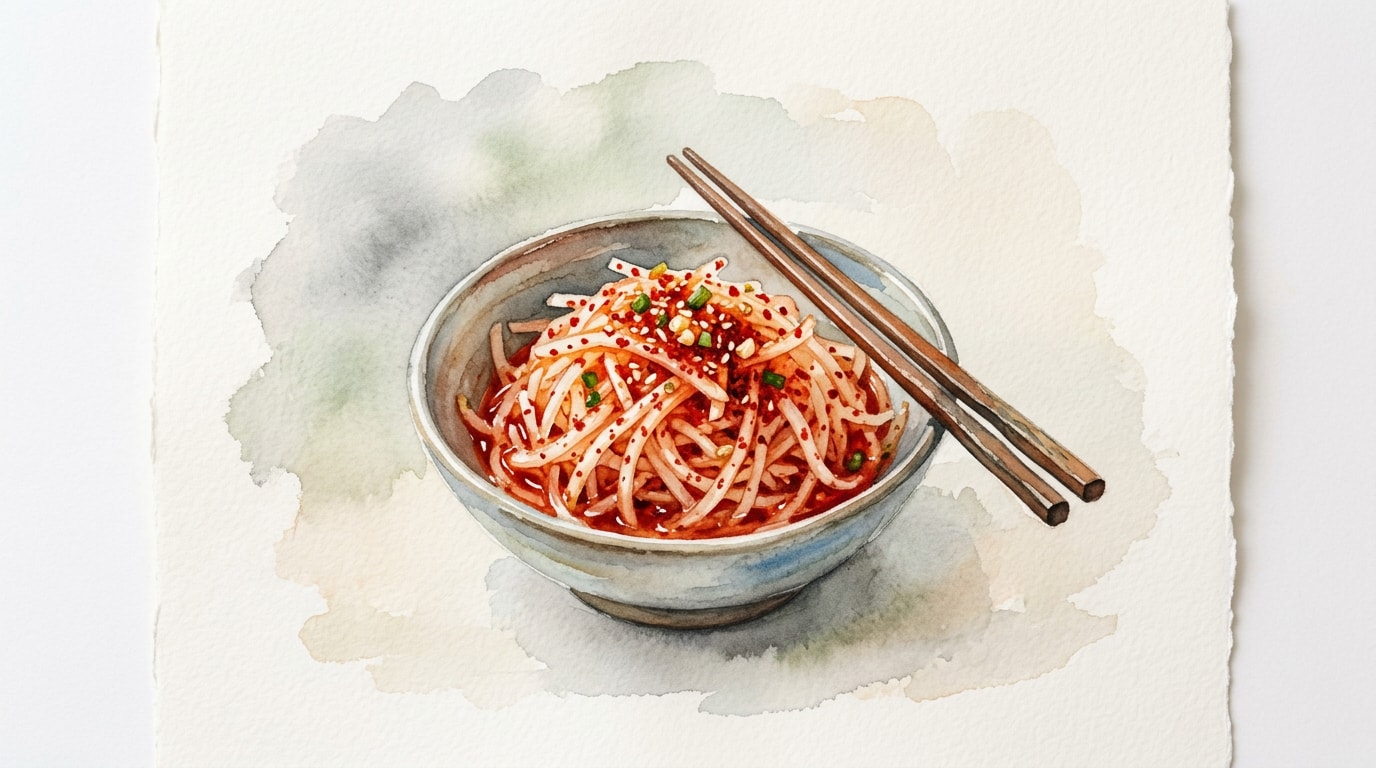
- 400 g white radish, peeled and julienned
- 15 g scallion, finely chopped
- 5 g garlic, minced
Dressing
- 10 g gochugaru
- 15 ml rice vinegar
- 10 ml soy sauce
- 10 g sugar
- 2 g salt
- 10 ml toasted sesame oil
- 5 g toasted sesame seeds
Nutrition (per serving)
Method
Place the julienned white radish into a large mixing bowl. If you are sensitive to spicy ingredients on your skin, put on food prep gloves.
Add the gochugaru to the radish. Using your hands, massage the chili flakes into the radish matchsticks for about 1 to 2 minutes until the radish takes on a uniform, vibrant red color.
Add the rice vinegar, soy sauce, sugar, salt, minced garlic, and chopped scallion to the bowl. Toss thoroughly to combine all the ingredients.
Drizzle the toasted sesame oil over the salad and sprinkle with toasted sesame seeds. Toss gently one final time to distribute the oil and seeds evenly without overworking the vegetables.
Let the salad rest at room temperature for 10 minutes before serving. This brief resting period allows the radish to absorb the dressing and soften slightly while maintaining its crisp texture.
Chef's Notes
- Korean radish (Mu) is firmer, sweeter, and holds less water than Japanese daikon, making it the superior choice for this dish. If using daikon, you may need to add a pinch more sugar to balance the flavor.
- Cutting the radish uniformly ensures that every bite has the same texture and absorbs the dressing evenly. A mandoline slicer can help achieve perfect consistency.
- Toasted sesame oil loses its distinct aroma quickly when heated or overworked, which is why it is added at the very end of the mixing process.
- If you prefer a milder side dish, you can halve the amount of gochugaru. Do not substitute western chili flakes, as they are much spicier and lack the sweet, smoky profile of gochugaru.
Storage
Refrigerator: 4 days — Store in an airtight container. The radish will release more water and the flavor will become more fermented over time.