Equipment
Ingredients
Base Elements
- 140 g hot-smoked trout fillets, skin and pin bones removed, flaked
- 50 g unsalted butter, softened at room temperature
- 35 g sour cream, full fat preferred
Aromatics and Seasoning
- 15 ml lemon juice, freshly squeezed
- 5 g fresh dill, finely chopped
- 5 g prepared horseradish, drained
- 1 g black pepper, freshly cracked
- kosher salt
Nutrition (per serving)
Method
Thoroughly inspect the flaked hot-smoked trout for any hidden pin bones, discarding the skin and dark bloodline meat for the best color and flavor.
In a food processor, combine the softened butter, sour cream, lemon juice, and horseradish (if using). Blend until completely smooth and emulsified.
Add the prepared smoked trout to the food processor. Pulse 3 to 5 times until combined but still retaining some texture. Do not over-process into a complete paste.
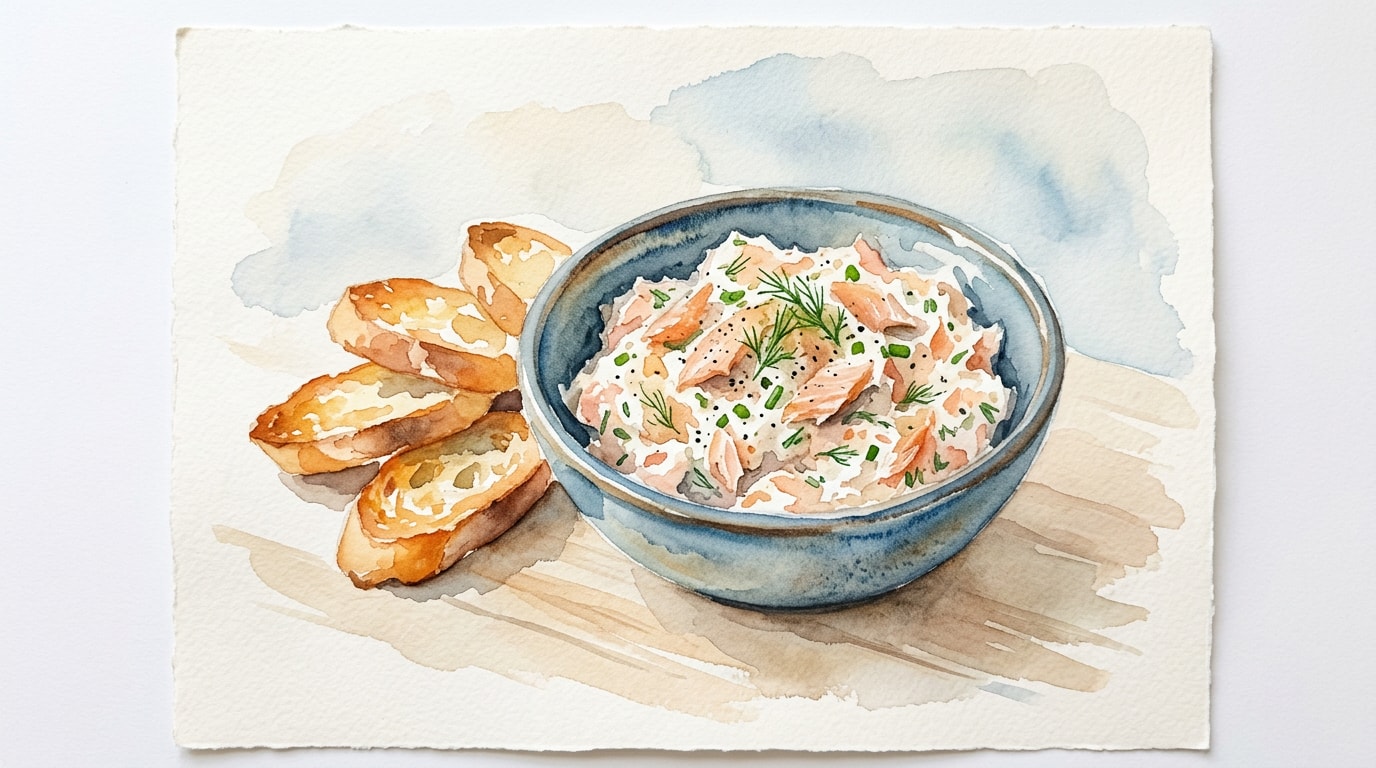
Transfer the mixture to a bowl. Gently fold in the chopped fresh dill and freshly cracked black pepper. Taste the spread and add a pinch of salt only if necessary.
Spoon the spread into a ramekin or serving bowl, smoothing the top. Cover tightly and refrigerate for at least 1 hour to allow the butter to firm up and the flavors to meld.
Chef's Notes
- Hot-smoked trout is preferred over cold-smoked for this recipe. It has a flaky, cooked texture that breaks down beautifully while offering a deeply savory, campfire-like smokiness.
- If you want an even more refined presentation, you can top the chilled ramekin with a thin layer of clarified butter to seal it, extending its shelf life by several days.
- The dark meat located along the bloodline of the trout can taste overly fishy or bitter. Removing it during the flaking stage ensures a sweet, clean flavor profile.
- Always taste your specific brand of smoked fish before salting the spread. Many commercial smoking processes use heavy brines, rendering additional salt unnecessary.
Storage
Refrigerator: 3 days — Store in an airtight container or covered tightly with plastic wrap directly touching the surface to prevent oxidation.