Equipment
Ingredients
Pasta Base
- 200 g dried spaghetti
- 15 g kosher salt
Tomato Garlic Sauce
- 30 ml extra virgin olive oil
- 3 garlic, thinly sliced
- 300 g cherry tomatoes, halved
- 1 g red pepper flakes
Finishing
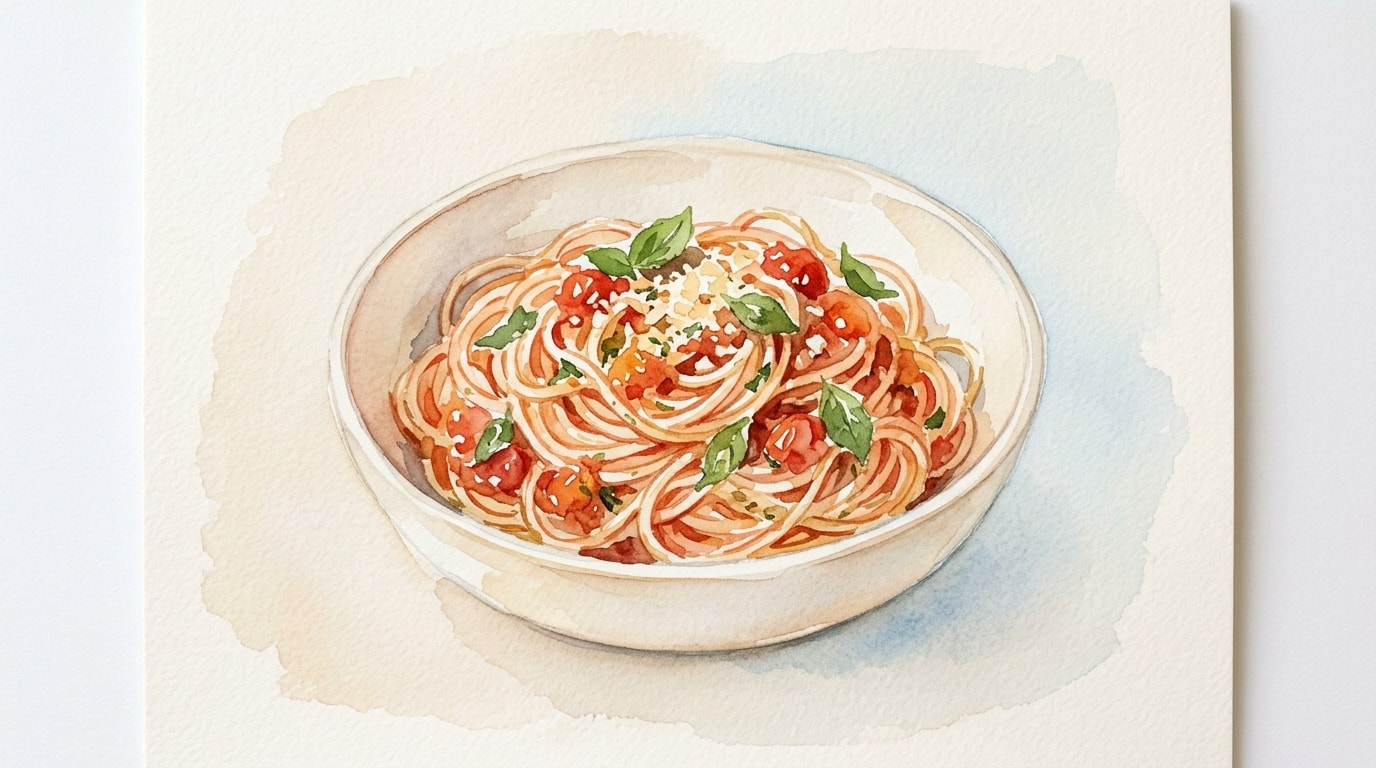
- 10 g fresh basil, roughly torn
Nutrition (per serving)
Method
Bring a large pot of water to a rolling boil at 100 degrees Celsius (212 degrees Fahrenheit). Add the kosher salt, then the spaghetti. Cook until just shy of al dente, usually 1 to 2 minutes less than the package instructions. Reserve at least 100ml of starchy pasta water before draining.
While the pasta boils, place a wide skillet over medium heat and add the extra virgin olive oil. Add the thinly sliced garlic and red pepper flakes. Cook gently until the garlic is fragrant and pale golden, taking care not to let it brown, about 2 minutes.
Increase the heat to medium-high and add the halved cherry tomatoes. Sauté until the tomatoes begin to blister, soften, and release their juices into the oil to form a rustic, bubbly sauce, about 6 minutes.
Transfer the slightly undercooked pasta directly into the skillet with the tomatoes. Pour in 50ml of the reserved pasta water. Using tongs, toss vigorously over medium-high heat until the starchy water and olive oil emulsify into a glossy sauce that clings to the noodles. Add more pasta water if the pan looks too dry.
Remove the skillet from the heat. Fold in the torn fresh basil leaves, toss one final time, and serve immediately.
Chef's Notes
- The secret to this minimal dish is the starchy pasta water. The starch released during boiling acts as a critical binding agent, turning the unmixed olive oil and tomato juices into a cohesive, creamy sauce.
- Do not let the garlic brown. Browning garlic introduces a bitter flavor profile that will easily overpower the delicate, fruity sweetness of fresh cherry tomatoes.
- For the best texture and flavor absorption, always finish cooking your pasta directly in the sauce rather than simply pouring the sauce over dry noodles on a plate.
- Tearing basil rather than chopping it with a knife minimizes bruising and slows oxidation, keeping the edges from turning dark too quickly.
Storage
Refrigerator: 3 days — Store in an airtight container. Pasta may absorb sauce and soften over time.
Reheating: Reheat gently in a skillet over low heat with a splash of water to revive the emulsion.