Equipment
Ingredients
Vegetables
- 600 g aubergine, cut into 2cm cubes
- 150 g yellow onion, finely chopped
- 100 g celery, diced
Sauce and Flavorings
- 120 ml olive oil
- 400 g canned crushed tomatoes
- 100 g green olives, pitted and roughly chopped
- 30 g capers, rinsed and drained
- 45 ml white wine vinegar
- 20 g granulated sugar
- fine sea salt
- black pepper
Garnish (Optional)
- 30 g pine nuts, lightly toasted
- 10 g fresh basil, leaves torn
Nutrition (per serving)
Method
Wash and cut the aubergines into uniform 2cm pieces. Finely chop the onion and dice the celery.
Heat 90ml of olive oil in a large skillet over medium-high heat. When the oil shimmers at around 180°C or 350°F, fry the aubergine cubes in batches to avoid crowding the pan. Cook until deeply golden brown and tender, about 8-10 minutes per batch. Transfer the fried aubergine to a paper towel-lined plate to drain.
Wipe the skillet clean if necessary and lower the heat to medium. Add the remaining 30ml of olive oil. Add the chopped onion and celery, and sauté until the vegetables are very soft and translucent, about 8 minutes.
Stir the crushed tomatoes, chopped green olives, and rinsed capers into the skillet with the onions and celery. Bring the mixture to a gentle simmer at around 90°C or 195°F and cook for 10 minutes to meld the flavors.
In a small bowl, whisk together the white wine vinegar and sugar until the sugar is mostly dissolved. Pour this agrodolce mixture into the skillet. Allow it to simmer and reduce for 3 to 4 minutes until the sharp vinegar smell mellows.
Return the fried aubergine to the skillet, folding it gently into the tomato mixture. Simmer for 2 final minutes so the aubergine absorbs the sweet and sour sauce. Taste and adjust seasoning with salt and pepper.
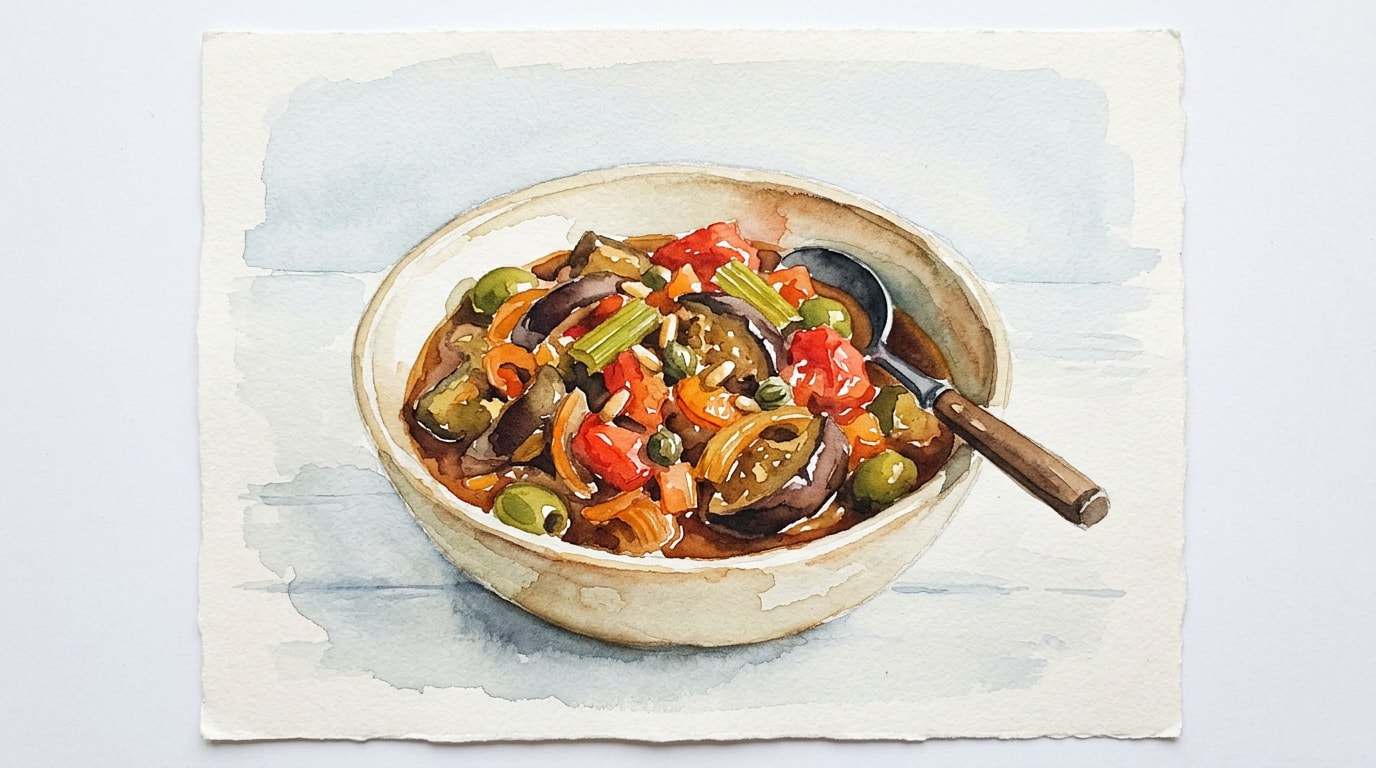
Remove the pan from the heat. Transfer the caponata to a serving dish and let it cool completely to room temperature. It is essential to let it rest for at least 2 hours before serving. Garnish with toasted pine nuts and torn fresh basil just before serving.
Chef's Notes
- Caponata is an exercise in patience. Do not serve it hot; it is traditionally eaten at room temperature or cold. The resting period allows the acetic bite of the vinegar to mellow and weave into the sugars and umami notes.
- Salting and draining the aubergine beforehand is a traditional step to remove bitterness. Modern aubergines have been bred to be less bitter, so this is optional, but doing so can reduce the amount of oil the aubergine absorbs during frying.
- For the absolute best results, make this dish a full 24 hours in advance and store it in the refrigerator. Bring it back to room temperature before serving.
- The hallmark of Sicilian cuisine is the 'agrodolce' (sour and sweet) flavor profile. Feel free to tweak the sugar and vinegar ratio at the end to suit your personal palate, as different tomato brands bring varying levels of natural sweetness.
Storage
Refrigerator: 5 days — Store in an airtight container. The flavor significantly improves after 24 hours.
Freezer: 3 months — Freeze in airtight containers. The texture of the aubergine may soften slightly upon thawing.
Reheating: Serve at room temperature or slightly chilled. If frozen, thaw overnight in the refrigerator before serving.