Equipment
* optional
Ingredients
Saffron Bloom
- ½ g saffron threads
- 30 ml water, hot
Rice Preparation
- 400 g basmati rice
- 2000 ml water
- 30 g kosher salt
Tahdig Base
- 60 g plain full-fat yogurt
- 1 egg yolk
- 50 g unsalted butter, melted
- 30 ml vegetable oil
Nutrition (per serving)
Method
Using a mortar and pestle, grind the saffron threads into a fine powder. Pour the hot water over the ground saffron and set aside to bloom for at least 10 minutes.
Rinse the basmati rice in a colander under cold running water until the water runs completely clear. Place the rinsed rice in a mixing bowl, cover with cold water, and soak for 30 minutes.
In the large non-stick pot, bring 2000ml of water to a vigorous boil at 100C/212F. Add the kosher salt and the drained, soaked rice. Boil uncovered for 5 to 7 minutes.
Immediately pour the partially cooked rice into a colander to drain. Rinse briefly with warm water to halt the cooking process and wash away any remaining starchy water.
In a clean mixing bowl, whisk together the yogurt, egg yolk, half of the bloomed saffron water, and 120 grams of the parboiled rice to create the tahdig mixture.
Dry the non-stick pot thoroughly. Pour in the melted butter and vegetable oil, swirling to coat the bottom. Spread the yogurt and rice mixture evenly across the bottom of the pot, pressing gently to compact it into an even layer.
Gently mound the remaining parboiled rice over the tahdig base, shaping it into a pyramid so it does not touch the side walls of the pot. Using the handle of a wooden spoon, poke 5 holes deep into the rice pyramid down to the bottom layer to allow steam to escape. Drizzle the remaining saffron water evenly over the rice.
Wrap the pot lid tightly in a clean kitchen towel, securing the edges over the top handle to prevent fire hazards. Cover the pot. Cook over medium-high heat for 5 to 7 minutes to set the crust, then lower the heat to the absolute lowest setting and let it steam undisturbed for 40 minutes.
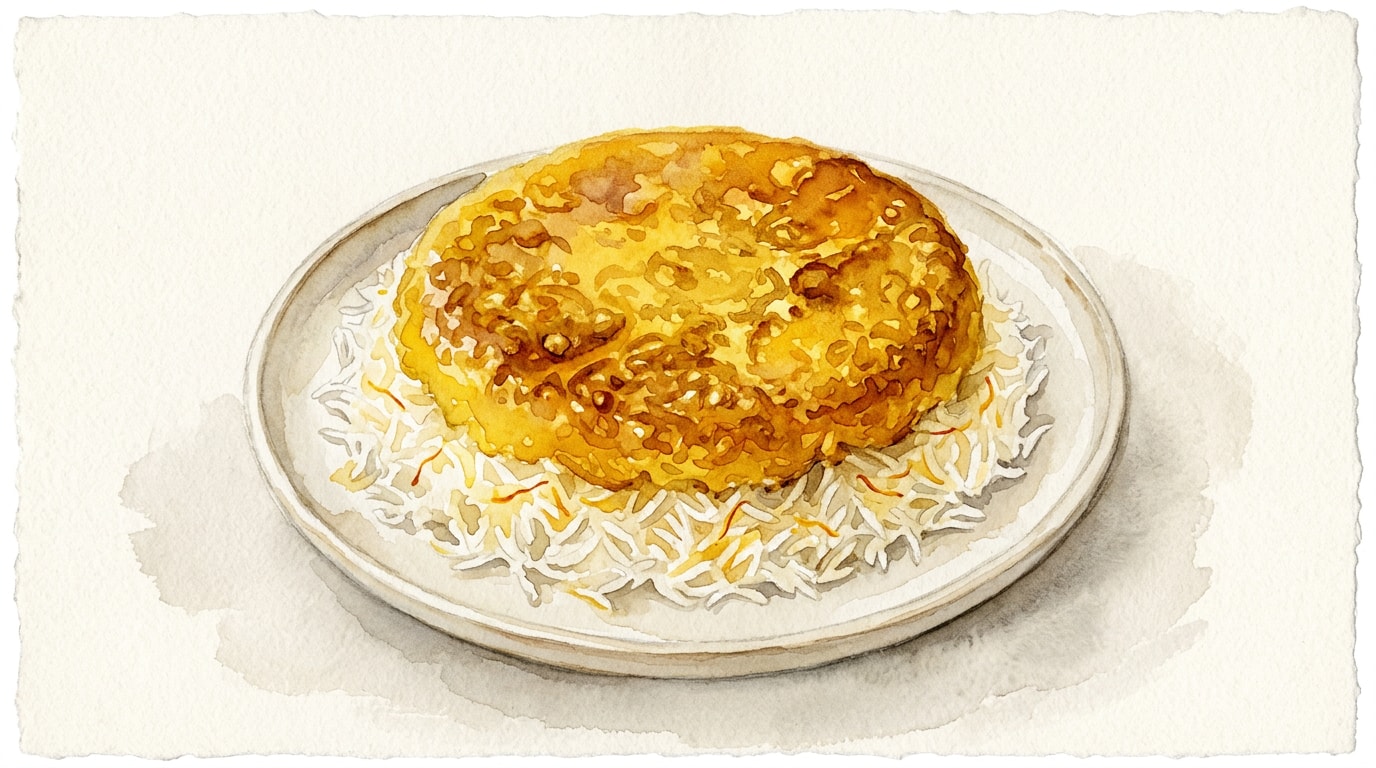
Remove the pot from the heat and let it rest for 2 minutes on a damp surface to loosen the crust. Remove the lid, place a large serving platter over the pot, and swiftly invert the pot to release the rice. The golden tahdig crust should be on top.
Chef's Notes
- Washing the basmati rice until the water runs completely clear is the single most important step for achieving the signature separated, fluffy grains of Persian rice.
- A high-quality non-stick pot is essential for a flawless, cake-like release. Traditional cast iron or stainless steel will almost certainly cause the yogurt crust to stick and tear.
- The inclusion of egg yolk and yogurt in the base acts as a binder, yielding a slightly thicker, richer, and more structurally sound crust akin to Tahchin.
- Do not walk away during the parboiling phase. The line between perfect al dente and mushy overcooked rice is crossed in less than two minutes.
Storage
Refrigerator: 3 days — Rice keeps well in an airtight container. The tahdig crust will lose its crispness once refrigerated.
Freezer: 1 month — Freeze only the fluffy rice portion; the crispy crust does not freeze well.
Reheating: Microwave the rice with a damp paper towel. To reheat tahdig, pan-fry gently in a dry non-stick skillet over low heat.