Equipment
Ingredients
Produce
- 500 g eggplant, cut into 1.5cm cubes
- 150 g red bell pepper, finely diced
- 150 g yellow onion, finely diced
- 15 g garlic, minced
- 10 g fresh basil, roughly torn
Pantry & Base
- 60 ml extra virgin olive oil
- 30 g tomato paste
- 120 ml dry red wine
- 800 g crushed tomatoes
Seasoning
- 5 g kosher salt
- 2 g black pepper, freshly ground
- 3 g dried oregano
- 1 g red pepper flakes
Nutrition (per serving)
Method
Heat 40ml of the extra virgin olive oil in a large Dutch oven over medium-high heat. Once the oil shimmers, add the cubed eggplant in a single layer.
Sear the eggplant without moving it for 3 minutes to develop a crust. Stir and continue cooking until deeply browned and tender throughout, about 5 to 7 more minutes. Transfer the eggplant to a plate and set aside.
Reduce the heat to medium. Add the remaining 20ml of olive oil to the pot, followed by the diced yellow onion and red bell pepper. Sauté until the vegetables are softened and the onion is translucent, about 6 minutes.
Stir in the minced garlic, tomato paste, dried oregano, and red pepper flakes. Cook constantly until the tomato paste darkens in color to a deep rust, about 2 minutes.
Pour in the dry red wine to deglaze the pot, scraping up any browned bits stuck to the bottom with a wooden spoon. Allow the wine to reduce until almost entirely evaporated, about 3 minutes.
Pour in the crushed tomatoes, kosher salt, and black pepper. Return the reserved eggplant to the pot and mix gently to combine.
Bring the sauce to a gentle bubble, then reduce the heat to low. Simmer uncovered, stirring occasionally to prevent sticking, until the ragu is thick and the flavors are highly concentrated, about 30 to 40 minutes.
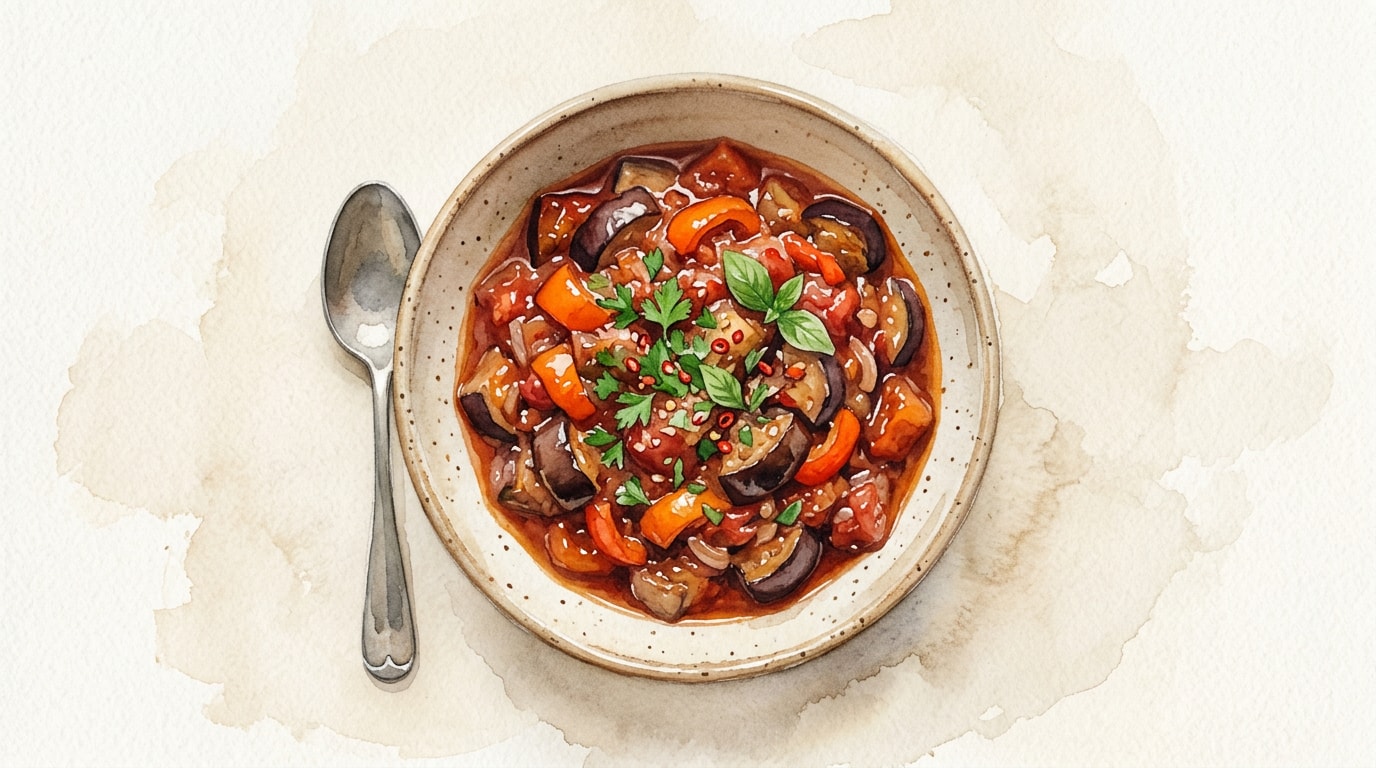
Remove the pot from the heat. Fold in the torn fresh basil leaves. Taste and adjust seasoning with additional salt or pepper if necessary. Serve hot.
Chef's Notes
- Salting the eggplant beforehand is optional for modern varieties, but doing so for 20 minutes before cooking draws out excess moisture, helping the cubes hold their shape and absorb less oil during searing.
- The technique of browning the tomato paste, known as pincage, is critical here. It transforms the raw, tinny flavor of the paste into a profound, caramelized umami that acts as the backbone of the ragu.
- Eggplant acts like a sponge when it hits hot oil. If it looks dry during the searing phase, resist the urge to pour in more oil immediately. As it cooks and collapses, it will release some of that oil back into the pan.
- Pair this ragu with wide, flat pasta shapes like pappardelle or tagliatelle, which provide enough surface area for the chunky sauce to cling to. It is equally spectacular ladled over a bowl of soft, buttered polenta.
Storage
Refrigerator: 5 days — Flavors will continue to meld and improve over the first 48 hours.
Freezer: 3 months — Store in airtight containers, leaving room for expansion.
Reheating: Reheat gently in a saucepan over medium-low heat until bubbling, adding a splash of water if the sauce has thickened too much.