Equipment
Ingredients
Main Ingredients
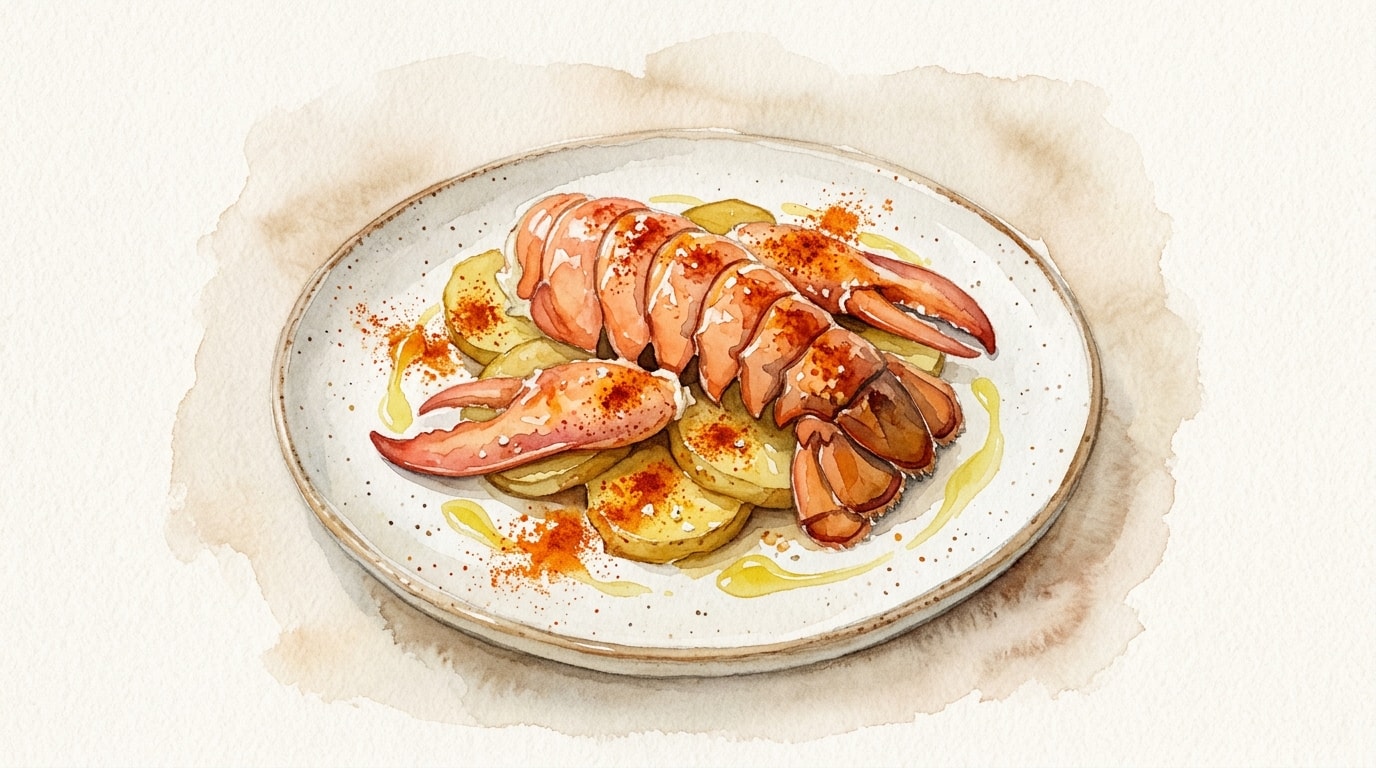
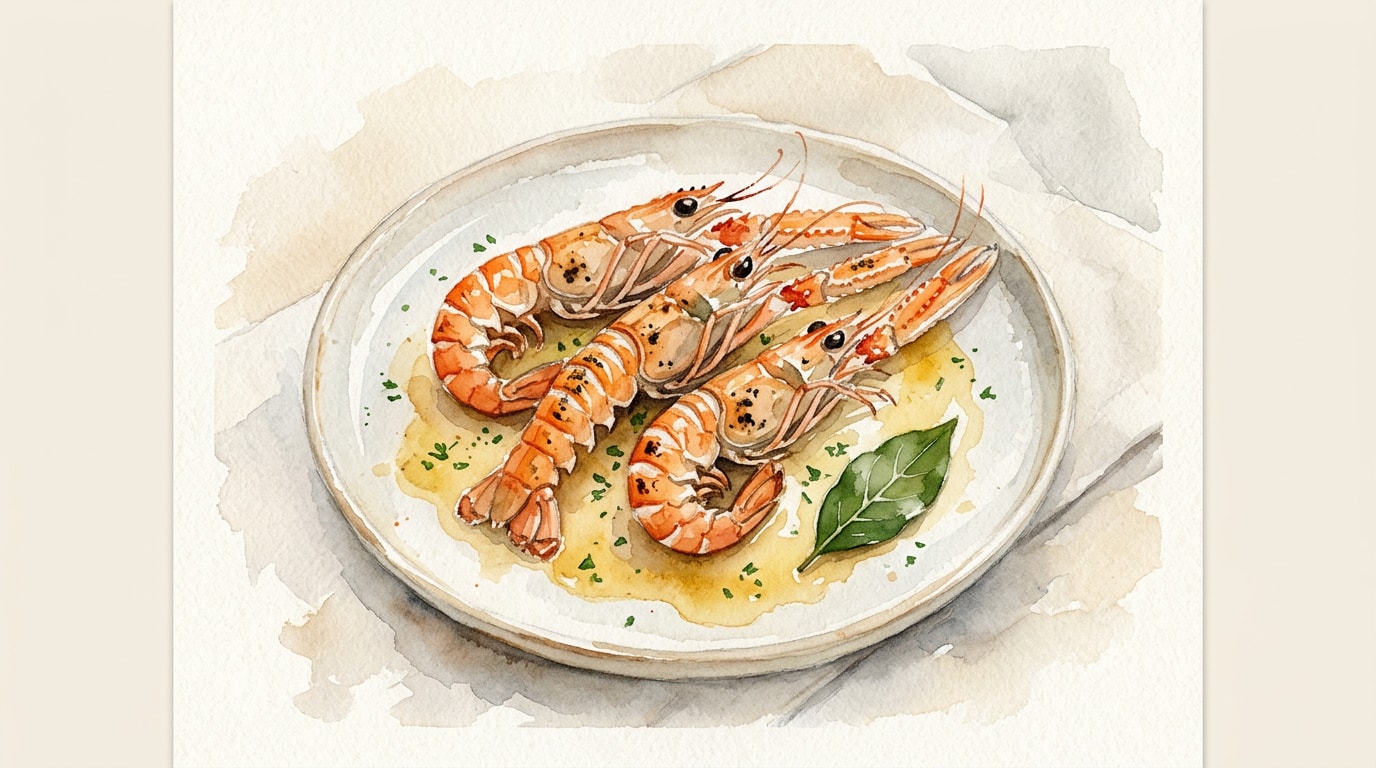
- 500 g whole raw langoustines, thawed if frozen, rinsed
- 15 ml extra virgin olive oil
- 45 g unsalted butter, cubed
- 4 fresh bay leaves
- 1 lemon, halved
- flaky sea salt
Nutrition (per serving)
Method
Using a sharp chef knife, place the langoustines flat on a cutting board and carefully slice each one in half lengthwise from head to tail. Remove the dark intestinal tract.
Place a large skillet over medium-high heat. Add the olive oil followed by the unsalted butter, allowing the butter to melt and begin to foam.
Add the bay leaves to the hot fat. Fry them briefly until they release their fragrance and crisp around the edges.
Using tongs, place the langoustine halves into the skillet, flesh-side down. Sear undisturbed until the edges turn slightly pink and the meat develops a light caramelization.
Flip the langoustines shell-side down. Using a spoon, continuously baste the meat with the foaming bay leaf butter until the flesh is entirely opaque and reaches a safe internal temperature of 63°C/145°F.
Remove the skillet from the heat immediately to prevent overcooking. Squeeze the fresh lemon halves over the langoustines, season with flaky sea salt to taste, and serve right away.
Chef's Notes
- Fresh bay leaves are vastly superior to dried in this application, offering a floral, almost citrusy aroma that pairs flawlessly with seafood.
- The combination of olive oil and butter is essential; the oil raises the smoke point to prevent burning, while the butter provides crucial milk solids for browning and rich flavor.
- When sourcing langoustines, look for bright, clear black eyes and a fresh oceanic scent. Avoid any specimens with blackening around the joints or a strong ammonia smell.
- Keep a close eye on the flesh. Langoustines cook faster than traditional lobster or large shrimp, and their delicate texture can turn mushy or rubbery within thirty seconds of overcooking.
Storage
Refrigerator: 24 hours — Best consumed immediately. Quality degrades significantly upon refrigeration.