Equipment
Ingredients
Ceviche Components
- 400 g fluke fillet, skinless, pin-bones removed, sashimi-grade
- 120 ml lime juice, freshly squeezed
- 100 g red onion, very thinly sliced
- 5 g habanero pepper, seeded and finely minced
- 10 g fresh cilantro, roughly chopped
- 5 g sea salt, fine
Nutrition (per serving)
Method
Slice the red onion as thinly as possible. Place the slices in a bowl of ice water to soak. This removes their harsh, pungent bite while keeping them incredibly crisp.
Using a sharp chef's knife and a dedicated cutting board, dice the cold fluke fillet into uniform 1.5cm cubes. Maintain strict hygiene to prevent cross-contamination when handling raw fish.
Transfer the diced fluke to a non-reactive glass or ceramic mixing bowl. Sprinkle with the sea salt and gently toss to coat the fish evenly, allowing the salt to open the pores of the fish.
Mince the habanero pepper and chop the fresh cilantro. Add both to the mixing bowl with the fluke.
Drain the red onions thoroughly. Add them to the bowl along with the freshly squeezed lime juice. Toss all ingredients together until completely combined.
Cover the bowl and chill in the refrigerator at 4°C/39°F for 10 to 15 minutes. The citric acid will denature the proteins, effectively curing the fish.
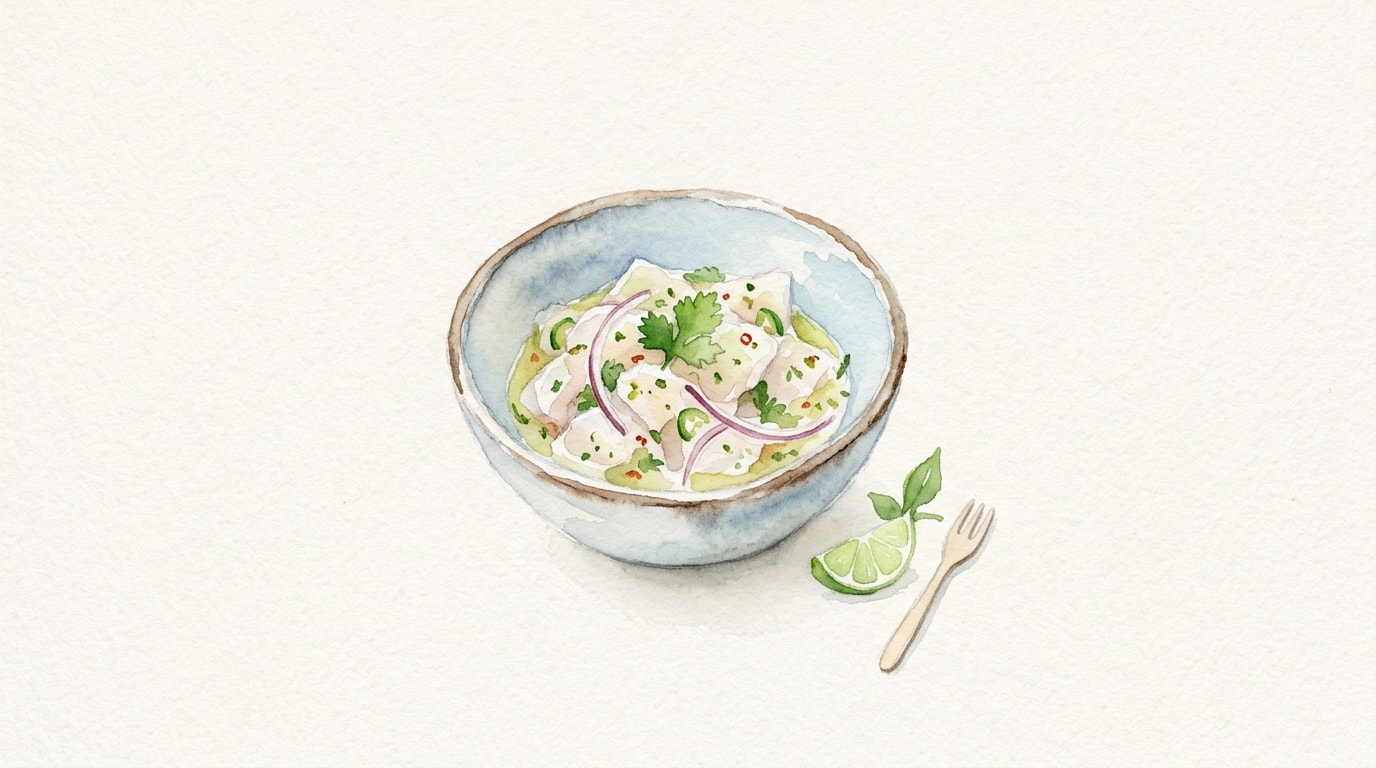
Remove the ceviche from the refrigerator. Divide immediately onto chilled serving plates, spooning the remaining marinade, known as leche de tigre, generously over the top.
Chef's Notes
- Always use the highest quality, freshest sashimi-grade fluke available. Curing in citrus acid denatures the proteins to mimic cooking, but it does not reach temperatures capable of killing harmful bacteria.
- Do not use bottled lime juice under any circumstances. The flavor of ceviche relies entirely on the bright, aromatic qualities of freshly squeezed citrus.
- A glass or ceramic bowl is strictly necessary. Metal bowls can react with the heavy amount of acid in the lime juice, imparting a distinct metallic off-taste to the delicate fish.
Storage
Refrigerator: 2 hours — Best consumed immediately. The acid will continue to denature the proteins, turning the fish rubbery over time.