Equipment
Ingredients
Produce & Pickles
- 900 g russet potatoes, peeled and scrubbed
- 150 g yellow onion, peeled
- 100 g kosher dill pickles, finely julienned
Binders & Seasonings
- 2 large eggs, lightly beaten
- 45 g plain bread crumbs
- 8 g kosher salt
- 2 g black pepper, freshly ground
Frying
- 250 ml canola oil
Nutrition (per serving)
Method
Using the large holes of a box grater, grate the russet potatoes and the yellow onion. Transfer the grated mixture to the center of a clean kitchen towel.
Gather the corners of the towel, twist tightly, and squeeze out as much liquid as physically possible into a separate bowl. Let the extracted liquid sit undisturbed for 5 minutes, then carefully pour off the watery layer, reserving the dense white potato starch at the bottom of the bowl.
Add the squeezed potato and onion mixture into the bowl containing the reserved potato starch. Fold in the julienned dill pickles, lightly beaten eggs, bread crumbs, kosher salt, and black pepper. Mix thoroughly until the starch is incorporated and the ingredients are evenly distributed.
Pour the canola oil into a large heavy-bottomed skillet until it reaches a depth of about 5 millimeters. Place over medium-high heat until the oil reaches 190°C (375°F). You will know it is ready when a small piece of potato dropped into the oil sizzles vigorously immediately.
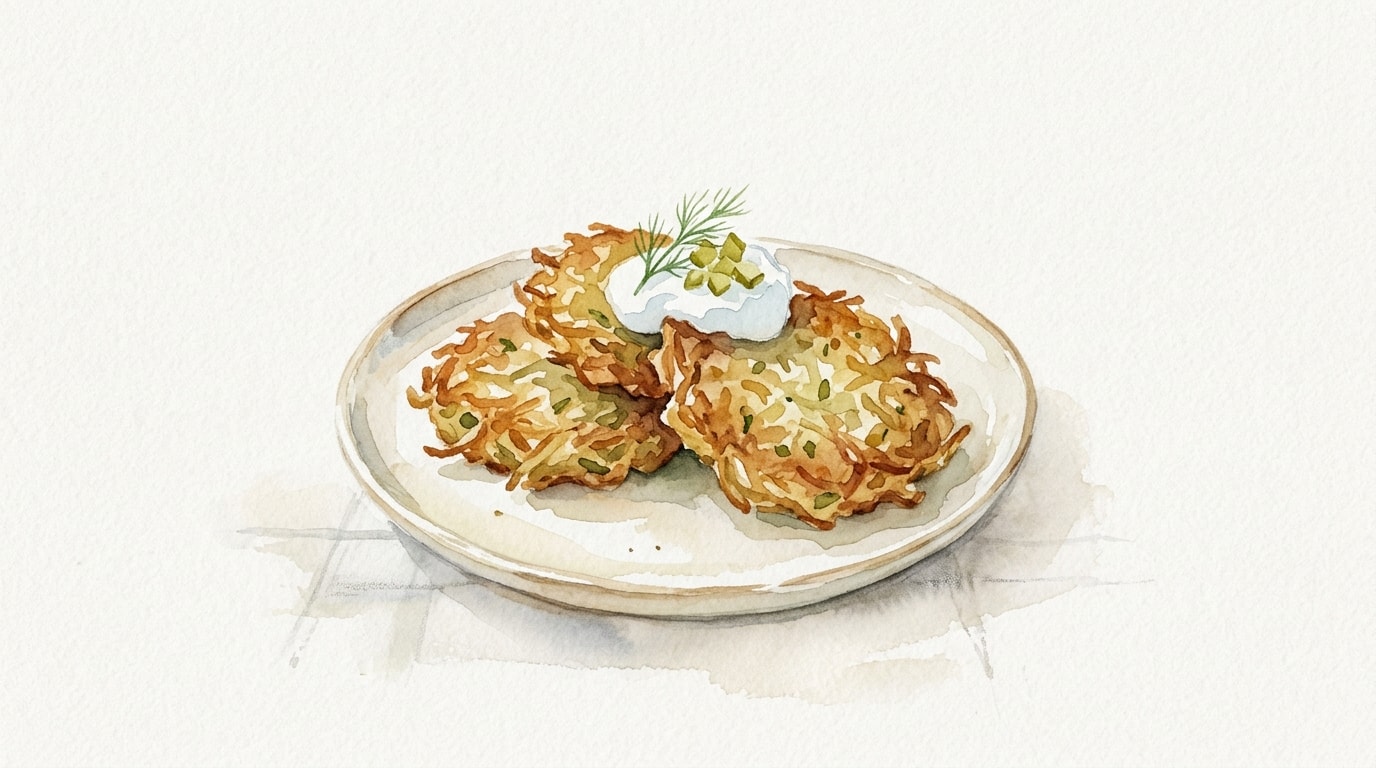
Working in batches to avoid crowding the pan, drop 60g mounds of the potato mixture into the hot oil. Flatten them gently with a spatula to an even thickness. Fry for 3 to 4 minutes on the first side until deeply browned and crisp, then carefully flip and fry for another 3 minutes on the second side.
Using a spatula, transfer the fried latkes to a wire cooling rack set over a baking sheet to drain off excess oil. Serve immediately while hot and crispy.
Chef's Notes
- Reserving the natural potato starch from the extracted liquid is the secret to a perfectly cohesive and ultra-crispy latke, as it binds the starches back together without making the interior heavy.
- Julienne the pickles rather than grating them. Grating pickles releases too much liquid and risks making the latke batter soggy, whereas thin slivers maintain their distinct texture and sour punch.
- Russet potatoes are mandatory for this recipe. Their high starch and low moisture content yield the classic fluffy interior and shatteringly crisp exterior that waxy potatoes cannot achieve.
- Always use a wire rack for draining fried foods. Placing hot latkes directly onto paper towels traps steam underneath them, rendering the bottom side instantly soggy.
Storage
Refrigerator: 3 days — Store in an airtight container between layers of paper towels.
Freezer: 2 months — Freeze in a single layer on a baking sheet before transferring to an airtight bag or container.
Reheating: Reheat from fridge or frozen in a 200°C (400°F) oven on a wire rack for 8 to 10 minutes until sizzling and crisp.