Equipment
Ingredients
Vegetable Base
- 900 g russet potatoes, peeled
- 150 g yellow onion, peeled
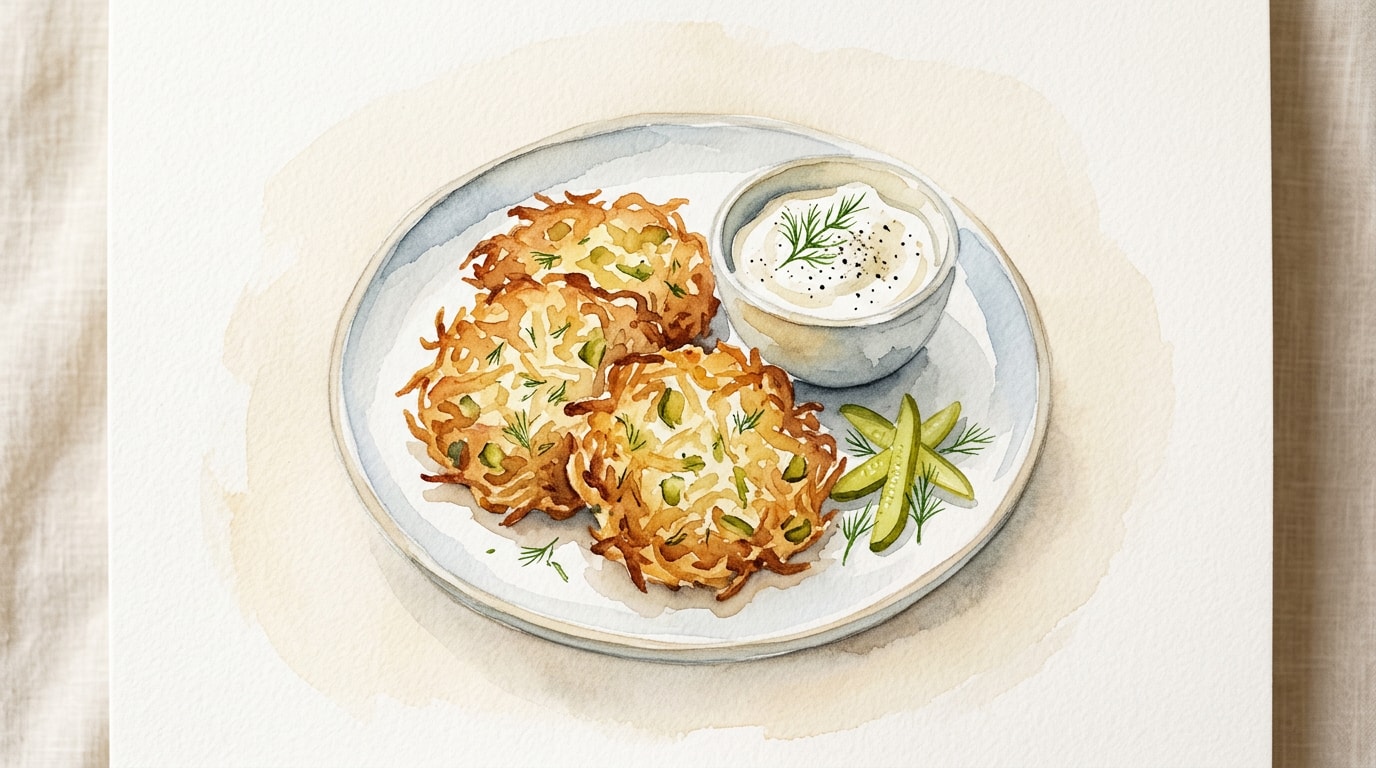
- 150 g dill pickles, finely julienned
Binders and Seasoning
- 2 eggs, lightly beaten
- 45 g plain bread crumbs
- 5 g kosher salt
- 2 g black pepper, freshly ground
Frying
- 240 ml neutral oil
Nutrition (per serving)
Method
Using the large holes of a box grater, grate the russet potatoes and the yellow onion. Transfer the grated mixture to the center of a clean kitchen towel.
Gather the corners of the towel and tightly wring the bundle over a bowl to squeeze out as much liquid as possible from the potato and onion mixture. Let the extracted liquid sit undisturbed for 10 minutes. Carefully pour off and discard the watery liquid, retaining the thick white layer of potato starch settled at the bottom of the bowl.
In a large mixing bowl, combine the dry grated potato and onion mixture, the reserved potato starch, finely julienned dill pickles, beaten eggs, bread crumbs, kosher salt, and black pepper. Toss thoroughly until the ingredients are evenly distributed.
Pour the neutral oil into a large skillet until it reaches a depth of about a quarter-inch. Heat over medium-high heat until the oil reaches 180°C/350°F, or until a single shred of potato sizzles immediately upon contact.
Carefully drop 60g portions (about a quarter cup) of the latke mixture into the hot oil, spacing them evenly. Press down lightly with a spatula to flatten into pancakes. Fry for 3 to 4 minutes.
Using the spatula, carefully flip each latke away from you to avoid splashing hot oil. Fry the second side for an additional 3 to 4 minutes until deeply colored and crisp.
Transfer the fried latkes to a wire cooling rack set inside a baking sheet. This prevents the bottoms from steaming and becoming soggy. Repeat the frying process with the remaining batter, adding more oil if necessary.
Chef's Notes
- Russet potatoes are non-negotiable for traditional latkes. Their high starch and low water content are exactly what creates the glass-like crispiness on the exterior.
- Do not skip reserving the potato starch. This natural binder creates a seamless structural integrity that allows you to use fewer eggs and bread crumbs.
- Julienne the pickles rather than chopping them into cubes. The long, thin slivers mimic the shape of the shredded potatoes, helping the latke hold together while distributing the acidic punch evenly.
- Draining the finished latkes on a wire cooling rack rather than paper towels is crucial. Paper towels trap the escaping steam against the bottom of the latke, reversing all your hard work to get them crispy.
Storage
Refrigerator: 3 days — Store in an airtight container layered with paper towels to absorb excess moisture.
Freezer: 2 months — Freeze flat on a baking sheet before transferring to a heavy-duty freezer bag.
Reheating: Reheat in a 200°C/400°F oven on a wire rack for 5 to 8 minutes until crisp. Avoid microwaving.