Equipment
Ingredients
Foie Gras
- 300 g grade a foie gras, raw, well-chilled, sliced into 2cm thick medallions
- 2 g flaky sea salt
- 1 g black pepper, freshly ground
Fig and Grape Gastrique
- 150 g fresh black mission figs, stemmed and quartered
- 100 g seedless red grapes, halved
- 1 shallot, finely minced
- 15 g unsalted butter
- 45 ml balsamic vinegar
- 60 ml ruby port wine
- 15 ml honey
Nutrition (per serving)
Method
Score one side of the cold foie gras medallions in a shallow crosshatch pattern. Season generously with salt and pepper immediately before cooking. Keep them in the refrigerator until the exact moment they hit the pan to prevent premature melting.
Heat the unsalted butter in a small saucepan over medium heat. Add the minced shallot and sweat until translucent and fragrant, about 3 minutes.
Add the quartered figs, halved grapes, balsamic vinegar, and port wine to the saucepan. Simmer gently over medium-low heat until the fruits break down slightly and the liquid reduces to a syrupy consistency that coats the back of a spoon, about 15 minutes. Taste and stir in honey if the fruit is overly tart. Keep warm.
Heat a dry stainless steel skillet over high heat until smoking hot, reaching approximately 230°C or 450°F. Place the chilled foie gras medallions scored side down in the dry pan. Sear for exactly 45 to 60 seconds until a deep, crusty brown surface forms.
Carefully flip the medallions using a thin spatula. Sear the second side for 30 to 45 seconds. Immediately remove the pan from the heat and transfer the foie gras to a paper towel-lined plate to rest for 1 minute.
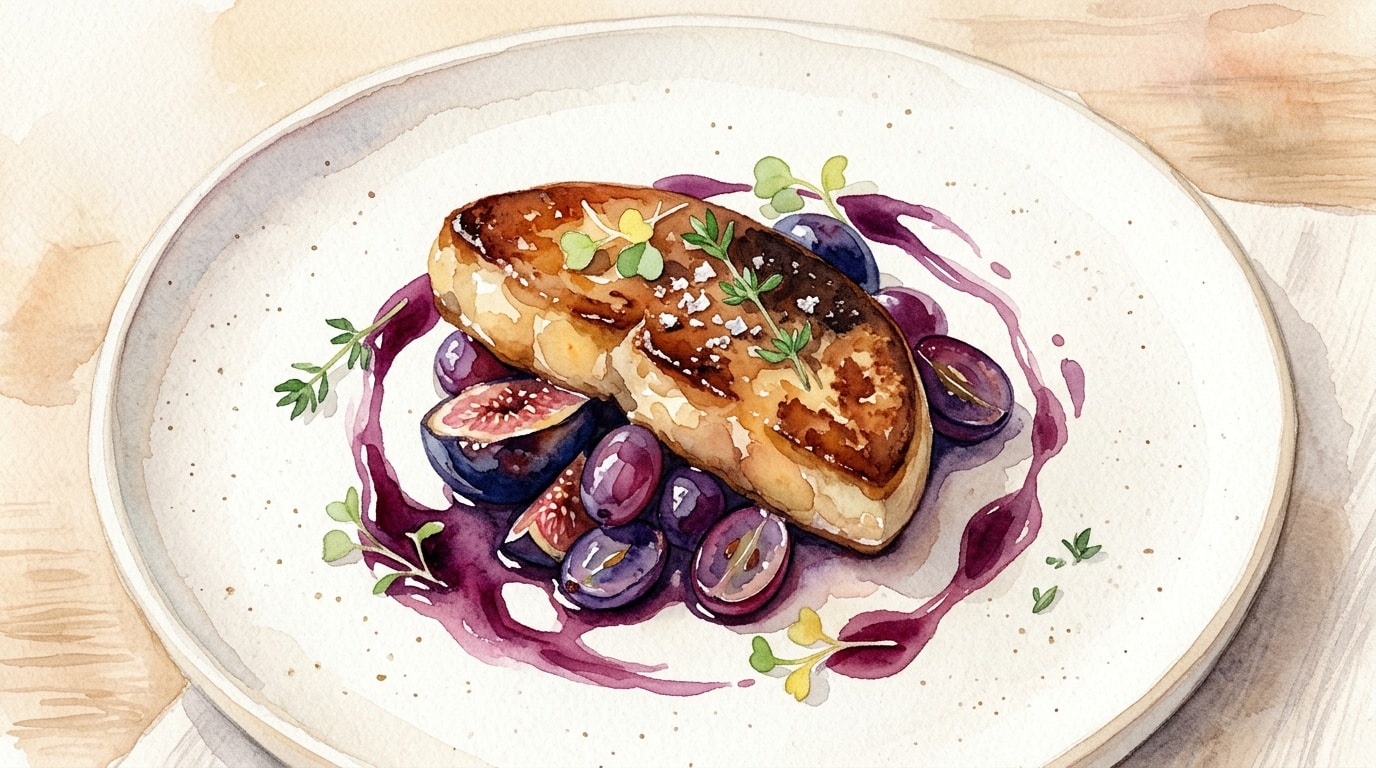
Spoon a generous pool of the warm fig and grape syrup onto the center of each plate. Place a rested foie gras medallion on top of the sauce and finish with a pinch of flaky sea salt. Serve immediately while hot.
Chef's Notes
- Grade A foie gras is strictly required for pan-searing. Lower grades contain more veins and water, which causes them to bleed out and melt excessively instead of forming a solid sear.
- Always use a completely dry pan when searing foie gras. The liver contains over 80 percent fat and will rapidly release more than enough of its own lipid content to lubricate the pan.
- Reserve the rendered liquid fat left in the skillet after searing. Strain it through a fine sieve and store it in the refrigerator to use as a luxurious cooking fat for roasted root vegetables or traditional pommes sarladaises.
- The sharp acidity of the balsamic vinegar and the tannins in the ruby port wine are biologically necessary to cut through the extreme richness of the liver, providing palate relief and preventing sensory fatigue.