Equipment
Ingredients
Foie Gras
- 240 g fresh foie gras escalopes, chilled, cut into 1.5cm thick slices
- 2 g flaky sea salt, for finishing
- 1 g black pepper, freshly cracked
Fig and Grape Gastrique
- 150 g black mission figs, stemmed and quartered
- 100 g red seedless grapes, halved
- 60 ml ruby port wine
- 30 ml balsamic vinegar
- 20 g honey
- 15 g unsalted butter, cold, cubed
- 1 g kosher salt
Nutrition (per serving)
Method
Combine port wine, balsamic vinegar, and honey in a small saucepan. Bring to a gentle boil over medium heat.
Add the prepared figs, grapes, and kosher salt to the boiling liquid. Reduce the heat and simmer until the fruit softens and the liquid reduces to a thick, syrupy consistency.
Remove the saucepan from the heat. Whisk in the cold cubed butter to mount the sauce, giving it a glossy finish. Keep warm while preparing the foie gras.
Score one side of each chilled foie gras slice with a shallow crosshatch pattern using a sharp knife. Season both sides generously with salt and pepper immediately before cooking.
Heat a dry cast iron skillet over medium-high heat until it is smoking hot, about 200°C/400°F. Do not add any oil to the pan.
Place the foie gras slices in the dry skillet. Sear undisturbed until deeply browned and a crisp crust forms, about 45 to 60 seconds.
Carefully flip the slices using a fish spatula and sear the other side for an additional 45 to 60 seconds. The center should remain medium-rare and yield slightly to the touch.
Quickly transfer the seared foie gras to a plate lined with paper towels to drain for 30 seconds.
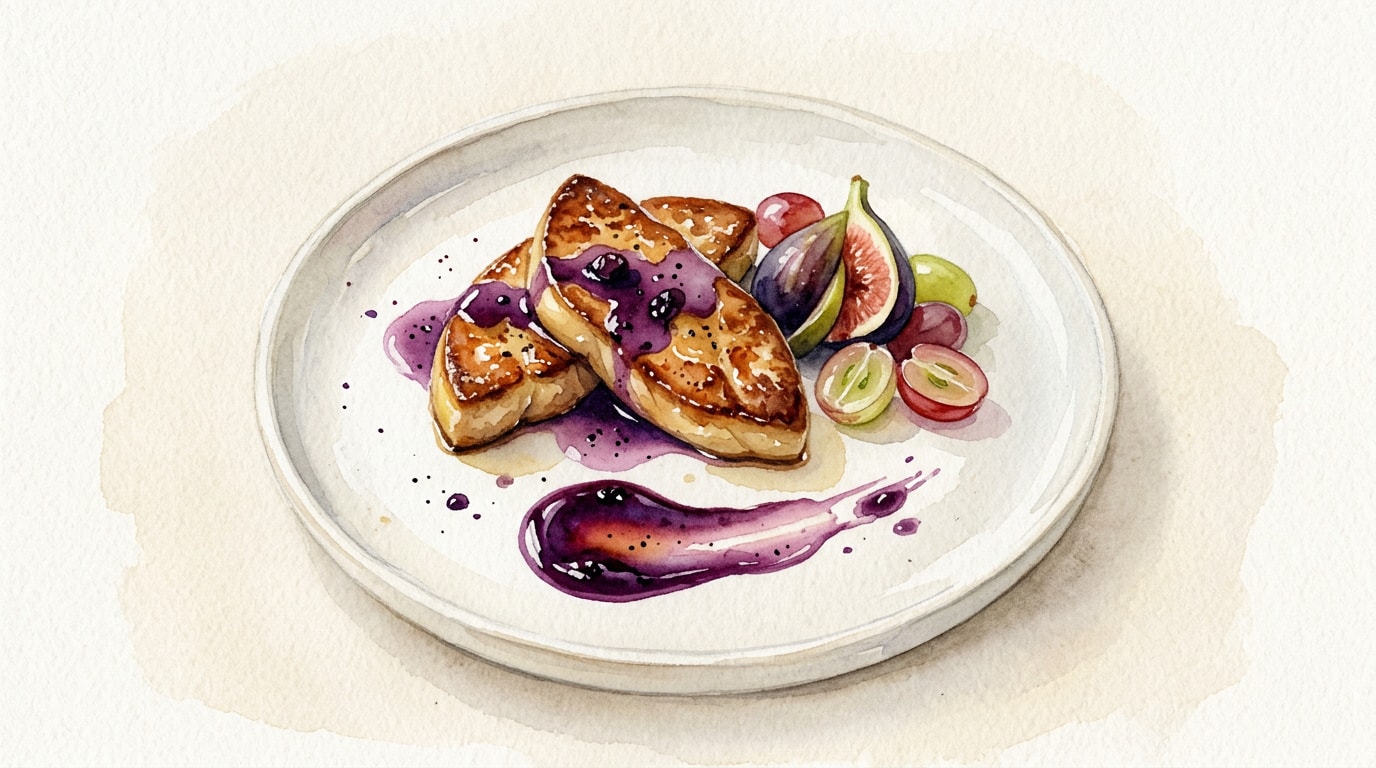
Spoon the warm fig and grape gastrique onto serving plates. Place the rested foie gras over the sauce and finish with a sprinkle of flaky sea salt. Serve immediately.
Chef's Notes
- Keep the foie gras as cold as possible until the very second it hits the pan. Warm foie gras will melt entirely into liquid fat before a crust can form.
- Save the rendered foie gras fat left in the skillet. Strain it through a fine mesh sieve and keep it in the fridge to roast potatoes or sear steaks; it is liquid gold.
- The sharp acidity of the balsamic vinegar and the concentrated sweetness of the fruit reduction are absolutely crucial for cutting through the extreme richness of the liver. Do not rush the reduction process.