Equipment
Ingredients
Meats
- 400 g pork shoulder, cut into 2.5cm cubes, well chilled
- 250 g pork belly, skinless, high fat content, cut into 2.5cm cubes, well chilled
- 200 g veal shoulder, cut into 2.5cm cubes, well chilled
- 150 g chicken livers, trimmed of connective tissue
Inclusions and Lining
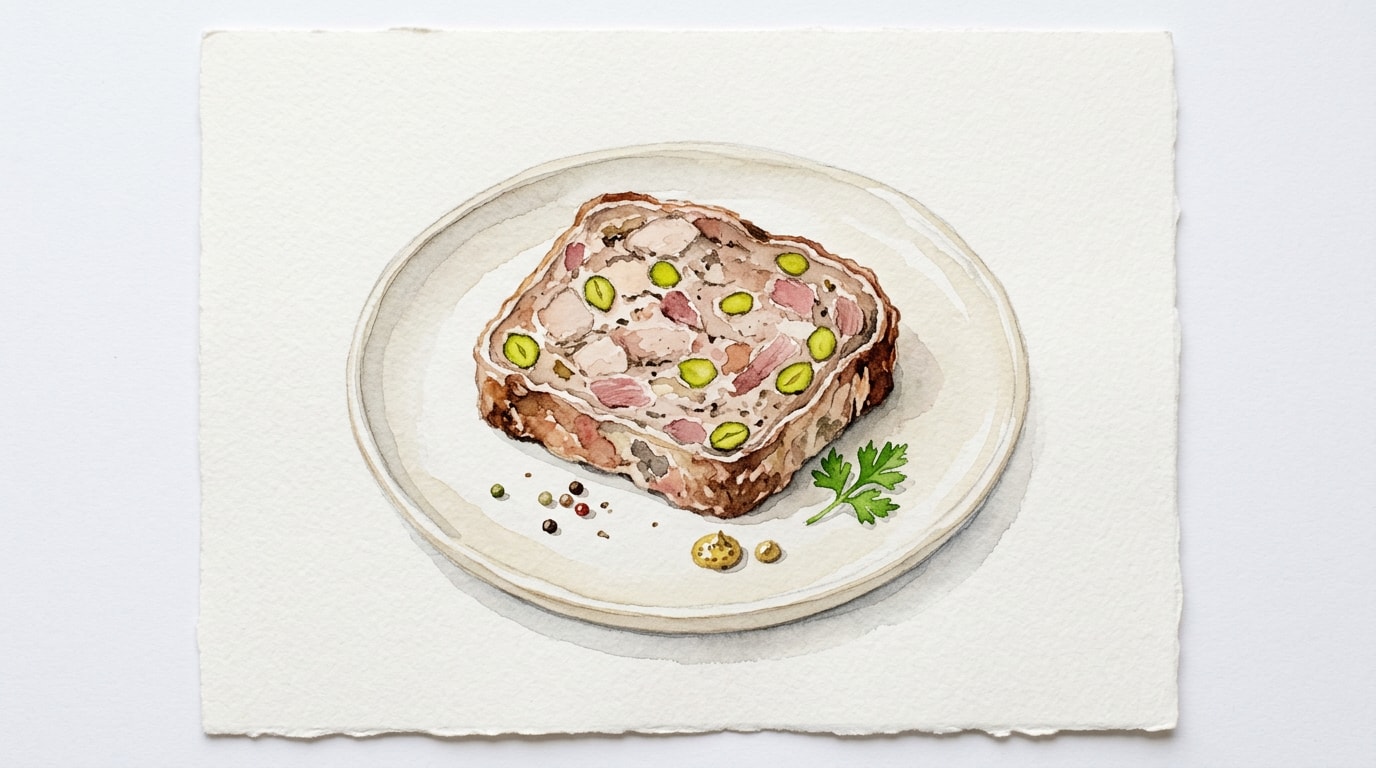
- 150 g smoked ham, cut into uniform 6mm dice
- 60 g pistachios, shelled, unsalted, left whole
- 200 g smoked streaky bacon, thinly sliced, for lining the mold
Aromatics and Liquids
- 50 g shallots, finely minced
- 10 g garlic, smashed and minced
- 45 ml cognac
- 45 ml port wine
Seasoning and Binders
- 2 eggs, lightly beaten
- 18 g kosher salt
- 3 g quatre epices
- 3 g white pepper, freshly ground
- 2 g fresh thyme leaves, chopped
Nutrition (per serving)
Method
In a large bowl, combine the cubed pork shoulder, pork belly, veal, and chicken livers. Add the shallots, garlic, cognac, port wine, kosher salt, quatre epices, white pepper, and thyme. Toss thoroughly to coat, cover tightly, and refrigerate for 12 to 24 hours.
Preheat your oven to 160°C (320°F). Bring a kettle or large pot of water to a boil for the bain-marie.
Pass the marinated meats (including the liquid) through a meat grinder fitted with a coarse die. If you prefer a smoother texture, pass the chicken livers through a fine die or pulse them in a food processor first.
Add the lightly beaten eggs, diced smoked ham, and whole pistachios to the ground meat mixture. Using your hands or a sturdy spatula, mix vigorously for 2 to 3 minutes until the mixture becomes sticky and cohesive. This develops the myosin protein for proper binding.
Line your terrine mold with the sliced bacon, overlapping slightly and leaving enough overhang to fold over the top. Press the meat mixture into the mold tightly, ensuring there are no air pockets. Fold the overhanging bacon over the top to completely encase the meat. Cover the mold tightly with a lid or a double layer of aluminum foil.
Place the covered terrine into a roasting pan. Pour the boiling water into the roasting pan until it reaches halfway up the sides of the terrine mold. Carefully transfer to the preheated oven and bake until the internal temperature registers 70°C (158°F).
Remove the terrine from the water bath and take off the lid or foil. Place a piece of cardboard wrapped in foil or a custom pressing plate directly on top of the cooked meat. Place heavy weights evenly on top. Let it cool at room temperature for 1 hour, then transfer to the refrigerator with the weights still attached to chill for 48 hours.
Chef's Notes
- Temperature management is the absolute most critical factor in charcuterie. If your fat smears rather than grinds cleanly, you have created a broken emulsion, which leads to a greasy, crumbly end product.
- Do not skip the 48-hour resting period. This process, called maturation, allows the complex array of spices, alcohols, and varied meats to meld into a unified flavor profile while the gelatin and fats solidify properly.
- A small trick to test your seasoning before committing to a 3-day process: after mixing your raw forcemeat, take a small tablespoon and pan-fry it until cooked through. Taste it and adjust your raw mixture's salt and pepper accordingly.
Storage
Refrigerator: 1 week — Store tightly wrapped in plastic wrap or sealed in the terrine mold with its fat cap.
Freezer: 2 months — Wrap slices individually in parchment paper and vacuum seal before freezing.