Equipment
Ingredients
Duck Legs
- 4 duck legs, whole, bone-in, skin-on
- 10 g sea salt
- 4 fresh thyme sprigs
- 4 garlic cloves, smashed
Liver Vinaigrette
- 100 g fresh duck livers, cleaned and trimmed
- 1 shallot, minced
- 30 ml sherry vinegar
- 10 g dijon mustard
- 45 ml walnut oil
- 15 ml duck fat
Salad
- 2 frisée lettuce, washed and torn
- 10 g chives, finely chopped
Nutrition (per serving)
Method
Using a sharp knife, score the skin of the duck legs in a diamond pattern without cutting into the meat. Season generously with sea salt on all sides.
Place duck legs skin-side up on a rack in a roasting pan. Tuck thyme and smashed garlic underneath. Roast at 150°C/300°F for 2 to 2.5 hours, until the meat is very tender and pulls away from the bone. Reserve the rendered fat.
While duck rests, heat 1 tbsp of reserved duck fat in a sauté pan over medium-high heat. Season duck livers and sear quickly until browned but still pink in the center, about 2 minutes. Add shallots and cook for 1 minute more.
Transfer the warm livers and shallots to a blender. Add sherry vinegar, Dijon mustard, and walnut oil. Puree until smooth and creamy. Season with salt and pepper to taste. If too thick, thin with a teaspoon of warm water.
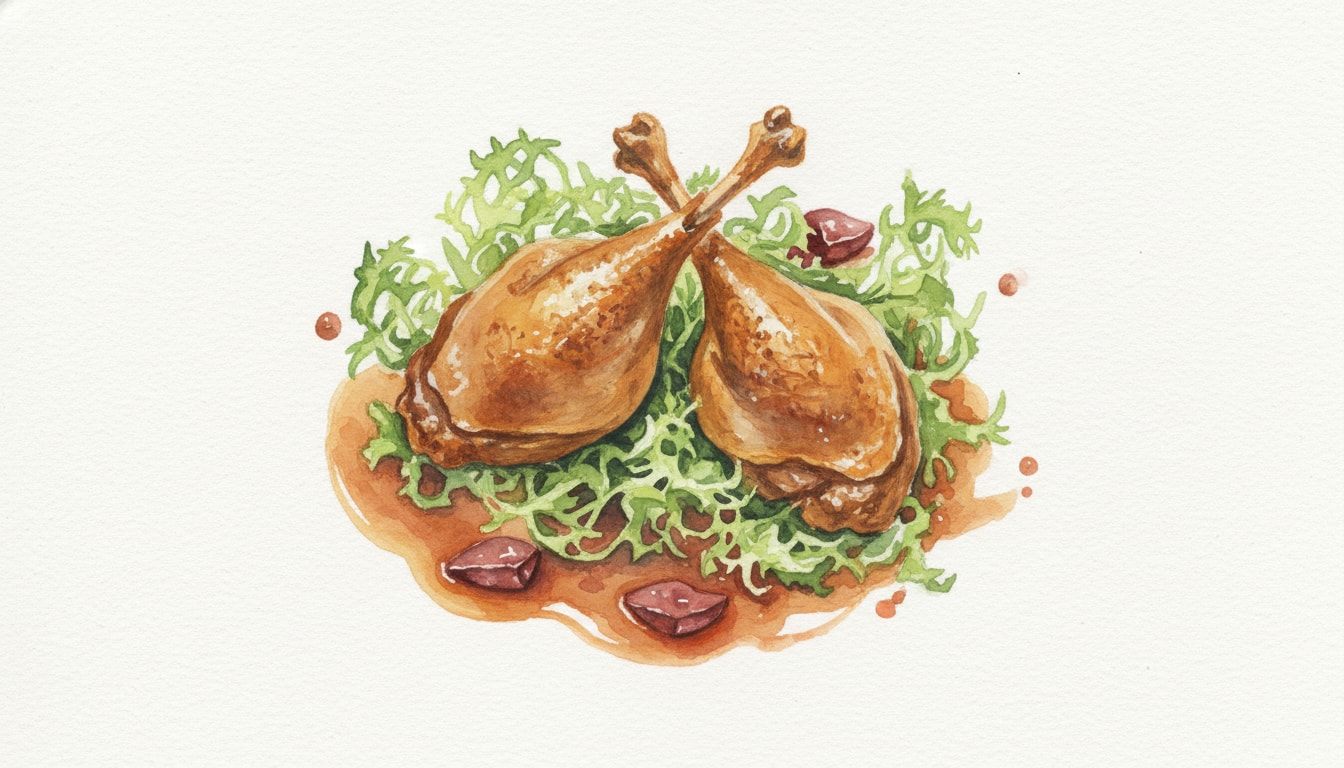
Preheat grill to high heat. Place the roasted duck legs skin-side down on the grill. Grill for 3-5 minutes to crisp the skin and add char. Watch carefully for flare-ups caused by dripping fat.
In a large bowl, toss the frisée with the warm liver dressing until evenly coated. Divide the salad among plates and top each with a grilled duck leg. Garnish with chopped chives.
Chef's Notes
- Pricking or scoring the skin is crucial; it allows the fat to render out, self-basting the meat while crisping the skin.
- The liver dressing adds a savory 'umami' depth that mimics a warm pâté; do not overcook the livers or the texture will become grainy.
- If you cannot find walnut oil, hazelnut oil is a great alternative, or use a high-quality extra virgin olive oil.
- This 'slow-roast then grill' method mimics the texture of confit without requiring liters of extra duck fat.
- For safety, duck livers should be seared but can remain pink inside; however, immunocompromised individuals should cook them through.
Storage
Refrigerator: 3 days — Store duck and dressing separately. Dress salad immediately before serving.
Reheating: Reheat duck in a 180°C oven until skin is crisp again. Serve dressing warm or room temperature.