Equipment
Ingredients
Plantains
- 3 green plantain, whole, unpeeled
- 2 ripe plantain, whole, unpeeled
Cooking Liquid & Prep
- 2000 ml water
- 10 g kosher salt
- 5 ml vegetable oil
Nutrition (per serving)
Method
Rub your hands with a few drops of vegetable oil. Using a chef's knife, score the skins lengthwise and peel both the green and ripe plantains.
Cut the peeled plantains into large 5cm chunks, ensuring you keep the green and ripe chunks separated in different piles.
In a large pot, bring the water and kosher salt to a vigorous boil (100°C/212°F). Add the green plantain chunks and boil until they just begin to soften.
Add the ripe plantain chunks to the boiling water alongside the green ones and continue to boil until both types are completely tender when pierced with a fork.
Drain the plantains thoroughly in a colander, making sure to catch and reserve exactly 120ml of the hot, starchy cooking water in a separate small bowl.
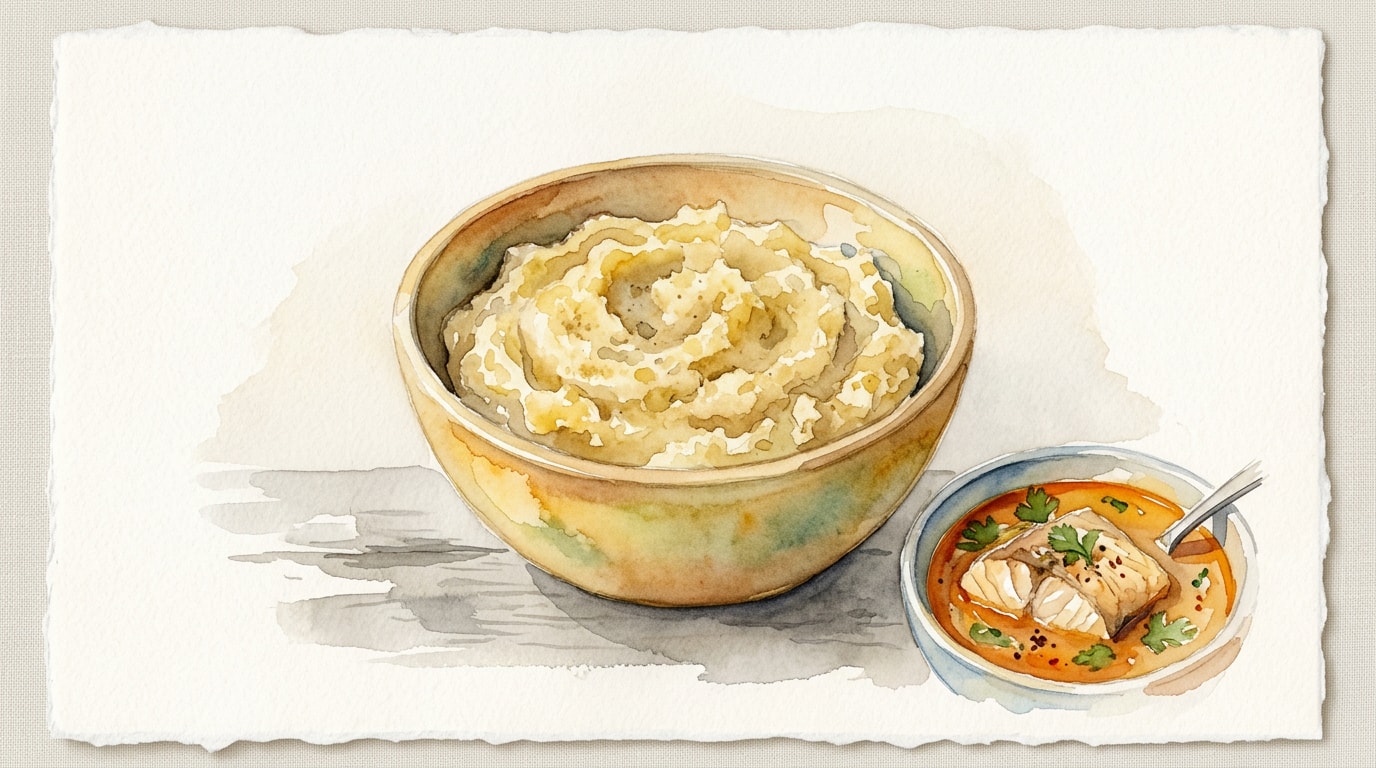
Transfer the steaming hot plantains to a large mortar or heavy mixing bowl. Using a pestle or heavy potato masher, pound vigorously until smooth, adding small splashes of the reserved hot water as needed to create a sticky, elastic dough.
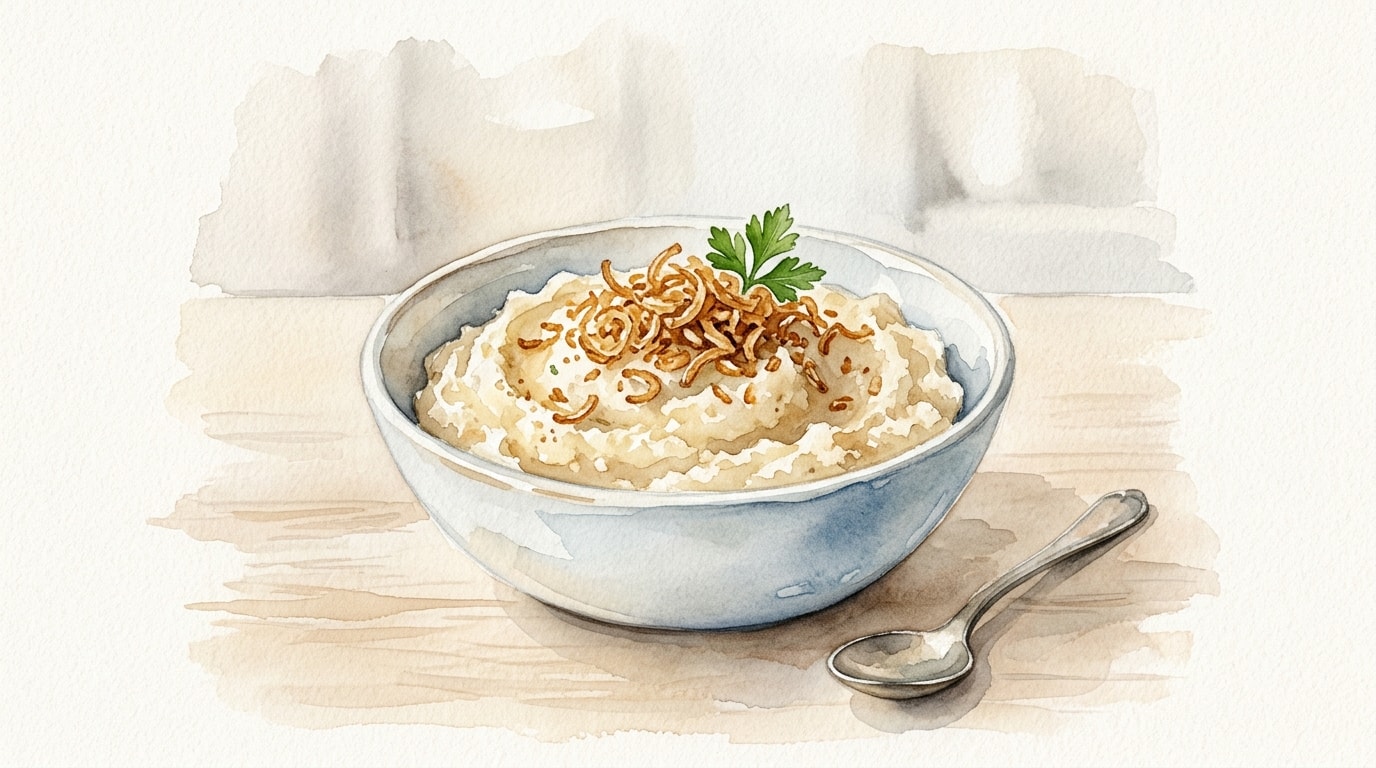
Form the elastic mash into individual smooth balls or one large communal mound. Serve immediately while warm.
Chef's Notes
- The ratio of green to ripe plantains dictates the overall sweetness and structural integrity of the mash. A traditional 3:2 or 3:1 green-to-ripe ratio provides enough dense starch to form a solid dough, while the ripe plantains add essential moisture and a touch of sweetness.
- Always peel and begin cooking the green plantains first. Ripe plantains contain more sugar and less resistant starch, meaning they cook significantly faster. Boiling them for the full duration would result in a waterlogged, mushy texture.
- Temperature is absolutely critical for elasticity. You must pound and mash the plantains while they are still steaming hot. If they cool down, the starches lock up, resulting in a stiff, crumbly mass that will refuse to form a smooth dough.
- While a traditional wooden mortar and pestle (called a 'hana') yields the most authentic elasticity through repetitive pounding, a sturdy potato masher used with aggressive downward force will achieve a very similar dough-like consistency at home.
Storage
Refrigerator: 3 days — Will harden significantly and lose elasticity when chilled.
Reheating: Wrap in a damp paper towel and microwave in 30-second bursts, or steam gently until steaming hot. Knead briefly to restore the sticky texture.