Equipment
Ingredients
Aromatics & Acid
- 2 shallot, finely diced
- 30 ml red wine vinegar
- 2 g salt
Herbs & Oil
- 20 g fresh sage leaves, dry
- 100 ml extra virgin olive oil
- 30 g fresh flat-leaf parsley, finely chopped
- 1 garlic clove, grated or minced
- 1 g red pepper flakes
Nutrition (per serving)
Method
Combine the finely diced shallot, red wine vinegar, and salt in a small mixing bowl. Let this mixture stand (macerate) for at least 10 minutes. This softens the texture of the shallots and mellows their raw onion bite.
Place the olive oil and sage leaves in a small skillet over medium heat. Cook, swirling the pan gently, until the bubbles around the sage leaves slow down significantly and the leaves darken slightly, about 2-3 minutes. The oil should reach roughly 170°C/340°F.
Immediately remove the sage leaves with a slotted spoon and transfer to a paper towel-lined plate. Sprinkle lightly with a pinch of salt. Remove the oil from the heat and allow it to cool to room temperature (approx 20-25°C/68-77°F).
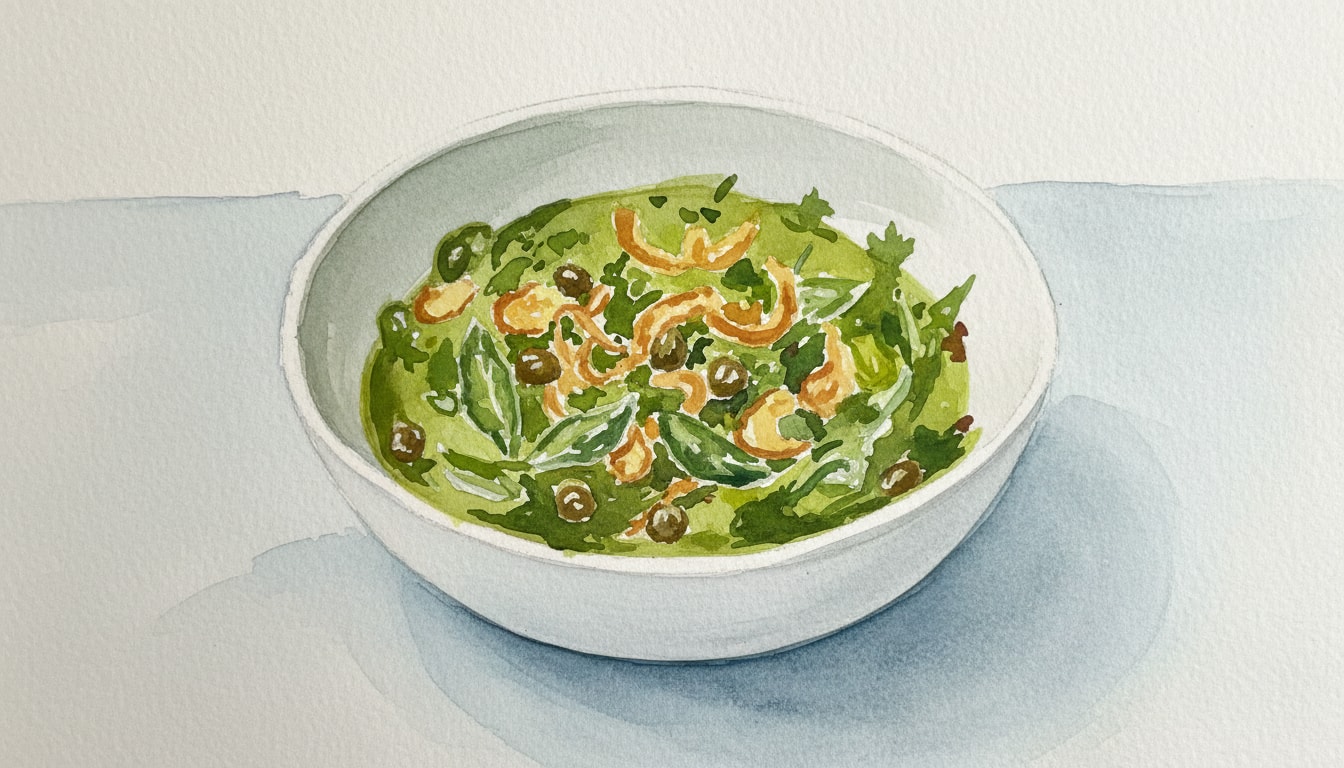
Once the sage is cool and crisp, crumble it into coarse pieces with your fingers. Add the crumbled sage, chopped parsley, grated garlic, red pepper flakes (if using), and the reserved sage-infused cooling oil into the bowl with the macerated shallots.
Stir gently to combine. Taste and adjust seasoning with more salt or a splash more vinegar if needed. Serve immediately for maximum crunch.
Chef's Notes
- Ensure the sage leaves are completely dry before adding to the oil to prevent dangerous splattering.
- This salsa is exceptional on Thanksgiving leftovers, particularly turkey sandwiches or roasted root vegetables.
- The oil used to fry the sage becomes a 'sage oil' which carries as much flavor as the leaves themselves.
- If preparing ahead, keep the fried sage separate and stir it in right before serving to maintain the texture.
Storage
Refrigerator: 3 days — Best served fresh to maintain the crunch of the sage. If stored, the sage will soften but flavor remains excellent.