Equipment
Ingredients
Base & Soffritto
- 300 g arborio rice, dry
- 1200 ml vegetable stock, hot
- 1 fennel bulb, small dice
- 2 shallot, finely minced
- 30 ml extra virgin olive oil
- 120 ml dry white wine
Flavor & Finish
- 80 g oil-cured black olives, pitted and roughly chopped
- 45 g unsalted butter, cold, cubed
- 50 g parmigiano-reggiano, finely grated
- 1 lemon zest, zested
- salt
Nutrition (per serving)
Method
Pour the vegetable stock into a medium saucepan and bring to a simmer over medium heat. Reduce heat to low to keep it hot but not boiling vigorously.
In a heavy-bottomed pan, heat the olive oil over medium heat. Add the diced fennel and minced shallot. Sauté for 5-7 minutes until the vegetables are soft and translucent, but not browned.
Add the Arborio rice to the pan. Toast the rice, stirring constantly, for 2-3 minutes. The grains should become semi-translucent at the edges with an opaque white center (the pearl) and feel hot to the touch.
Pour in the white wine. Stir vigorously until the wine has completely evaporated and the smell of raw alcohol has dissipated.
Begin adding the hot stock one ladle (approx 100-150ml) at a time. Stir frequently, allowing the rice to absorb almost all the liquid before adding the next ladle. Adjust heat to maintain a gentle simmer.
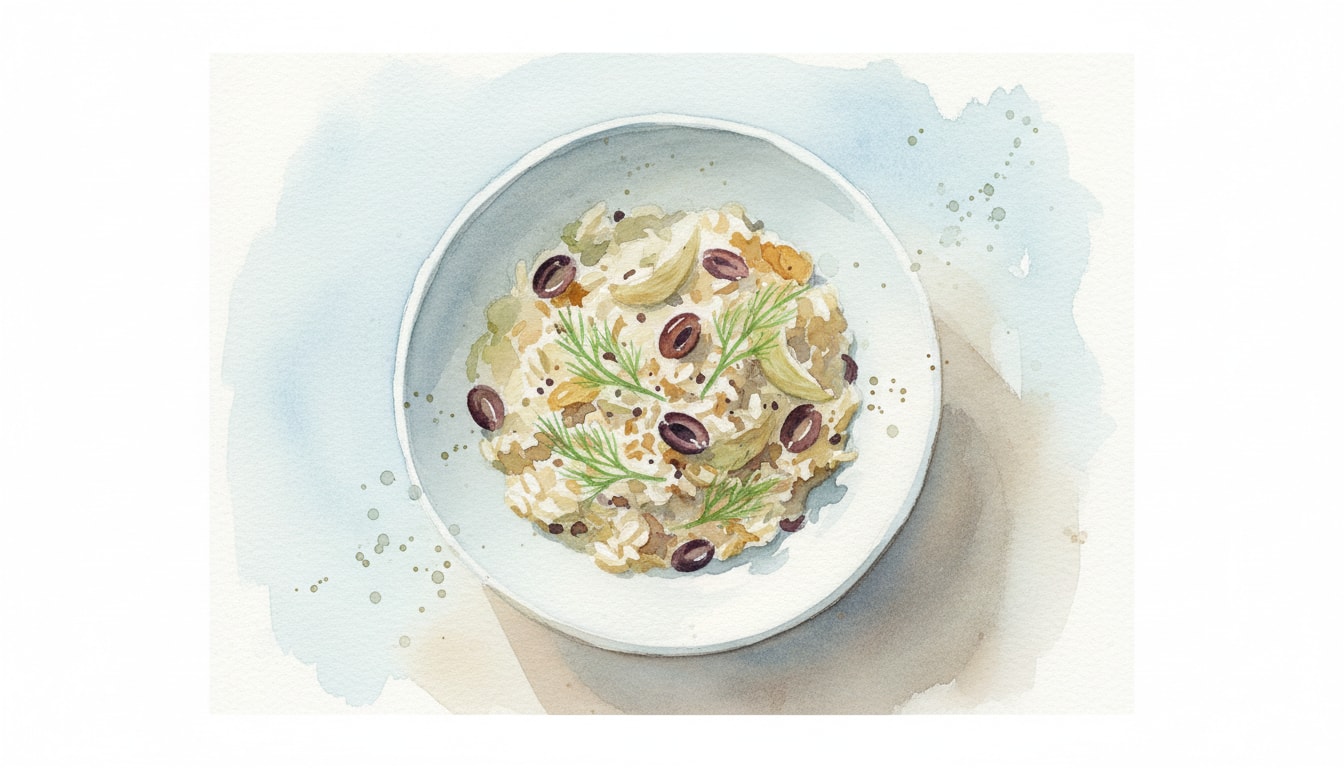
When the rice is al dente (usually after 18-20 minutes) and the texture is creamy but fluid (all'onda), remove the pan from the heat. Stir in the chopped olives.
Perform the 'mantecatura': Add the cold cubed butter and grated Parmesan. Whip the risotto vigorously with a wooden spoon to emulsify the fats with the starch, creating a glossy sauce. Stir in the lemon zest.
Taste and adjust salt if necessary (the olives and cheese add significant salt). Divide onto warmed plates and garnish with the reserved fennel fronds.
Chef's Notes
- The 'mantecatura' step is non-negotiable. Using cold butter (not room temp) when the pot is off the heat helps create a tighter, glossier emulsion.
- Do not rinse the Arborio rice before cooking. The surface starch is essential for creating the creamy texture characteristic of risotto.
- If you cannot find oil-cured black olives, Kalamata olives are an acceptable substitute, though they lack the dense, meaty texture of the oil-cured variety.
- The consistency should be 'all'onda' (like a wave)—if you tilt the plate, the risotto should slowly flow, not stand stiffly in a pile.
- Lemon zest is critical here to bridge the gap between the sweet earthy fennel and the heavy, salty olives.
Storage
Refrigerator: 3 days — Texture will degrade significantly; best eaten fresh.
Reheating: Reheat gently on stove with a splash of water or stock to loosen the starch matrix.