Equipment
Ingredients
Fruit
- 600 g fresh strawberries, hulled and gently crushed
Pantry
- 500 g white sugar, granulated
Nutrition (per serving)
Method
Preheat the oven to 175°C/350°F. Place a small ceramic plate in the freezer to chill; this will be used later for testing the consistency of the preserves.
Wash the strawberries in a bowl of cold water to remove any grit. Drain them thoroughly on a clean towel, remove the hulls, and crush them gently using a wooden pestle or potato masher until you have a textured, chunky mash.
Pour the granulated sugar into an oven-safe baking dish and heat it in the oven for about 10 minutes. The sugar should become very hot to the touch but must not be allowed to brown.
Place the crushed strawberries into a wide, non-aluminum saucepan. Set the pan over low heat just enough to warm the fruit gently.
Carefully remove the hot sugar from the oven and pour it directly over the warmed strawberries. Stir gently with a wooden spoon; the hot sugar will dissolve almost instantly into the fruit juices.
Increase the heat to high and bring the mixture to a rapid boil. Cook vigorously for exactly 9 minutes, stirring occasionally to prevent the fruit from scorching on the bottom of the pan.
As the preserves boil, a foam will naturally rise to the surface. Use a wooden spoon to skim this foam off immediately.
After 9 minutes of boiling, perform the plate test: drop a spoonful of the hot preserves onto the chilled ceramic plate. If the jam spreads only slightly and wrinkles when nudged, it is done. If it runs like a thin liquid, boil for 1 to 2 additional minutes and test again.
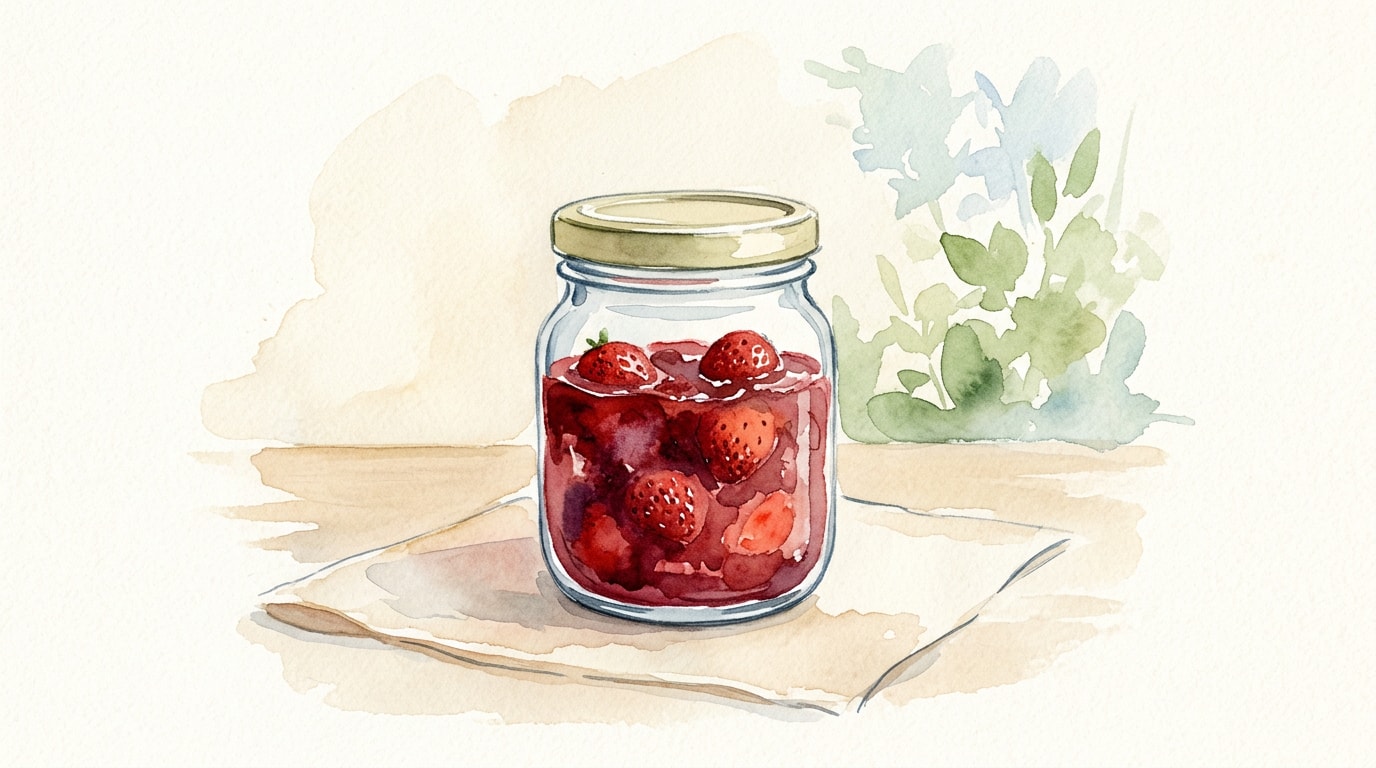
Remove the saucepan from the heat. Carefully ladle the hot preserves into sterilized half-pint jars, leaving about 3 millimeters (1/8 inch) of headspace at the top. Seal with lids and allow to cool completely.
Chef's Notes
- Edna Lewis's signature technique of heating the sugar separately is a brilliant historical method. It allows the sugar to dissolve instantly into the fruit puree, drastically reducing the required cooking time and preserving the vibrant, fresh flavor of the strawberries without relying on commercial pectin.
- Always use a non-aluminum saucepan when cooking high-acid fruits like strawberries. Reactive metals like bare aluminum or cast iron will impart an unpleasant metallic flavor and dull the beautiful ruby color of the preserves.
- Skimming the foam, often called scum, while the mixture is rapidly boiling is much easier. The vigorous bubbles naturally push the foam into a cohesive mass in the center of the pot, making it simple to lift away with a spoon.
- For the most authentic flavor and optimal set, seek out small, deeply red, field-grown spring strawberries. They have less water content and a much more concentrated flavor than large, hydroponic, or off-season supermarket varieties.
Storage
Refrigerator: 3 months — Store in the refrigerator if not processed in a boiling water bath for long-term pantry storage.
Freezer: 1 year — Leave at least 1 inch of headspace if freezing to allow for expansion.