Equipment
* optional
Ingredients
Fruit
- 12 hachiya persimmons, unripe and firm
Sanitization
- 3000 ml water
- 50 ml shochu or vodka
Nutrition (per serving)
Method
Trim the calyx leaves from the top of each persimmon using a paring knife, being extremely careful to leave the T-shaped stem fully intact.
Peel the skin completely off each persimmon using a vegetable peeler, starting from the bottom tip and pulling upward to the stem edge.
Cut lengths of kitchen twine and tie them securely around the T-shaped stem of each peeled persimmon.
Bring a large pot of water to a rolling boil at 100°C/212°F.
Holding the twine, submerge each persimmon into the boiling water for exactly ten seconds to pasteurize the exterior and discourage mold growth.
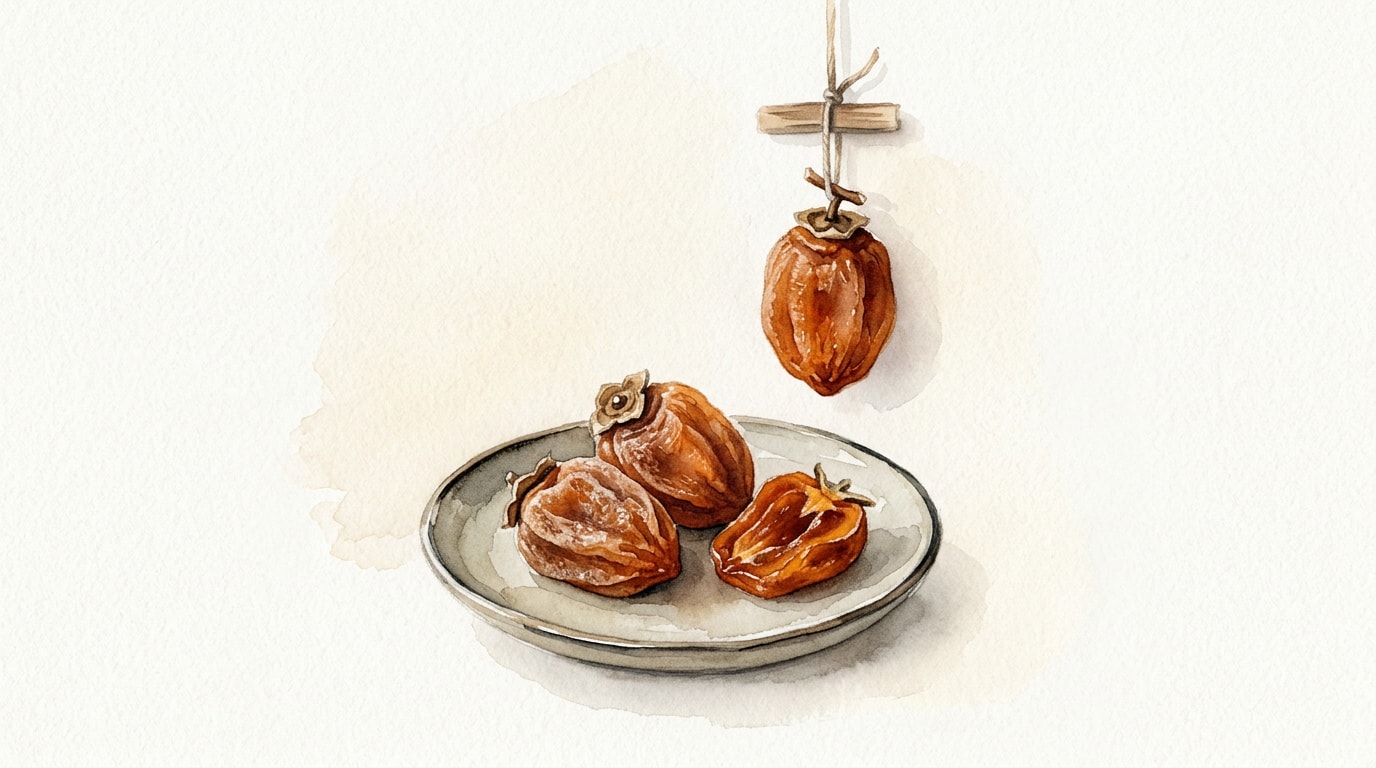
Suspend the persimmons by their twine from a bamboo pole or drying rack in a highly ventilated area, ensuring they do not touch walls, surfaces, or each other.
Allow the fruit to hang completely undisturbed for five to seven days until a leathery pellicle forms on the exterior.
Gently massage each persimmon with clean hands for a few seconds. Repeat this daily for three to four weeks to break up the hard inner core and draw the natural sugars to the surface.
Chef's Notes
- The white powder that eventually forms is not mold, but rather crystallized fructose and glucose drawn to the surface. It is the hallmark of a perfectly cured hoshigaki.
- Selecting the right persimmon is paramount. Fuyu varieties (squat and tomato-shaped) are non-astringent and meant to be eaten fresh. You must use Hachiya varieties (acorn-shaped) for drying.
- Always check for a sturdy piece of stem before purchasing your fruit. Without it, tying and suspending the persimmons becomes incredibly difficult.
- The daily massage serves two purposes: it breaks down the fibrous interior for a supple texture, and it ensures the fruit dries evenly rather than developing a hard outer shell and rotting center.
Storage
Refrigerator: 3 months — Store in an airtight container lined with parchment paper.
Freezer: 1 year — Wrap individually to prevent sticking.