Equipment
Ingredients
Polenta Base
- 750 ml water or vegetable broth
- 150 g coarse yellow cornmeal
- 3 g fine sea salt
Finishings
- 30 g unsalted butter, cubed
- 40 g parmigiano-reggiano cheese, finely grated
- 1 g black pepper, freshly ground
Crispy Eggs
- 30 ml extra virgin olive oil
- 4 large eggs, room temperature
- 2 g flaky sea salt
Nutrition (per serving)
Method
Bring the water or vegetable broth to a rolling boil in a medium saucepan over medium-high heat.
Gradually pour the coarse yellow cornmeal into the boiling liquid in a thin, steady stream while whisking continuously to prevent any dry lumps from forming.
Reduce the heat to the lowest setting. Simmer gently, stirring frequently with a heatproof spatula to scrape the bottom and sides, until the polenta is thick, creamy, and the grains are tender. This takes about 20 minutes.
Remove the saucepan from the heat. Fold in the cubed unsalted butter and half of the grated Parmigiano-Reggiano cheese until completely melted and uniformly incorporated. Season with black pepper and the fine sea salt.
In a separate skillet, heat the extra virgin olive oil over medium-high heat until it becomes highly fluid and begins to shimmer.
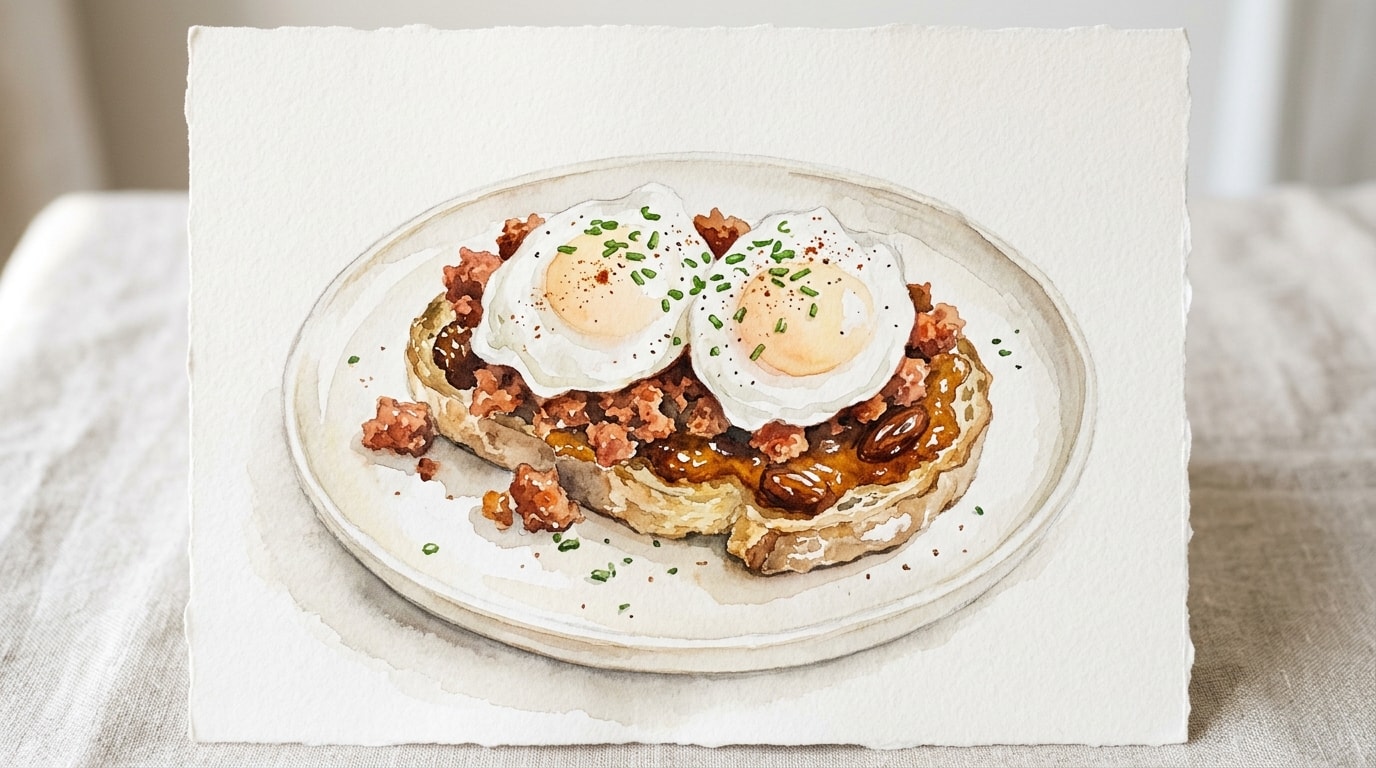
Carefully crack the eggs into the hot oil. Fry undisturbed for about 3 minutes until the whites are bubbling and crisp at the edges. For food safety, particularly when serving vulnerable populations, ensure proteins reach an internal temperature of 74°C or 165°F.
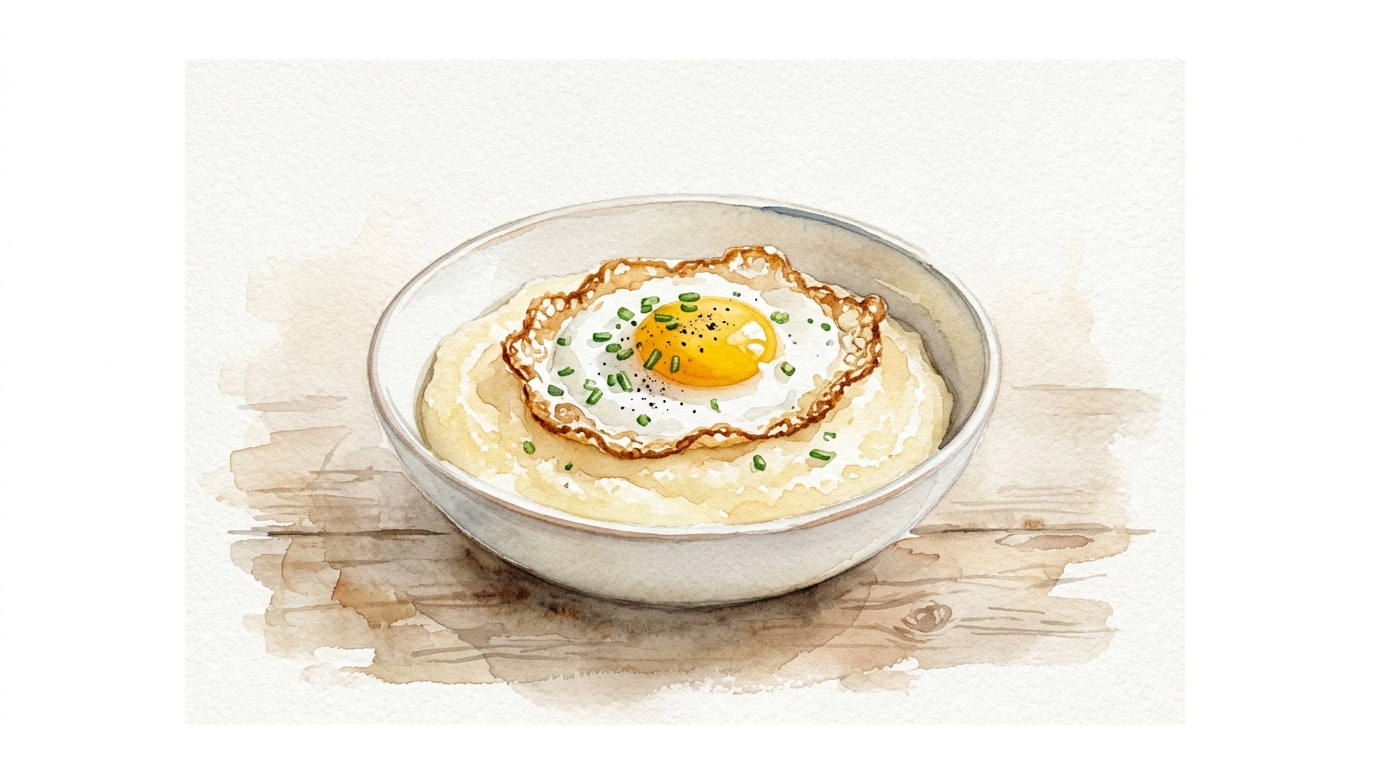
Divide the hot, creamy polenta evenly between two warm, shallow bowls. Use a spatula to gently slide two fried eggs onto the center of each portion.
Garnish the bowls with the remaining grated Parmigiano-Reggiano cheese, a pinch of flaky sea salt over the egg yolks, and additional freshly ground black pepper. Serve immediately.
Chef's Notes
- Always use a high-quality, coarse-ground stoneground cornmeal for the best texture and deepest corn flavor. Avoid quick-cooking or instant polenta, as it is pre-cooked and stripped of its natural complexities.
- The secret to achieving beautifully crispy, lacy egg edges is using a generous amount of olive oil and ensuring it is shimmering hot. Basting the thicker parts of the egg white with the hot oil ensures even cooking.
- Polenta is highly highly sensitive to cooling and will begin to solidify almost immediately. Have your bowls warmed and ready, and time your egg frying so everything finishes at precisely the same moment.
- For an extra layer of savory depth, substitute the water with a high-quality chicken or mushroom stock. However, using simply water and salt is the traditional method to let the pure flavor of the corn shine.
Storage
Refrigerator: 3 days — Store polenta separately in an airtight container. Fried eggs do not keep well and should be made fresh.
Reheating: Reheat polenta gently on the stovetop over low heat, whisking in a splash of water or milk until it regains its creamy consistency. Fry fresh eggs to serve.