Equipment
Ingredients
Aromatics & Fats
- 30 ml extra virgin olive oil
- 30 g unsalted butter
- 150 g brown onion, finely diced
- 100 g carrot, finely diced
- 100 g celery, finely diced
- 3 garlic, minced
Meat
- 100 g pancetta, finely diced
- 800 g beef mince, 80/20 fat ratio preferred
Liquids & Base
- 200 ml whole milk, room temperature
- 250 ml dry red wine
- 50 g tomato paste
- 800 g crushed tomatoes
- 250 ml beef stock
Seasoning
- 2 bay leaves, dried
- nutmeg, freshly grated
- g sea salt
- g black pepper, freshly ground
Nutrition (per serving)
Method
Place the heavy-bottomed Dutch oven on the stove and heat the extra virgin olive oil and unsalted butter over medium heat until the butter is melted and foaming.
Add the finely diced pancetta to the pot. Cook, stirring occasionally, until the fat has rendered and the edges are lightly crisp.
Add the finely diced onion, carrot, celery, and minced garlic. Cook gently, stirring frequently, until the vegetables are very soft and translucent, taking care not to let them brown heavily.
Increase the heat slightly to medium-high. Add the beef mince, breaking it apart continuously with the wooden spoon. Cook until the meat is entirely browned and no pink remains. A core temperature of at least 74°C/165°F should be reached for food safety.
Pour in the whole milk. Stir well and let it simmer until the milk has almost entirely evaporated, leaving only a slightly creamy coating on the meat. This step tenderizes the beef and protects it from the acidic tomatoes.
Pour in the dry red wine. Scrape the bottom of the pot with your wooden spoon to release any browned bits. Simmer until the smell of alcohol has burned off and the wine has mostly evaporated.
Stir in the tomato paste, cooking it for about two minutes to toast it slightly. Then pour in the crushed tomatoes and beef stock. Add the bay leaves and a pinch of grated nutmeg. Stir thoroughly to combine.
Bring the sauce to a very gentle bubble, then lower the heat to the absolute minimum setting. Cover the pot with the lid slightly ajar. Let it simmer slowly and lazily for 3 hours, stirring every 30 minutes. If the sauce looks completely dry at any point, add a splash of warm water or stock.
Remove the pot from the heat. Discard the bay leaves. Taste the sauce carefully and add sea salt and freshly ground black pepper as needed to balance the flavors.
Allow the bolognese to rest uncovered for 10 minutes before serving. This allows the fat to reincorporate slightly and the temperature to drop to an ideal serving level.
Chef's Notes
- The sequence of adding milk before wine is a cornerstone of authentic Bolognese. The milk coats the meat fibers and protects them from the harsh tannins of the wine and the acidity of the tomatoes, guaranteeing a tender texture.
- A proper sofritto (the onion, carrot, and celery base) is the flavor foundation. Do not rush the sweating process; cooking them gently extracts their natural sugars and lays down an essential savory-sweet baseline.
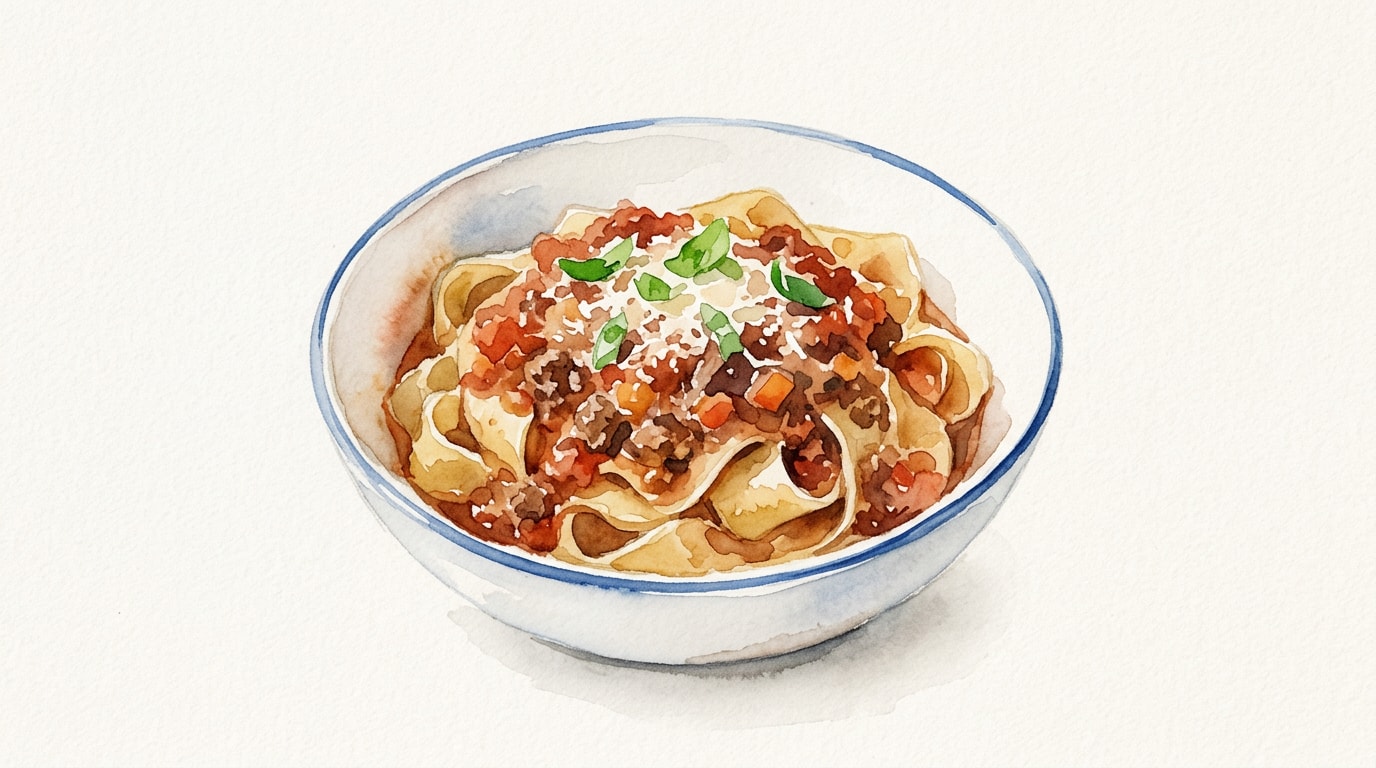
- When serving, never scoop the sauce over plain, dry pasta on a plate. Always transfer your cooked, al dente pasta into a separate pan with a generous amount of the Bolognese and a splash of starchy pasta water. Toss vigorously over low heat to emulsify the sauce and coat every strand perfectly.
- The fat that rises to the surface during cooking is liquid gold. Do not skim it off entirely; stir it gently back into the sauce at the end, as it carries a massive amount of the fat-soluble flavor compounds.
Storage
Refrigerator: 4 days — Flavors deepen and improve significantly after resting overnight.
Freezer: 3 months — Freeze in airtight containers or vacuum-sealed bags.
Reheating: Thaw overnight in the refrigerator. Reheat gently on the stovetop over low heat until simmering, adding a splash of water or broth if it has thickened too much.