Equipment
Ingredients
Sorrel Cream Sauce
- 15 g unsalted butter, room temperature
- 15 g shallot, finely diced
- 50 g fresh sorrel, stems removed, chiffonade
- 60 ml heavy cream, minimum 36 percent fat
- 2 g salt
- 1 g white pepper
Poached Eggs
- 1000 ml water
- 15 ml white vinegar
- 2 large eggs
Serving
- 2 sourdough bread, thick slices
Nutrition (per serving)
Method
Melt the butter in a small saucepan over medium-low heat. Add the finely diced shallot and sweat gently until translucent, about 3 minutes. Do not let it brown.
Add the prepared sorrel to the saucepan. Stir continuously until wilted. The sorrel will dramatically reduce in volume and change from bright green to a muted olive tone; this natural reaction to its own acidity is entirely normal.
Pour in the heavy cream. Increase the heat to medium and simmer gently until the sauce thickens enough to coat the back of a spoon. Season with salt and white pepper. Remove from heat and keep warm.
In a medium saucepan, combine the water and white vinegar. Bring to a gentle simmer at exactly 85C (185F). You should see tiny bubbles rising slowly from the bottom, but no vigorous boiling.
Crack each egg into its own small bowl. Using a spoon, stir the simmering water to create a gentle vortex. Carefully slide the eggs into the center of the vortex. Poach for exactly 3 minutes. For vulnerable populations, consider using pasteurized eggs as this recipe results in undercooked yolks.
While the eggs are poaching, toast the sourdough slices until deeply golden and crispy.
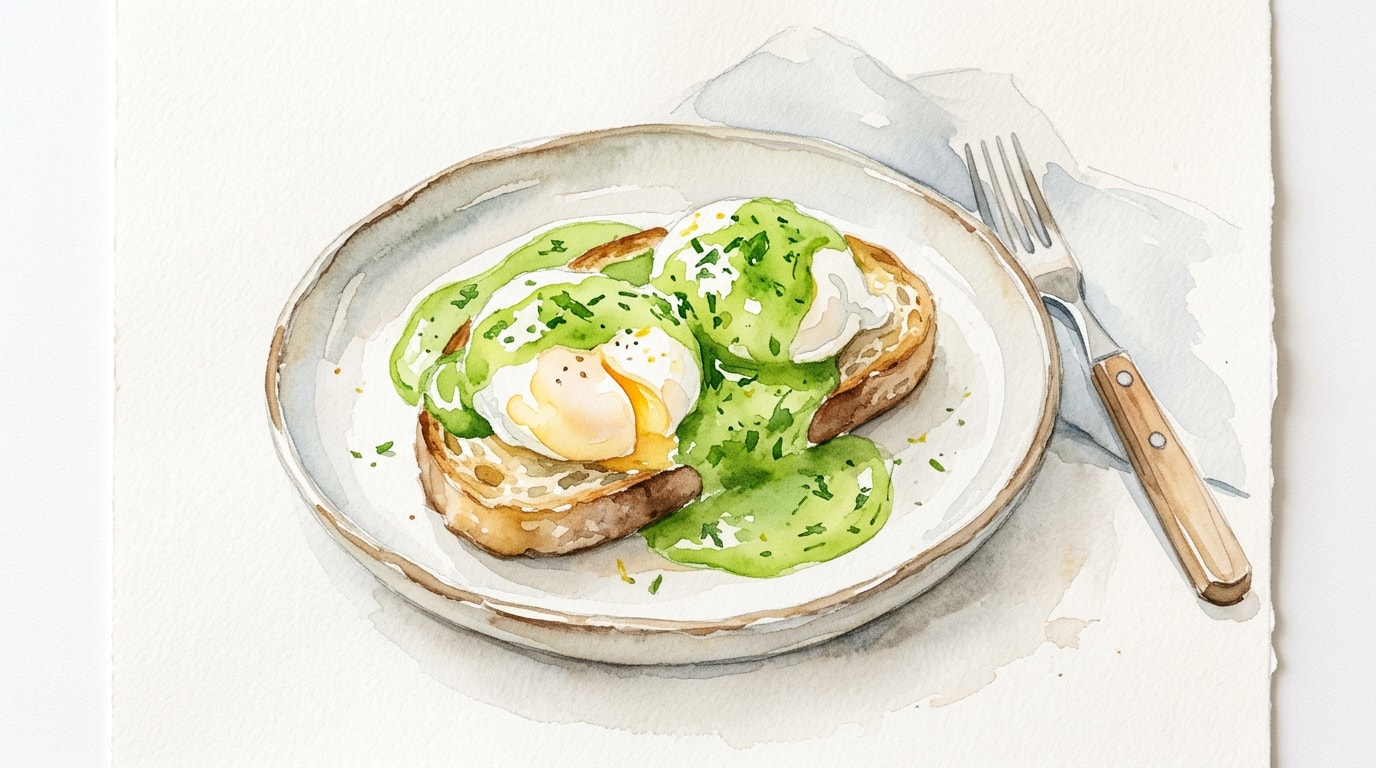
Using a slotted spoon, carefully lift the poached eggs from the water. Briefly rest the spoon on a clean paper towel to drain all excess water. Place one toasted sourdough slice on each plate, top with a poached egg, and generously nap with the warm sorrel sauce. Serve immediately.
Chef's Notes
- Sorrel contains high amounts of oxalic acid. When heated, this acid breaks down chlorophyll, turning the leaves a drab brownish-green. Do not try to prevent this by undercooking; the flavor remains spectacular and the visual shift is a hallmark of classic French preparations.
- Draining poached eggs thoroughly is a critical step that separates professional plating from amateur execution. Even a teaspoon of leftover poaching water will instantly break and dilute the luxurious cream sauce on the plate.
- For the neatest poached eggs, crack the egg into a fine mesh sieve first. Swirl gently to let the liquidy, aged part of the egg white drain away, then transfer the remaining tight white and yolk to a small bowl for poaching.
Storage
Refrigerator: 1 day — Store leftover sauce only. Poached eggs and toast must be made fresh.