Equipment
* optional
Ingredients
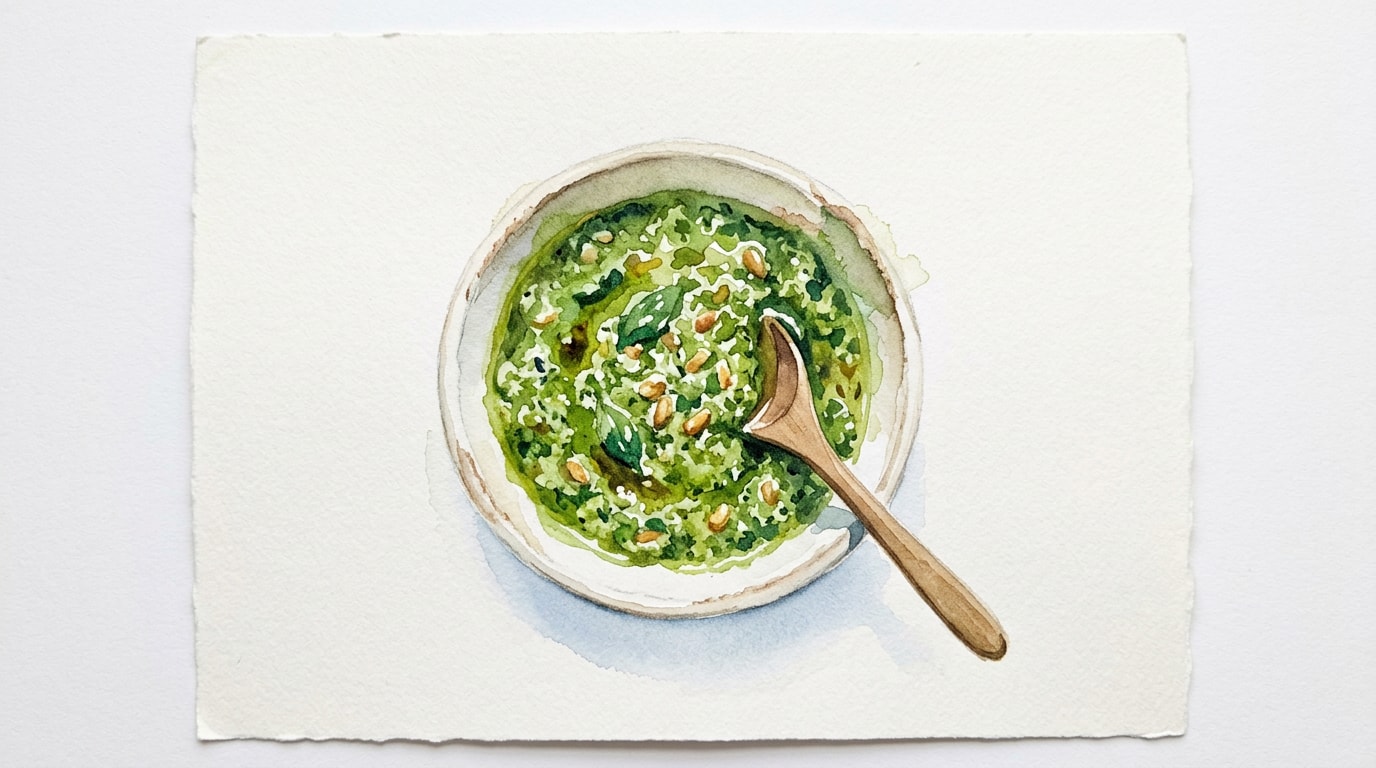
Pesto Base
- 60 g fresh basil leaves, washed and thoroughly dried
- 30 g pine nuts, toasted
- 2 garlic, peeled and roughly chopped
- 50 g parmesan cheese, freshly grated
- 120 ml extra virgin olive oil
- 2 g kosher salt
- 1 g black pepper, freshly ground
Nutrition (per serving)
Method
Heat a small skillet over medium heat. Add the pine nuts or walnuts and toast for 3 to 5 minutes, shaking the pan frequently until the nuts are fragrant and lightly golden. Transfer to a plate to cool completely.
Place the cooled nuts and chopped garlic into the bowl of a food processor. Pulse 3 to 4 times until the mixture is coarsely ground.
Add the dry fresh basil leaves to the food processor. Pulse another 5 to 6 times until the basil is roughly chopped, pausing to scrape down the sides of the bowl with a rubber spatula as needed.
With the food processor running on a low speed, slowly stream the extra virgin olive oil through the feed tube until a thick, loose emulsion forms. Stop the machine once combined to avoid over-processing.
Remove the food processor blade or transfer the mixture to a small bowl. Gently fold in the grated Parmesan cheese, kosher salt, and black pepper manually using a rubber spatula. Taste and adjust seasoning as necessary.
Chef's Notes
- Moisture is the enemy of bright green pesto. After washing your basil, use a salad spinner and gently pat the leaves completely dry with paper towels.
- For the most authentic texture, try using a mortar and pestle. The crushing action bursts the basil cells rather than slicing them, releasing more aromatic oils and creating a creamier consistency.
- When using pesto with pasta, never heat the pesto directly in a pan. Instead, place the pesto in a large serving bowl, add a splash of hot, starchy pasta water to temper it, then toss the hot pasta in the bowl off the heat.
- If pine nuts are unavailable or too expensive, walnuts or even blanched almonds make excellent substitutes that provide the necessary rich, creamy structure.
Storage
Refrigerator: 1 week — Store in an airtight container with a thin layer of olive oil poured over the surface to prevent browning.
Freezer: 6 months — Freeze in ice cube trays, then transfer solid cubes to a freezer bag for easy portioning.