Equipment
Ingredients
Bubble and Squeak Cakes
- 500 g cold mashed potatoes, chilled
- 200 g cooked savoy cabbage, finely shredded
- 30 g plain flour
- 20 g unsalted butter
- 15 ml vegetable oil
- salt
- black pepper
Hollandaise Sauce
- 3 egg yolks, room temperature
- 15 ml lemon juice, freshly squeezed
- 150 g unsalted butter, melted and warm
- cayenne pepper
Toppings
- 4 back bacon rashers
- 4 eggs, very fresh
- 15 ml white vinegar
- 5 g chives, finely chopped
Nutrition (per serving)
Method
Combine the cold mashed potato and cooked cabbage in a large bowl. Season generously with salt and pepper. Shape into 4 equal round cakes, approximately 2cm thick. Dust lightly with flour on both sides.
Prepare the hollandaise. Place egg yolks and lemon juice in a heatproof bowl set over a saucepan of barely simmering water (do not let the bowl touch the water). Whisk vigorously until the mixture thickens and doubles in volume.
Remove the bowl from heat. Slowly stream in the melted butter while whisking constantly to form a thick emulsion. Season with salt and a pinch of cayenne. Cover to keep warm in a draft-free spot.
In a large frying pan over medium-high heat, fry the bacon until fat renders and edges crisp. Remove bacon to a warm plate, leaving the fat in the pan.
Add the butter and oil to the bacon fat in the pan. Carefully add the potato cakes. Fry undisturbed for 4-5 minutes per side until deep golden brown and crispy. Transfer to a warm oven or plate.
While cakes fry, bring a saucepan of water to a gentle simmer (85°C/185°F). Add vinegar. Crack eggs into a fine mesh sieve to drain loose whites, then gently slide into the water. Poach for 3-4 minutes until whites are set but yolks remain runny.
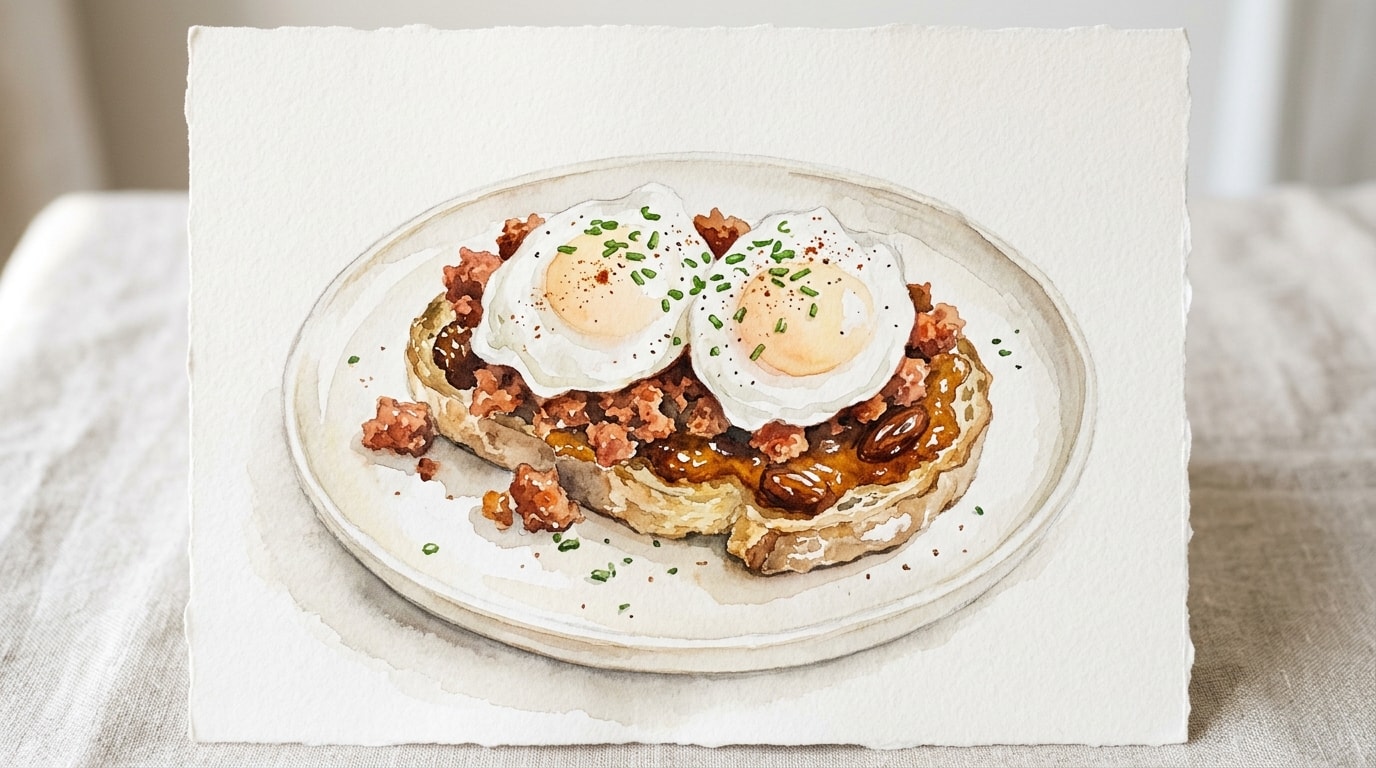
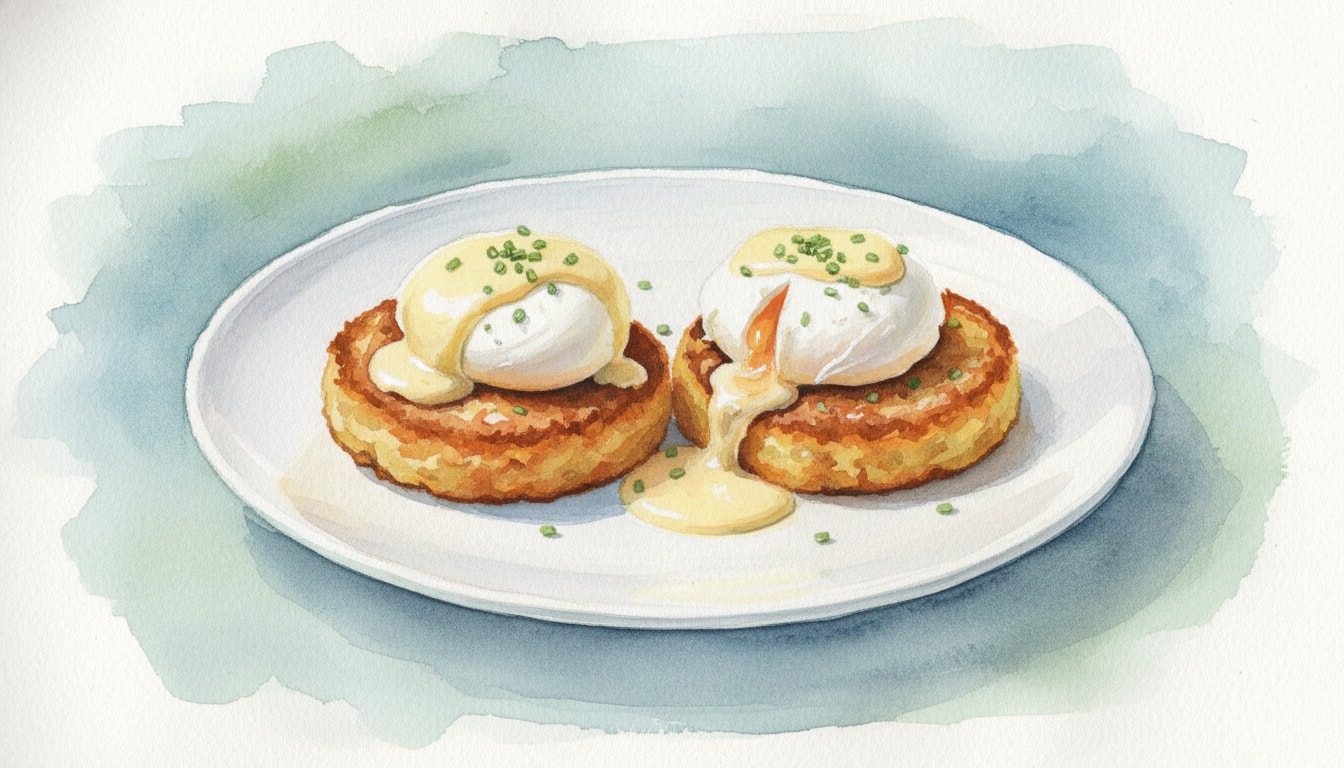
Place a potato cake on each plate. Top with a rasher of bacon, then a poached egg. Generously spoon the hollandaise sauce over the egg and garnish with chives.
Chef's Notes
- The secret to structural integrity for the cakes is using fridge-cold mashed potatoes; the starch retrogrades and binds better than warm mash.
- When poaching eggs, straining them through a fine mesh sieve first removes the watery albumin that causes wispy strands.
- For the hollandaise, if your butter is too hot, it will cook the yolks; aim for the butter to be 55°C-60°C (130°F-140°F) when streaming in.
- If your leftover mash is very creamy/buttery, you may need to add a tablespoon of flour directly into the mix to help it bind.
Storage
Refrigerator: 2 days — Store components separately. Hollandaise does not reheat well.
Freezer: 1 month — Only the formed raw potato cakes can be frozen.
Reheating: Reheat cakes in a dry pan; fresh eggs and sauce recommended.